Chargers Sign Veteran Jake Browning With Justin Herbert in Concussion Protocol Amid Disastrous 1-9 Season

The Los Angeles Chargers have officially reached a critical juncture in what has rapidly transformed into a thoroughly dismal 2026 campaign. Sinking to a dismal 1-9 record following a disheartening home loss to the New York Jets, the franchise now faces the very real prospect of playing without their cornerstone franchise player. Star quarterback Justin Herbert sustained a head injury during the recent defeat at Inglewood’s SoFi Stadium and was subsequently placed in the league-mandated concussion protocol earlier in the week. The severity of the injury has cast a heavy shadow of doubt over his availability for the upcoming matchup against the New England Patriots, forcing the front office to make swift roster adjustments to secure depth under center.
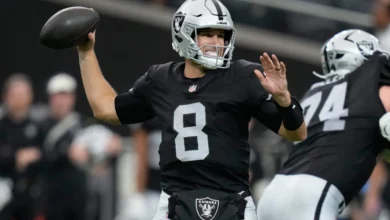
In a clear indication that the organization is bracing for the likelihood of an extended absence for their franchise signal-caller, the Chargers made a notable move on Thursday by signing veteran backup quarterback Jake Browning to the active roster, according to reports from ESPN’s Adam Schefter. The addition of Browning injects a measure of veteran experience into an otherwise youthful and struggling quarterback room, though it simultaneously underscores the mounting challenges facing the coaching staff as they attempt to salvage the remaining weeks of a lost season.
A Season to Forget in Southern California
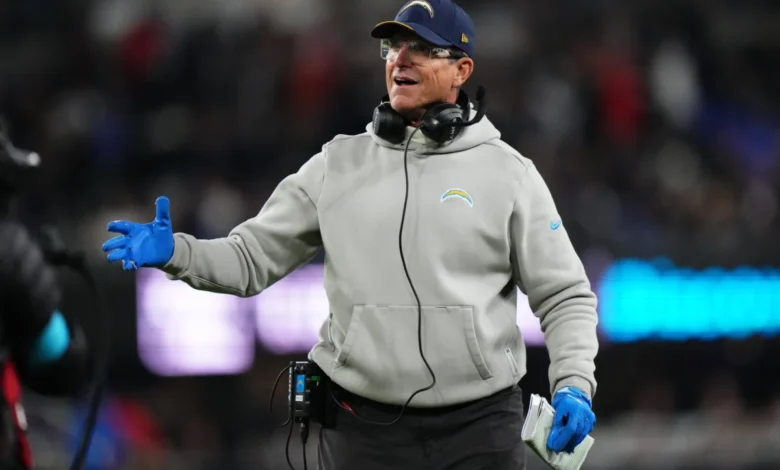
To describe the Chargers’ 2026 season as challenging would be an understatement; it has been an absolute disaster from the opening kickoff. Expectations were high in Los Angeles following the arrival of head coach Jim Harbaugh, who was brought in to instill a culture of physical toughness, discipline, and winning football. Instead, the team has floundered on nearly every front, culminating in a 1-9 start that has mathematically eliminated them from meaningful playoff contention before the calendar even flips to the final month of the regular season.

Even when healthy, Herbert has been unable to lift the offense out of its persistent doldrums. The former Pro Bowl selection is enduring statistically the worst professional campaign of his career, a steep decline that has baffled analysts and frustrated the fan base. Through 10 appearances, Herbert has uncharacteristically struggled to find a rhythm, throwing a mere eight touchdown passes against 11 interceptions. Compounding these struggles is a porous offensive line that has failed to protect its most valuable asset, leaving Herbert to absorb a punishing 39 sacks over the course of 10 games.
The cascading failures of the offense have sparked intense scrutiny throughout the organization. Newly appointed offensive coordinator Mike McDaniel has faced unrelenting criticism from media and fans alike for a scheme that has routinely looked disjointed, predictable, and entirely devoid of explosive playmaking capability. Simultaneously, head coach Jim Harbaugh has been forced to answer difficult questions regarding the team’s overall direction, preparation, and inability to execute on game days. The cumulative offensive output places Los Angeles near the absolute bottom of nearly every major statistical category across the National Football League, rendering them one of the least efficient scoring units in professional football.
The Timeline of the Collapse
The downward spiral of the Chargers’ season can be traced through a series of demoralizing setbacks, injuries, and tactical missteps. Entering the year with optimism, the team quickly encountered turbulence during the opening month, struggling to establish an identity under McDaniel’s newly installed offensive framework.
As the losses piled up, internal frustration mounted. A particularly bleak nadir arrived earlier in November when the team’s offensive ineptitude drew sharp barbs from opponents and analysts alike—including notorious media commentary comparing their stagnant passing attack to mundane deli meats. Despite flashes of competitiveness, the roster’s depth was continually tested by injuries across multiple position groups.

The breaking point arrived on November 22, 2026, during the home matchup against the New York Jets. In a game characterized by defensive struggles and offensive stagnation, Herbert absorbed multiple heavy hits from a relentless Jets pass rush. Late in the contest, a collision involving safety Dane Belton and linebacker David Bailey resulted in the head injury that ultimately forced the quarterback into the concussion protocol. The subsequent loss—a humbling defeat at the hands of a struggling Jets squad—all but sealed the fate of the Chargers’ season, cementing a 1-9 record and turning the conversation from postseason aspirations toward roster evaluation and future draft positioning.
Roster Adjustments and the Path Forward
With Herbert’s status for Sunday’s game against the New England Patriots shrouded in uncertainty, the coaching staff faces critical decisions regarding game-day personnel. Rookie quarterback DJ Uiagalelei currently holds the QB2 designation on the official depth chart, having spent the season absorbing the nuances of the professional game from the sidelines. However, the unexpected acquisition of Jake Browning introduces a compelling variable into the equation.
Browning, known for his poise and serviceable execution during previous stints as a fill-in starter elsewhere in the league, offers Harbaugh and McDaniel a seasoned alternative should they decide that throwing a rookie into the fire against a disciplined Patriots defense is an unnecessary risk. Whether the team opts for the veteran savvy of Browning or turns the keys over to the developmental arm of Uiagalelei will likely depend on how Herbert progresses through the final stages of the concussion protocol before the weekend.
Broader Implications and Strategic Pivots
As the reality of a lost 2026 campaign settles over the franchise, the approach of the Los Angeles front office is expected to shift toward long-term asset management and evaluation. In professional football, a 1-9 record fundamentally alters a team’s strategic priorities, moving the needle away from short-term desperation and toward future preservation.

From a front-office and draft perspective, prudently managing Herbert’s health carries significant weight. Rushing a franchise quarterback back from a head injury in a season where playoff contention is no longer mathematically viable defies logical risk-management. Allowing Herbert ample time to fully recover, heal his physical ailments, and clear protocol without the pressure of immediate return safeguards the long-term investment the organization has made in his career.
Simultaneously, the final stretch of the season provides an unobstructed laboratory for the coaching staff to evaluate younger talent, test scheme adjustments under low-stress conditions, and determine which supporting pieces warrant a place in the team’s future plans. While the immediate present remains bleak for the Los Angeles faithful, how the organization navigates these concluding weeks will lay the foundational groundwork for the massive offseason rebuild required to restore respectability to the franchise.