Trump suggests allowing Iran to target Los Angeles and San Diego during campaign rally in Nebraska

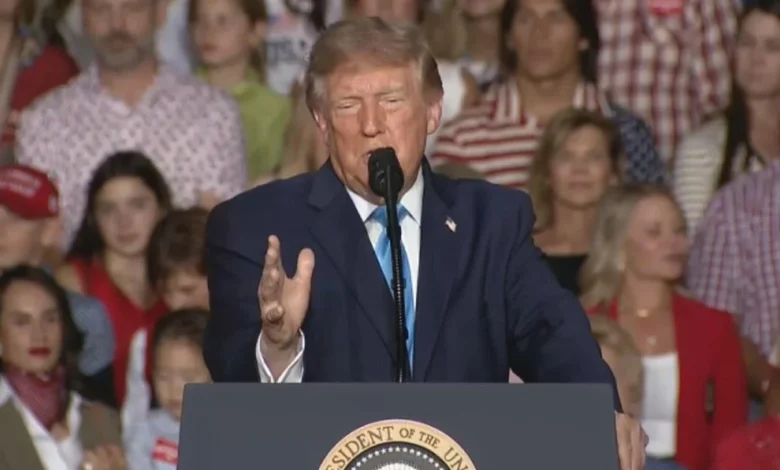
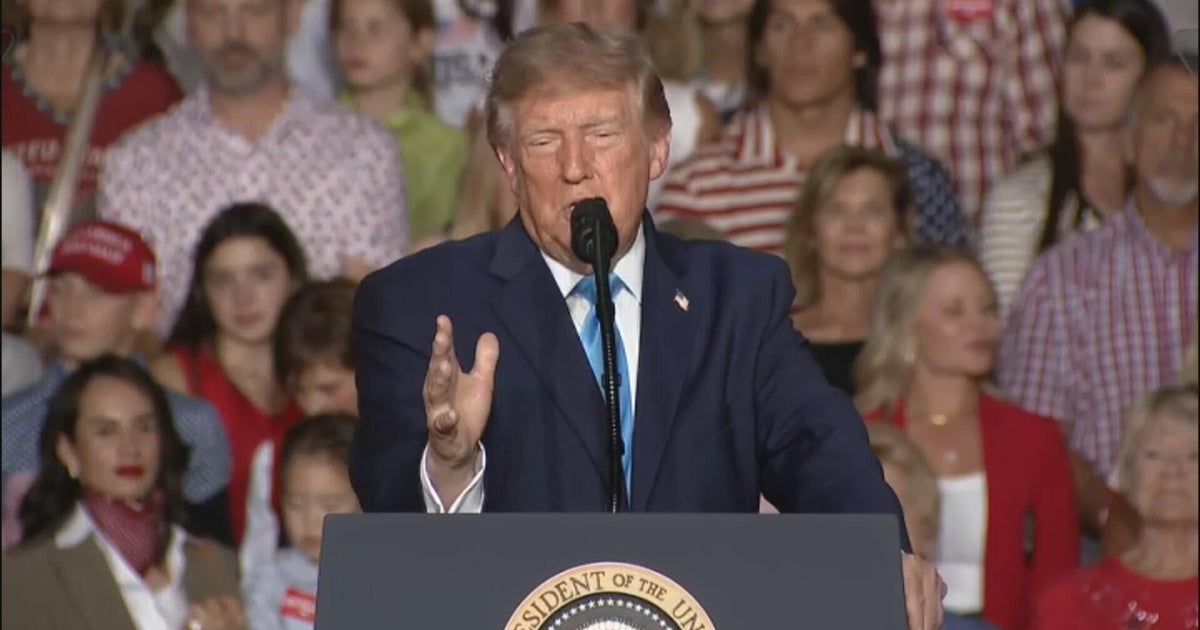
The political landscape of the United States has been thrust into a state of profound agitation following inflammatory remarks made by President Donald Trump during a campaign event in Nebraska this week. Addressing a crowd of supporters, the President suggested that permitting foreign adversaries—specifically naming Iran—to strike major American metropolitan hubs like Los Angeles and San Diego could be viewed as a strategic necessity. The comments, which were met with cheers from the gathered audience, have ignited a firestorm of condemnation from state officials, constitutional scholars, and national security experts who view the rhetoric as an unprecedented departure from the presidential oath of office.
The gravity of these remarks cannot be overstated, as they strike at the foundational responsibility of the Commander-in-Chief: the defense of the American homeland. While presidential campaign rhetoric often employs hyperbole, the explicit suggestion that specific domestic cities should be offered up as targets for a foreign power represents a shift into territory that many legal analysts describe as a potential violation of the President’s core duty to protect the nation.
Chronology of the Escalating Rhetoric
The incident occurred during an evening rally in Nebraska, where the President was outlining his vision for international relations and the containment of Iranian influence in the Middle East. According to transcribed segments of the event, the President framed the potential destruction of these cities as a utilitarian trade-off. "It’s a small price to pay for keeping the world safe, keeping our country safe," the President stated. "They can take out a city. Let them take out Los Angeles. Let them take out San Diego."
The immediate aftermath of the speech saw a rapid mobilization of social media pushback. California Governor Gavin Newsom was among the first to respond, utilizing the platform X to voice his outrage. Newsom’s statement highlighted a perceived pattern of hostility from the federal government toward California, referencing earlier tensions regarding the deployment of National Guard and Marine units to the state. "After sending the National Guard and Marines to occupy California, Donald Trump is now saying our foreign enemies should ‘take out’ Los Angeles and San Diego," Newsom wrote. "He is deranged and dangerous."
Strategic Importance of the Targeted Cities
To understand the scale of the President’s suggestion, one must look at the immense strategic, economic, and military value of the cities identified. Los Angeles is not merely the second-most populous city in the United States; it is a critical node in the nation’s defense infrastructure.
Los Angeles serves as the home to the U.S. Space Force’s Space Systems Command (SSC), which is responsible for the research, development, and acquisition of space-based military systems. Any disruption to this command would have immediate, cascading effects on the nation’s satellite reconnaissance, GPS capabilities, and missile warning systems. Furthermore, the region is a powerhouse of the aerospace and defense industry. Major contractors, including Lockheed Martin, Boeing, and Northrop Grumman, maintain significant operations in Southern California, as do various federally funded research centers, such as the RAND Corporation, which provides critical analysis for national security policy.
San Diego, meanwhile, is arguably the most vital maritime military hub on the West Coast. As the home port for the U.S. Pacific Fleet, the city hosts a massive concentration of naval assets, including aircraft carriers, amphibious assault ships, and nuclear-powered submarines. The city is also a focal point for Naval Base San Diego, Marine Corps Air Station Miramar, and Camp Pendleton, which is situated just north in the county. The suggestion that these cities are "expendable" ignores the fact that their neutralization would fundamentally cripple the United States’ ability to project power across the Pacific theater.
Official Responses and Institutional Rebukes
The backlash from local leadership was swift and uncompromising. Los Angeles Mayor Karen Bass characterized the remarks as a direct violation of the presidential mandate. "The role of a president is to protect the country, not to actively threaten it and encourage attacks on American lives," Bass wrote.
San Diego Mayor Todd Gloria echoed these sentiments, focusing on the human cost and the absurdity of treating American citizens as bargaining chips in a geopolitical game. "San Diego is not collateral damage," Gloria stated. "We are not expendable. And we are never a ‘small price to pay.’ Keep our city out of your reckless war talk."
The silence from other high-ranking federal officials has been noted by political analysts. As of the time of reporting, many members of the President’s own party have yet to issue formal statements, creating a vacuum that is being filled by intense speculation regarding the internal state of the administration’s foreign policy apparatus.
Broader Implications and National Security Analysis
From a national security perspective, the President’s words carry significant weight on the international stage. Intelligence analysts suggest that such rhetoric, even if intended as campaign theater, provides an opening for foreign adversaries to perceive a fracturing of American resolve. If a foreign power believes that the U.S. leadership is willing to sacrifice its own major cities, the deterrent value of the American military—based largely on the promise of an overwhelming response to any attack—is severely undermined.
Furthermore, the domestic implications of the President’s comments raise questions about the internal stability of the Union. When a President explicitly singles out states that are politically opposed to his administration, it accelerates the erosion of the social contract. Legal experts have begun to weigh in on whether such rhetoric constitutes a breach of the constitutional requirement to "provide for the common defense." While the President holds wide latitude in foreign policy, the explicit targeting of U.S. territory in speech is an unprecedented legal and political dilemma.
Economic and Social Consequences
The economic impact of this rhetoric is already beginning to manifest in the form of investor anxiety. Southern California represents one of the world’s largest economies; if the market perceives that the federal government is prioritizing the destruction of these cities as part of its foreign policy, the uncertainty could lead to a massive capital flight. Real estate markets, defense contracts, and the thriving tech sectors in both L.A. and San Diego rely on a stable, predictable federal partner. The suggestion that the President views these hubs as disposable targets creates a climate of extreme risk for businesses and residents alike.
Moreover, the psychological impact on the residents of these cities cannot be ignored. For millions of Americans, the federal government is their primary shield against foreign aggression. When that shield is weaponized in rhetoric, it creates a sense of abandonment and existential dread.
Conclusion
The incident in Nebraska marks a significant inflection point in the current election cycle. Whether viewed as a tactical blunder or an intentional escalation of the President’s "America First" policy, the comments have fundamentally changed the discourse around presidential responsibility. As calls grow for a formal congressional inquiry into the President’s comments, the nation waits to see how the administration will navigate the fallout.
For now, the mayors of Los Angeles and San Diego, along with the Governor of California, remain firm in their stance: that the protection of their cities is non-negotiable and that the President’s rhetoric is a dangerous departure from the democratic values that have governed the United States for over two centuries. As the situation develops, the focus will likely remain on whether the President will walk back his comments or double down on a strategy that equates the survival of American cities with the pursuit of international security. The upcoming days will be critical, as both domestic political stability and international perceptions of American resolve hang in the balance.
Related posts: