The Bipartisan American Affordability and Jobs Act and the Looming Overhaul of Federal Permitting Standards

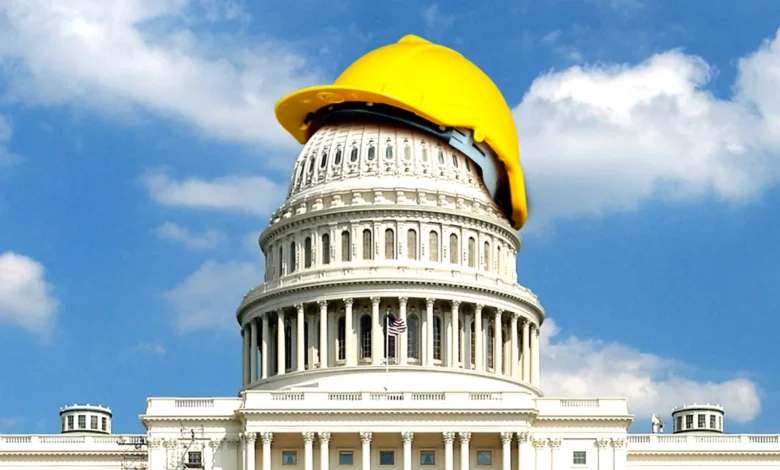
As the dust settles on one of the most transformative midterm elections in recent American history, a quiet but profound legislative battle is reaching a fever pitch in the halls of the lame-duck Congress. While headlines across the country remain dominated by the emergence of a "Blue Texas," the election of the nation’s first Black female governor, and the visible erosion of long-standing gerrymandering strategies, the Senate is preparing for a pivotal vote on the Bipartisan American Affordability and Jobs Act (BAAJA). This legislation, which aims to modernize the nation’s antiquated permitting infrastructure, has become a lightning rod for debate, threatening to pit the urgent necessity of a clean energy transition against the foundational protections of American historical and cultural heritage.
The Legislative Landscape: Origins of BAAJA
Introduced in September 2026 by a bipartisan coalition—including Senators Sheldon Whitehouse (D-RI), Heinrich Martin (D-NM), Mike Lee (R-UT), and Shelley Moore Capito (R-WV)—the BAAJA seeks to accelerate the deployment of vital infrastructure. The bill’s proponents argue that the current federal review process is a labyrinth of red tape that stifles the development of high-voltage transmission lines, modern power grids, and sustainable energy projects.
For renewable energy advocates, the bill represents a necessary evolution. Projects such as offshore wind farms and utility-scale solar arrays often face multi-year delays during the permitting phase, a timeline that many experts argue is incompatible with current climate goals. By streamlining the National Environmental Policy Act (NEPA) and other regulatory frameworks, the bill aims to reduce the "time-to-build" for projects that are essential to the nation’s energy security and environmental commitments. However, the legislation has sparked a "civil war" within the climate movement, as environmentalists and legal scholars warn that the bill’s provisions could inadvertently serve as a "Trojan Horse" for fossil fuel expansion.
A Chronology of the Permitting Reform Debate
- 1966: President Lyndon B. Johnson signs the National Historic Preservation Act (NHPA), establishing a formal process for considering the impact of federal undertakings on historic sites.
- September 2026: Sens. Whitehouse, Martin, Lee, and Capito introduce S. 5653, the Bipartisan American Affordability and Jobs Act, seeking to overhaul federal permitting.
- October 2026: Opposition grows as legal experts and preservationists identify "poison pill" clauses in the bill that could bypass Section 106 of the NHPA.
- November 6, 2026: Federal judicial intervention stalls President Trump’s "Triumphal Arch" project, highlighting the role of current environmental and historic preservation laws in curbing executive overreach.
- Late November 2026: The lame-duck Senate schedules a floor vote on BAAJA, with debate intensifying regarding the potential impacts on tribal sovereignty and historic districts.
The Intersection of Infrastructure and Executive Authority
Beyond the broader energy implications, BAAJA has drawn intense scrutiny for its potential impact on urban development in Washington, D.C. Since the start of his second term, President Donald Trump has pursued an aggressive "beautification" agenda, characterized by a series of high-profile, often controversial construction projects. These include the reconstruction of the White House East Wing into a ballroom, plans for a Triumphal Arch near Arlington National Cemetery, and the proposed transformation of public green space at Hains Point into a private-access golf course.
Legal challenges have served as the primary check on these initiatives. When a federal judge recently issued an injunction against the construction of the Triumphal Arch, it signaled that existing regulatory frameworks—specifically those governing the preservation of the nation’s capital—remained robust. Critics contend that BAAJA would effectively strip these protections. By amending Section 106 of the NHPA, the bill would empower federal agency heads to unilaterally determine that project objectives outweigh historic preservation concerns, effectively insulating such projects from the rigorous public consultation processes that have been standard for six decades.
Analyzing the "Poison Pill" Provisions
The core of the legal opposition, led by organizations like the National Trust for Historic Preservation, rests on the assertion that BAAJA would effectively gut the Section 106 consultation process. Christopher Cody, senior associate general counsel for the National Trust, characterizes the bill as a direct threat to the checks and balances inherent in American governance.
"The federal government was doing things in our communities and in our states that destroyed our historic resources," Cody explains. "The American people wanted a bigger say." The NHPA was established to prevent the wholesale destruction of local landmarks that defined the urban renewal era of the mid-20th century. By allowing an agency head to declare that "other considerations outweigh historic preservation," the bill would remove the requirement to mitigate the "adverse effects" of new construction. Under this new legal regime, projects that currently face intense scrutiny—such as those impacting the visual integrity of the Lincoln Memorial or Arlington National Cemetery—could proceed with little to no accountability.
Broader Implications: Tribal Sovereignty and Public Lands
The scope of concern extends well beyond the borders of Washington, D.C. Charles Birnbaum, president and CEO of the Cultural Landscape Foundation (TCLF), emphasizes the existential threat the legislation poses to indigenous and marginalized communities. According to Birnbaum, the bill’s language regarding "expedited review" risks severing the "cultural lifeways" of Native American tribes whose ancestral lands are often targeted for energy and industrial development.
"This country has been known for its erasure of stories," Birnbaum states. "Whether it is tribal lands or African American communities that were redlined, we are looking at a system that prioritizes speed over heritage." The fear among critics is that by lowering the threshold for what constitutes an "adverse effect," the federal government will effectively eliminate the ability of stakeholders to challenge projects that cause irreparable damage to sites of deep historical, spiritual, and cultural significance.
Expert Analysis: The Risks of Regulatory Speed
John Podesta, a veteran advisor on climate and energy policy, has cautioned that the legislation provides the executive branch with an unprecedented level of authority. By describing the bill as a "loaded Howitzer" aimed at public lands, Podesta underscores the reality that regulatory speed often comes at the cost of legal durability. When federal agencies bypass standard review processes, they often find their projects trapped in litigation for years, as the lack of a proper administrative record leaves the government vulnerable to successful court challenges.
The fundamental conflict, therefore, is not merely between energy and the environment, but between two different visions of governance. Proponents of BAAJA see a nation that has become paralyzed by bureaucracy, unable to build the infrastructure required for a 21st-century economy. Opponents, however, see a dangerous erosion of the rule of law, where the pursuit of infrastructure development is used as a pretext to bypass public transparency and historical accountability.
Moving Forward: The Legislative Outlook
As the Senate prepares for the upcoming vote, the political calculus remains volatile. With the incoming Congress set to feature a new Democratic majority, some legislators have signaled a desire to delay the vote, arguing that a more balanced and comprehensive permitting reform bill could be negotiated in the new year—one that achieves the goals of energy efficiency without sacrificing the protections of the NHPA.
The outcome of the BAAJA vote will likely set the tone for the next four years of infrastructure policy. If passed in its current form, it would mark a historic shift in the balance of power between federal agencies, private developers, and the public. If defeated or significantly amended, it would force a return to the negotiating table, where the challenge will be to reconcile the nation’s urgent need for modern energy infrastructure with the enduring requirement to preserve the landscapes, histories, and cultural narratives that define the American experience. For now, the debate remains a testament to the persistent tension between the momentum of development and the preservation of the past.