A Decade of Dust: The Lingering Crisis of Black Lung Disease and the Battle for Miner Benefits

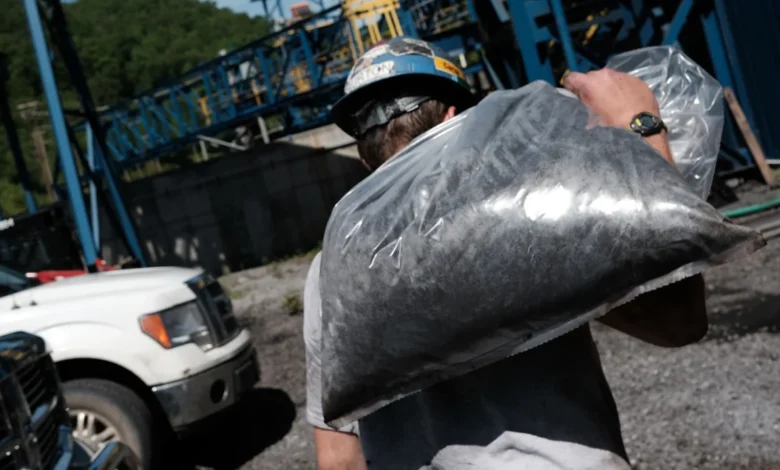
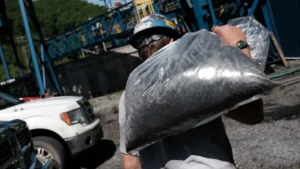
For 38 years, Josh Armes navigated the subterranean passages of West Virginia and Virginia, extracting the coal that fueled the nation’s power grid. Today, the 74-year-old resident of Grundy, Virginia, finds his world confined to the radius of an oxygen tube. Diagnosed with coal workers’ pneumoconiosis (CWP)—commonly known as black lung disease—Armes is a living testament to an occupational health crisis that has reached its most severe levels in nearly half a century. His struggle, however, is not merely biological; it is a protracted legal marathon against the very industry he served.
The federal black lung benefits program, established by the Coal Mine Health and Safety Act of 1969, was intended to serve as a bedrock of support for miners incapacitated by the dust they inhaled underground. Yet, for thousands of miners like Armes, the program has devolved into a labyrinthine, adversarial process defined by years of litigation, denied claims, and financial uncertainty. As rates of the disease climb to levels unseen since the late 1970s, the intersection of regulatory stagnation and aggressive corporate legal strategy has left a vulnerable workforce fighting for their basic right to breathe.
The Anatomy of an Industrial Epidemic
The resurgence of black lung is not a mystery of modern medicine but a consequence of changing mining practices. Contemporary coal seams are thinner, forcing machines to cut through surrounding rock—specifically quartz-rich sandstone—to access the coal. This process releases massive quantities of respirable crystalline silica dust, which is significantly more toxic and faster-acting than coal dust alone.
According to data published in the American Journal of Respiratory and Critical Care Medicine in August 2026, roughly 32.5 percent of veteran underground coal miners in Central Appalachia are suffering from CWP. This statistic marks the highest prevalence rate recorded since 1978. Between 2020 and 2023 alone, more than 1,700 miners succumbed to the disease. The medical reality is grim: once the lungs are scarred by these particulates, the damage is irreversible. It leads to progressive massive fibrosis, where the lungs lose their elasticity, ultimately resulting in respiratory failure.
A Chronology of Bureaucratic and Legal Attrition
The ordeal for families like the Armes’ often begins with a diagnosis and ends in a decade-long courtroom battle. Josh Armes’ case serves as a microcosm of a systemic failure. After decades of labor, he was diagnosed with CWP and successfully secured federal benefits. In 2014, those benefits were contested by a coal operator. For the past twelve years, the family has been trapped in an appeals process, forced to provide exhaustive medical documentation while watching their financial security evaporate.
The broader context of this administrative delay is supported by recent findings from the Government Accountability Office (GAO). In a May 2026 report, the GAO analyzed the effectiveness of the black lung benefits system, revealing that between 2013 and 2024, a staggering 40 percent of all approved Department of Labor claims were disputed by coal operators.
The timeline of a typical contested claim is demoralizing:
- Initial Filing: A miner files for benefits following a medical diagnosis.
- Approval/Contest: If the government approves the claim, the mine operator often initiates an appeal, triggering a multi-year judicial review.
- The "Wait-and-See" Strategy: Evidence from the GAO report indicates that miners perceive these delays as a strategic move by operators to wait for the claimant to pass away or exhaust their financial resources, effectively nullifying the debt.
- The Repayment Trap: In 390 instances between 2013 and 2024, miners who were initially approved for benefits had their decisions reversed on appeal, suddenly becoming responsible for repaying years of received benefits.
The Legislative and Regulatory Stalemate
The regulatory landscape has become increasingly polarized. In April 2024, a landmark federal silica dust rule was passed, designed to implement stricter engineering and ventilation controls to mitigate exposure. However, the enforcement of this rule has faced significant headwinds. In June 2024, Congress blocked funding for the rule’s implementation, and the Mine Safety and Health Administration (MSHA), under the current administration, has signaled a preference for "indefinite delay" pending judicial review.
Critics argue that the government is failing in its mandate to protect workers. Rebecca Shelton, director of policy for the Appalachian Citizens’ Law Center, has been vocal about the implications of these delays. "If the administration actually cared about protecting coal miners from black lung, we’d have a strong silica rule in place right now," Shelton stated. "Instead, they are hiding behind a ridiculous legal process to delay action while miners get sick and die."
The United Mine Workers of America (UMWA) has similarly characterized the current climate as an abandonment of worker safety. Brian Sanson, president of UMWA International, has explicitly stated that corporate profit margins should not take precedence over a human being’s right to draw a breath.
Official Responses and the Burden of Proof
The burden of proof in these cases rests squarely on the shoulders of the disabled miner. As Crystal Armes, Josh’s daughter, notes, the process requires families to fund their own medical testing and secure legal representation, a daunting task for families living on limited or fixed incomes. The legal costs associated with fighting corporate litigation can easily outweigh the benefits being sought, forcing many to abandon their claims entirely.
When questioned about the status of protections, the MSHA provided a formal response via email, stating: "Until pending litigation and limited rulemaking on respirable crystalline silica are resolved, MSHA continues to vigorously enforce the permissible exposure limit of 100 micrograms per cubic meter." Critics, however, point out that this limit is considered outdated by health professionals and is largely insufficient to prevent the rapid onset of modern, silica-driven black lung.
Broader Impact and Future Implications
The implications of this crisis extend beyond the individual families involved. There is a profound social cost to a system that incentivizes the depletion of human health in the pursuit of resource extraction. As coal mining continues to be a central feature of the Appalachian economy, the failure to address the safety of the workforce threatens the long-term sustainability of these communities.
The legislative efforts led by Senators Mark Warner, John Hickenlooper, Tim Kaine, and John Fetterman represent an attempt to bridge the gaps identified by the GAO. Their proposed legislation aims to increase the accessibility of the benefits program and streamline the appeals process, ensuring that the burden of proof does not become an insurmountable barrier to justice.
However, until these systemic changes are enacted, the status quo remains one of attrition. The case of the Armes family is a haunting reminder of the cost of "doing business." For Josh Armes, the fight is not just about the monetary compensation he was promised; it is about the recognition of his service and the validation of his struggle.
"They sent me a paper that said I got first- and second-stage black lung," Armes said, reflecting on his decade-long battle. "That ought to be enough, or do you have to be dead?"
As the nation debates the future of its energy policy, the silence surrounding the health of those who have already sacrificed their lungs in the dark of the earth remains a stark, unresolved ethical failure. Whether through renewed regulatory enforcement or meaningful legislative reform, the path forward for thousands of American miners depends on shifting the scales of justice back toward those who have paid the highest price for the nation’s industrial past.