The Rising Tide of Virginia’s Second District: Climate Change and the Future of Naval Readiness

As early voting concludes this Saturday in Virginia’s second congressional district, the electoral contest between Republican incumbent Jennifer Kiggans and Democratic challenger Elaine Luria has crystallized into a bellwether for the future of both regional governance and national security. With the Cook Political Report recently shifting the district’s status from a "toss up" to "lean Democrat," the stakes extend far beyond partisan control of the House of Representatives. The outcome of this race promises to dictate how the federal government approaches the intersection of climate resilience and the operational integrity of the United States’ most vital military infrastructure.
For over a decade, Virginia’s Hampton Roads region, encompassing Virginia Beach and Norfolk, has served as a primary laboratory for the real-world consequences of sea-level rise. The region suffers from a compounding crisis: as the Atlantic Ocean rises due to global warming, the land beneath the coastal plain is simultaneously subsiding. This geological vulnerability has turned "sunny-day flooding"—tidal inundation occurring in the absence of storm activity—into a routine disruption of civil and military life.
The Strategic Importance of Hampton Roads
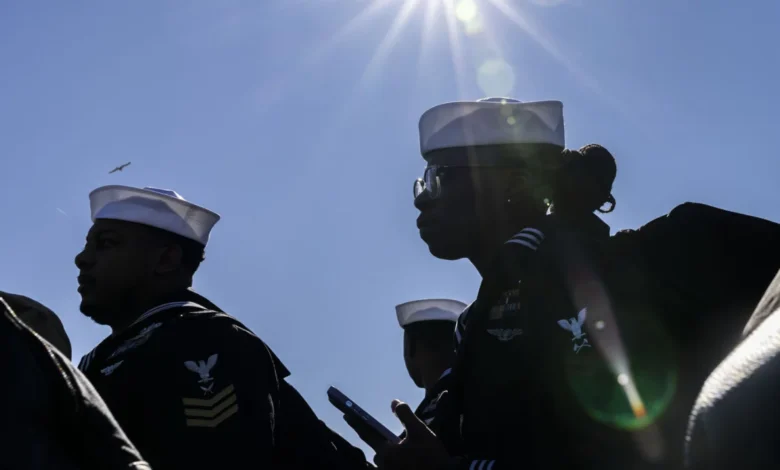
Naval Station Norfolk is not merely a military installation; it is the world’s largest naval base and a linchpin of American maritime power. It serves as the home port for the U.S. Fleet Forces Command and supports the deployment of aircraft carrier strike groups, including the USS Gerald R. Ford. However, the base’s geographic location makes it uniquely susceptible to environmental volatility.
Department of Defense assessments have repeatedly flagged the facility as a "unique example" of how environmental change can undermine national defense capabilities. The potential for flooding to compromise logistics, delay ship maintenance, and impede the transit of personnel presents a significant risk to force readiness. Retired Rear Admiral Jonathan White, former director of the U.S. Navy’s Climate Change Task Force, has been a vocal critic of the current trajectory. "Naval Station Norfolk is probably one of the most at-risk large Navy or military installations when we look at climate change," White noted. "Climate change impacts readiness: the ability to get a job done, to keep ships up and running, and get them to where we want them to be in time. It all makes a difference."
A Political Landscape Defined by Defense and Denial
The political rhetoric in Virginia’s second district is heavily weighted toward defense spending and economic stability, reflecting the interests of a constituency that includes over 88,000 veterans. While traditional campaign issues like the cost of living and geopolitical tensions with Iran often dominate the headlines, climate change has emerged as an underlying current that voters cannot ignore.
According to data from the Yale Climate Opinions Map, 57 percent of adults in the district acknowledge the link between global warming and rising sea levels, while 55 percent recognize its role in exacerbating local flooding. Despite these figures, both major parties have navigated a delicate political dance. The Democratic platform has occasionally been criticized for "climate hushing," a strategy of downplaying environmental rhetoric to avoid alienating moderate or industry-aligned voters. Conversely, the Republican incumbent has faced scrutiny for the broader party’s dismissal of climate change as a "hoax"—a narrative championed at the top of the ticket.
Chronology of Legislative Conflict
The legislative tug-of-war regarding climate resilience in the region has been marked by several key moments over the last two years:
- January 2026: The House passes the FY 2026 appropriations package. Representative Kiggans supports the bill, citing critical investments in military readiness and infrastructure, which she characterizes as essential for the district’s survival.
- January 2026: Following a presidential attempt to pause the Coastal Virginia Offshore Wind (CVOW) project, Representative Kiggans joins a bipartisan letter to Defense Secretary Pete Hegseth and Interior Secretary Doug Burgum, signaling opposition to the administration’s obstruction of renewable energy efforts.
- June 2026: Reports emerge that the federal climate resilience pilot program at Norfolk Naval Base—originally established in 2023—has stalled. The pause is widely attributed to the administration’s broader efforts to scrub climate-related terminology from federal agencies.
- August 2026: Following the primary elections, Elaine Luria reaffirms her commitment to protecting the Chesapeake Bay and Hampton Roads, specifically citing the economic risks of failing to address climate-induced infrastructure damage.
Official Responses and Administrative Friction
The official stance of the Department of Defense regarding climate change has shifted significantly under the current administration. Secretary of Defense Pete Hegseth has been blunt in his public opposition to environmental integration in military planning, famously stating that the "war machine does not do climate change crap." This ideological shift has filtered down to the operational level.
"Everything is being shelved," says Admiral White regarding the current state of resilience planning. "I’ve become totally frustrated. The United States is just falling farther and farther behind. If we don’t have strong leadership in the White House and Congress to push these issues forward, it really impacts our national and global security."
Conversely, the Navy maintains a position of procedural readiness. In an anonymous statement provided to investigators, a Navy official noted, "As a coastal installation, Naval Station Norfolk routinely plans and prepares for flooding, severe weather and other environmental conditions that may affect installation operations. The installation incorporates these considerations into infrastructure planning, emergency preparedness and operational procedures to minimize disruptions."
The Human Cost of Infrastructure Failure
The implications of these policy debates extend beyond the gates of the naval base. Quentin Scott, Federal Policy Director at the Chesapeake Climate Action Network (CCAN), points out that the base is the economic heart of the region. When the base is compromised, the entire regional workforce—from truck drivers to skilled welders—suffers.
"Flooding is overwhelming our systems here," Scott says. "People are driving boats through the middle of the neighborhood. There’s a ‘No Wake Zone’ sign in the middle of a school playground. These are the everyday experiences that people are adapting to."
The political irony is that while candidates often seek to project a "tough on national security" stance, the physical degradation of the region poses an existential threat to that very security. Whether a candidate votes to preserve clean energy tax credits—as Kiggans initially supported before later voting to repeal them in 2026—becomes a litmus test for their reliability. Scott describes the 2026 vote to gut those credits as a "stab in the back" for a district that desperately needs renewable investment to bolster its aging infrastructure.
Analysis: The Intersection of Data and Democracy
The political strategy in the second district highlights a disconnect between voter reality and national platform messaging. While political analysts might label the district a "lean Democrat" or "toss up" based on traditional metrics, the local electorate is driven by two specific, tangible factors: the influx of data center development and the relentless rise of local flooding.
Data centers, which require massive amounts of power and cooling, are tied to the energy infrastructure debates occurring in the district. Flooding, meanwhile, is the physical reality that threatens property values and public safety. Because both issues are inextricably linked to climate change, voters are increasingly viewing their congressional representatives through the lens of their environmental adaptability.
As the ballots are counted this week, the winner will inherit a district in crisis. The challenge will be to balance the ideological mandates of their party with the immediate, non-partisan necessity of protecting the nation’s primary naval asset from the encroaching Atlantic. If the next representative follows the path of current congressional deadlock, the region faces the potential for continued economic decline and a degradation of national defense readiness. If they choose to champion long-term infrastructure resilience, they may set a new standard for how the United States approaches the existential threat of a changing planet.
For the voters of Virginia’s second district, this election is not merely about party loyalty; it is a referendum on whether the federal government will acknowledge the rising tides that threaten their homes, their jobs, and the security of the nation. As Admiral White aptly summarized, "The people who believe that healthcare, vaccines, and medicine are important to our society, also believe that climate change is important." Whether that sentiment will translate into a decisive mandate at the ballot box remains to be seen.
Related posts: