The Climate Crisis is Transforming the American Dream from a Path to Prosperity into a Financial Liability

For generations, the American Dream was etched into the national psyche with the image of a detached single-family home, a white picket fence, and a secure financial future built on rising real estate equity. This vision of stability served as the primary vehicle for middle-class wealth creation, intended to fund everything from university tuitions to retirement. However, as the frequency and severity of climate-driven disasters accelerate, this foundational pillar of American life is undergoing a profound and potentially permanent transformation. The promise of homeownership is increasingly being supplanted by the reality of escalating insurance premiums, uninsurable property risks, and the looming threat of catastrophic loss.
Sierra Isley, a 26-year-old resident of Asheville, North Carolina, once viewed the prospect of purchasing her first home as the ultimate milestone of adulthood. Like many in her generation, she saw the suburban ideal as the natural progression of a successful life. Two years ago, Isley and her partner, Jamie, identified a three-bedroom brick home in Asheville, a city frequently touted as a climate refuge due to its elevation and perceived safety from the extreme weather plaguing coastal regions. After securing financing and preparing to close, a last-minute legal discovery of a significant lien on the property forced them to abandon the deal.
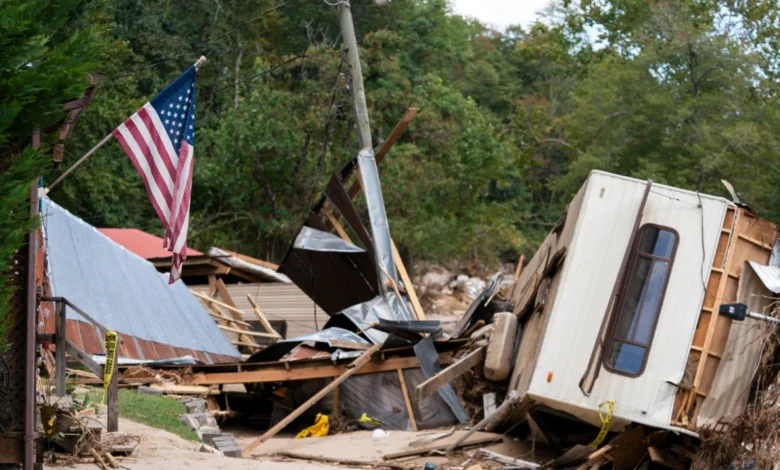
That setback proved to be a pivotal moment. Shortly after the couple transitioned into a rental, the remnants of Hurricane Helene tore through western North Carolina. While their rental unit suffered basement flooding, they escaped the total destruction that leveled homes in their immediate vicinity. The event fundamentally altered their perspective on property ownership. Today, Isley views the real estate market through a lens of risk mitigation, acknowledging that her pursuit of the American Dream has shifted from a goal of acquisition to a struggle for long-term security.
The Erosion of Value: A Trillion-Dollar Crisis
The financial implications of a changing climate are no longer theoretical; they are currently being priced into the national housing market. A landmark study by the research firm First Street, titled Property Prices in Peril, estimates that climate-related risks could strip nearly $1.5 trillion from the value of American residential properties by 2055. This devaluation is not limited to flood zones; it is beginning to permeate regions previously considered "safe."

The mechanism of this decline is complex. When homeowners can no longer secure affordable insurance, the property becomes functionally unmarketable. Furthermore, as municipal infrastructure is taxed by repeated disaster recovery efforts, property taxes often rise, creating a "double-squeeze" on homeowners. Research published in the journal Nature Climate Change indicates that homes within high-risk flood zones are already selling at a discount compared to similar, non-exposed properties. However, this adjustment is lagging behind the physical reality of environmental degradation, suggesting that the housing market remains significantly overvalued in many vulnerable regions of the United States.
Chronology of a Changing Landscape
The shift in the housing market did not happen overnight. The following timeline illustrates the intersection of climate events and the decline of the traditional homeownership model:
- 2012: Superstorm Sandy strikes the New York and New Jersey coasts, serving as a wake-up call for the insurance industry regarding the scale of potential losses in high-density, climate-vulnerable urban corridors.
- 2020: Property insurance costs begin an unprecedented climb, rising nearly 80 percent nationwide over the next six years as insurers adjust to a new baseline of catastrophic losses.
- 2024: Hurricane Helene delivers a devastating blow to western North Carolina, an area previously marketed as a climate-resilient sanctuary. The storm causes $9.5 billion in uninsured residential property losses.
- 2025–2026: Markets in regions like Appalachia, the Midwest, and the Pacific Northwest begin to show structural declines in home value growth compared to national averages, as the "climate risk" factor becomes a permanent line item in real estate assessments.
The Insurance Safety Net Fails
Insurance has historically served as the bedrock of the mortgage system. Without it, the modern mortgage industry would collapse, as lenders require coverage to protect their assets. However, as Douglas Heller, director of insurance at the Consumer Federation of America, points out, the market is currently approaching a state of dysfunction. Insurers, facing massive payouts from hurricanes, wildfires, and convective storms, are increasingly limiting their exposure.
In states like California, where wildfire risks have reached unprecedented levels, thousands of homeowners have been dropped by their providers, forcing them into state-backed "insurers of last resort." These policies are often prohibitively expensive and offer significantly lower coverage limits. This trend is not confined to the coasts. The Midwest is currently seeing the fastest growth in home insurance premiums, driven by an uptick in severe wind and hail events. The result is a fractured market where housing affordability is dictated more by geography and environmental modeling than by traditional economic factors like interest rates or local employment growth.
The Psychological Shift in Generations
The changing nature of the American Dream is also a generational issue. Polling data from Ipsos highlights a widening gap between older and younger Americans regarding the necessity of homeownership. While approximately 46 percent of baby boomers view owning a home as an essential component of the American Dream, only 13 percent of Gen Z respondents share that view.

This shift is not merely a preference; it is a pragmatic reaction to a landscape where the "ownership" of a home may carry more liability than equity. Sociologist Rebecca Elliott of the London School of Economics has noted that for many, the dream of homeownership is increasingly becoming a nightmare of debt. When a house is no longer an appreciating asset, but a target for the next flood or fire, the motivation to invest one’s life savings into that asset diminishes significantly.
A Call for Reimagining Security
As the impacts of climate change continue to reshape the economy, the conversation among policymakers and civil society is shifting from "how to protect the property" to "how to protect the person." Some experts argue that the focus on individual homeownership as the sole vehicle for wealth must be supplemented by more robust, community-level infrastructure and social safety nets.
In the aftermath of Hurricane Helene, communities in Asheville exhibited a degree of social cohesion that transcended property lines. Survivors reported that the experience of the disaster, while traumatic, fostered a deep sense of mutual reliance that the atomized, suburban-focused American Dream often overlooks. Some residents, such as those who lived through the 2018 Woolsey Fire in California, have begun organizing volunteer fire brigades and community-led emergency response teams, effectively taking the responsibility for safety into their own hands when institutional support proved insufficient.
For individuals like Sierra Isley, the response to this crisis is a pivot toward public service. Isley is currently pursuing a master’s degree in public health, motivated by the desire to help other rural communities navigate the realities of climate-driven disasters. Her journey reflects a broader, emerging sentiment: that the future of the American Dream may lie not in the individual accumulation of private property, but in the collective resilience and preparedness of the communities we call home.
The era of the "oil-soaked" American Dream, which prioritized individual consumption and ignored the environmental costs of that lifestyle, is clearly reaching its limits. Whether through policy reform, a total restructuring of the insurance market, or a societal shift toward communal security, the United States is being forced to reconcile its most cherished cultural myth with the unforgiving physics of a warming planet. The dream is not dead, but its definition is being rewritten by the very disasters it helped create.
Related posts: