Thomas Frank has emerged as a leading candidate to take over as Crystal Palace manager if the Eagles decide to sack Pierre Sage.

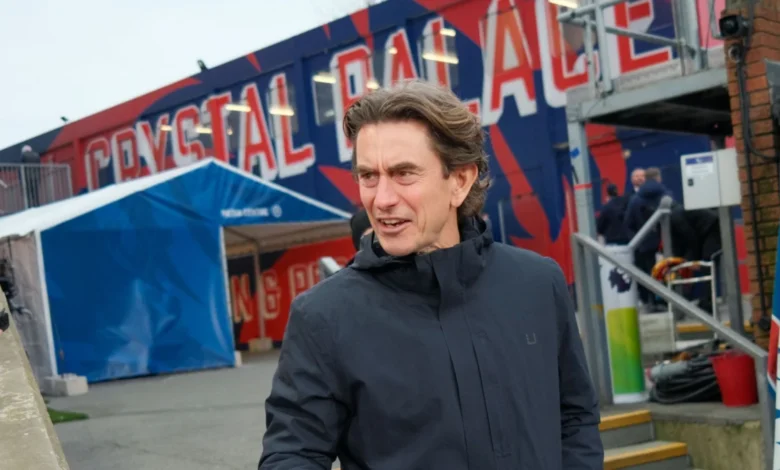
The pressure mounting at Selhurst Park has reached a critical juncture following the club’s recent 3-1 defeat to Liverpool, a result that marked the seventh league loss of the campaign for the South London outfit. While the Crystal Palace board has yet to issue a formal statement regarding the immediate future of Pierre Sage, internal discussions are understood to be underway, with the club evaluating its options as they attempt to arrest a slide that has left the team languishing in an precarious position in the Premier League table.
Thomas Frank, the highly regarded former Brentford manager, has been identified as a primary target. His tactical acumen and proven ability to stabilize and elevate clubs within the top flight made him a candidate of interest for Palace during the summer recruitment cycle, and his availability now makes him a logical frontrunner should the club hierarchy decide to part ways with Sage.
A Chronology of Decline
The tenure of Pierre Sage at Crystal Palace has been characterized by a disjointed start that has failed to translate promising phases of play into tangible results. Since taking the helm, Sage has struggled to implement a consistent system that can withstand the rigors of the Premier League. The current campaign, which saw the club enter with aspirations of building upon their established status as a mid-table fixture, has instead turned into a survival struggle.
The recent match against Liverpool served as a microcosm of the season thus far. Despite a performance that saw Palace create numerous scoring opportunities—leading some analysts to argue it was their best display of the season—the lack of clinical efficiency resulted in a decisive defeat. This defeat was not an isolated incident but rather the latest in a series of setbacks. Consecutive losses against bottom-half rivals and a failure to secure points from winnable home fixtures have created a toxic atmosphere at Selhurst Park.
As of this week, the club has failed to secure a victory in four of their last five outings, a statistic that has significantly eroded the patience of both the ownership group and the fanbase. The timeline of this downturn began in the opening month, where a lack of cohesion in the defensive third allowed opponents to exploit space on the transition—a flaw that remained unaddressed throughout the first quarter of the season.
Analytical Overview: The Performance Gap
From a statistical perspective, Crystal Palace’s predicament is rooted in a significant disparity between their expected goals (xG) and their actual conversion rate. While the team has consistently outperformed their opposition in terms of shots on target and ball possession in the final third, their inability to capitalize on these metrics has been their undoing.
Against Liverpool, the visitors’ goalkeeper was forced into multiple world-class saves, a reality that speaks to the "what-if" nature of Sage’s tactical setup. However, the Premier League is a results-driven environment, and the data shows that Palace is currently conceding at a rate that is unsustainable for a club looking to remain competitive. Their defensive structure, particularly when defending set-pieces, has been exposed repeatedly, with the team allowing more high-value chances per game than at any point in their previous three seasons.
Industry analysts note that Palace, having enjoyed 14 consecutive seasons in the top flight, is facing an identity crisis. The current squad is arguably the most talented in years, yet they are performing at a level beneath their collective potential. This discrepancy is often the primary driver for board-level intervention, as ownership groups become increasingly risk-averse regarding the financial implications of relegation.
Perspectives from the Press Box
Jamie Carragher, providing analysis for Sky Sports, captured the prevailing sentiment surrounding the potential managerial change. Reflecting on the Liverpool match, Carragher noted the inherent danger of relying on "good performances" as a metric for long-term success when the points column remains stagnant.
"I think that would have been one of the best Crystal Palace performances this season," Carragher remarked. "Liverpool won 3-1 away from home but their goalkeeper was their best player. That tells you how well Palace did. But I don’t think you can hang your hat on the performance, especially with a new guy into the Premier League. He’s really struggled so far. I don’t think you can take the risk as an owner when you think of the finances involved."
Carragher’s assessment reflects the cold reality of modern football management: when a manager is unable to convert performance into points, the boardroom must act. The consensus among pundits is that Crystal Palace will likely appoint a successor to Sage before their next Premier League fixture, seeking a manager who can provide immediate tactical discipline and a more pragmatic approach to league games.
The Managerial Response: Sage’s Defense
In the immediate aftermath of the Liverpool fixture, Pierre Sage remained defiant, emphasizing the lack of "rewards" for his team’s efforts. His post-match comments highlighted a frustration with the team’s efficiency rather than their structural intent.
"I always say the same thing about what we deserve and what we have," Sage told Sky Sports. "We start really well, we create a lot of chances but without scoring and taking this goal after a set-piece with the consequence of transition, it’s really difficult against Liverpool because they have a lot of speed and are really efficient in transition. That’s why we suffered more in the second half. We tried to make it 1-1 but we left too much space and they took it."
Sage acknowledged that the responsibility ultimately rests with him, admitting that if the team creates chances but cannot convert, the end result is effectively nullified. Despite his defense of the team’s work rate, he expressed a clear awareness that the current trajectory is insufficient for the demands of the club.
Broader Implications and Future Outlook
The potential appointment of Thomas Frank would represent a shift toward a manager who has already proven he can punch above his weight in the Premier League. Frank’s success at Brentford was predicated on data-driven recruitment and a clear, unwavering tactical philosophy that prioritized defensive stability and high-intensity counter-pressing.
Should Palace proceed with this change, the implications for the club are significant. A new manager will need to address the psychological fragility of a squad that has become accustomed to losing despite competitive performances. Furthermore, the club’s hierarchy must consider the January transfer window, where a new manager will likely require immediate financial backing to bring in personnel that align with his specific tactical requirements.
The pressure on the board is palpable. The decision to retain or replace a manager is never taken lightly, particularly given the disruption it causes to squad morale. However, the looming threat of a relegation battle often forces the hand of owners who fear the economic impact of dropping into the Championship.
As the club prepares for its next match, the uncertainty surrounding the manager’s office remains the dominant narrative. Whether the board chooses to grant Sage one final opportunity to prove his worth or decides to initiate a clean break to allow a successor time to implement a new vision, the days ahead will be pivotal. Crystal Palace stands at a crossroads, and the decisions made in the coming 72 hours could define the remainder of their season. The fans, having endured a turbulent start, are waiting for a signal that the club’s leadership is committed to securing their status as a top-flight force.