The Perils of Algorithmic Advice: How AI Chatbots Are Leading Unprepared Hikers Into Dangerous Backcountry Situations

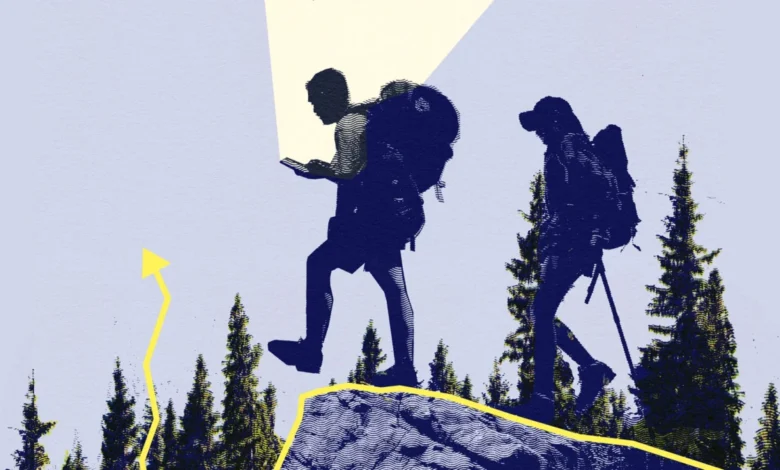
The rise of generative artificial intelligence has fundamentally altered how modern travelers plan their excursions, but this technological convenience is increasingly clashing with the unforgiving realities of the wilderness. From the jagged peaks of Mount Shasta in Northern California to the sprawling, high-altitude terrain of the Grand Teton National Park, search and rescue (SAR) teams are reporting a troubling trend: hikers are venturing into high-risk environments armed with itinerary advice generated by chatbots that prioritize conversational flow over topographical accuracy or seasonal safety data.
This shift in trip-planning behavior has sparked a debate among wilderness experts, technologists, and public land managers. As AI models become the primary search interface for millions of users, the traditional reliance on topographic maps, expert-led guidebooks, and ranger stations is being superseded by the instant, persuasive—and sometimes dangerously incorrect—output of large language models (LLMs).
A Cascade of Errors on Mount Shasta
The risks of algorithmic reliance were starkly illustrated in a recent incident on Mount Shasta. A group of three hikers, all in their early twenties, set out to summit the mountain with a plan derived from Google’s Gemini chatbot. Their lack of preparation was not for a lack of effort; rather, it was a failure of the tool they trusted.
According to reports from the U.S. Forest Service’s Mount Shasta Wilderness Climbing and Avalanche Center, the hikers failed to carry sufficient supplies, misjudged their own physical endurance, and ignored critical timing markers. Because the AI had provided an overly optimistic itinerary, the hikers pushed forward long after they should have turned back. They reached the summit at 7:30 p.m., forcing a treacherous descent in near-total darkness. By the following morning, they were disoriented in a rugged, technical section of the mountain, and one member of the party had sustained a significant knee injury.
Nick Meyers, a program manager at the center, noted that while the group had technically "researched" their trip, they had effectively outsourced their judgment to an algorithm. "We get plenty of people who come unprepared or don’t do any research at all," Meyers said. "To these guys’ credit, they did try. But I think they kind of turned their brains off."
The Pattern of Cognitive Surrender
The Mount Shasta incident is far from an outlier. Reports from national parks and wilderness areas suggest that AI-generated guidance is becoming a common, if problematic, feature of outdoor recreation. In one instance, a visitor to Mount Shasta ignored clearly posted "No Camping" signage, citing an AI chatbot’s assurance that the site was permissible. In other cases, search teams have encountered hikers utilizing AI-generated maps that erroneously depicted natural landmarks, such as canyons and ridges, on the wrong side of the mountain.
Perhaps the most high-profile incident occurred in British Columbia, where a 16-year-old hiker had to be rescued by helicopter from a dangerous ledge on Crown Mountain. The teenager had used Anthropic’s Claude to assist in his planning. While subsequent investigations revealed the hiker also cross-referenced his plans with Google Maps and the crowd-sourced app AllTrails, the incident served as a bellwether for the broader issue of digital reliance in the backcountry.
Chris Flathmann, a professor of human-centered computing at Clemson University, describes this behavior as "cognitive surrender." According to Flathmann, when individuals interact with AI systems, they often fall into a trap where they stop exercising critical thinking because the system presents information with a high degree of confidence. "When humans work with AI systems, they can get so deep into it they give up thinking critically for themselves," Flathmann said. "When the AI pretends to be an expert on a topic you don’t know, you can’t challenge the validity of the statement because you don’t have the expertise to recognize the error."
The Mechanics of Algorithmic Hallucination
The danger inherent in using tools like ChatGPT or Gemini for wilderness planning lies in the technical architecture of these models. Unlike a static map or a peer-reviewed guidebook, LLMs are designed to generate text that is statistically likely to follow a user’s prompt. They do not "know" the trail conditions; they scrape information from a vast, unfiltered corpus of data, which includes Reddit threads, outdated travel blogs, YouTube captions, and potentially fabricated content.
If a user asks an AI to "plan a hike that is easy for beginners" in an area known for dangerous, fluctuating weather, the chatbot may aggregate outdated or anecdotal advice that makes a difficult hike appear accessible. Because these systems are optimized to be helpful and encouraging, they rarely include the necessary disclaimers about the user’s personal risk profile or the specific, current hazards of the environment.
Statistical Context and Search and Rescue Trends
While the influx of AI-guided hikers is significant, the long-term impact on search and rescue statistics remains a subject of ongoing study. Data from Grand Teton National Park indicates a rapid adoption rate; Superintendent Chip Jenkins reported that the percentage of visitors citing AI as a primary source for travel information jumped from near zero to 26 percent within a single year.
However, a rise in usage does not automatically correlate to a spike in total rescues. For instance, search and rescue calls in Wyoming have actually decreased in 2026 compared to the previous two years. In 2024, there were 377 recorded calls, rising to 466 in 2025, but dropping to 312 by late 2026. Experts suggest that these fluctuations are often tied to weather patterns, economic conditions, and the total volume of park visitors, rather than a single technological variable.
Nonetheless, veterans of the search and rescue community warn that we are witnessing the latest iteration of a recurring problem. Two decades ago, the rise of Google Maps and portable GPS units led to a wave of hikers getting lost when their batteries died or their signals failed. A decade ago, the "Instagram effect"—where users flocked to dangerous locations for the perfect photo—drove a similar surge in preventable accidents. AI represents a more sophisticated, and therefore potentially more deceptive, iteration of these risks.
The Institutional Response
Public land agencies are currently evaluating how to address the "AI-driven hiker" phenomenon. For now, the consensus among rangers and safety experts is a return to foundational principles of backcountry preparedness.
- Verification is Mandatory: Information obtained from any digital source, especially generative AI, must be cross-referenced with official, up-to-date sources such as government-issued topographic maps, National Park Service websites, and trail association updates.
- Expert Consultation: When in doubt, the most reliable information comes from those with boots on the ground. Park rangers and local guides possess contextual knowledge—such as current snowpack, wildlife activity, and trail degradation—that AI models simply cannot replicate.
- Self-Reliance: The primary danger is not the technology itself, but the tendency to view the technology as a substitute for experience. The "Ten Essentials" of hiking—which include navigation tools, sun protection, insulation, lighting, and first aid—remain non-negotiable, regardless of how "intelligent" a smartphone app may appear.
As Jim Moss, a Colorado-based recreation attorney and search and rescue volunteer, notes, the media-driven push to increase outdoor participation has been successful, but it has outpaced the development of a culture of wilderness literacy. "If you’re going to go into places that will kill you," said Meyers of the Mount Shasta center, "you’d best double-check your information."
Ultimately, the integration of AI into outdoor planning appears to be an irreversible trend. As the technology improves, it may eventually offer more reliable, real-time safety data. Until that day, however, the consensus remains clear: the mountain is not a simulation, and the consequences of a "hallucinated" route are entirely real. Hikers must treat AI as a conversational assistant rather than a definitive authority, ensuring that the final decision to step onto the trail is based on reality, not just the confident output of a computer program.