Kawasaki Revives Personal Watercraft Dominance with the 310-Horsepower 2027 Jet Ski STX Lineup and Classic Stand-Up Models

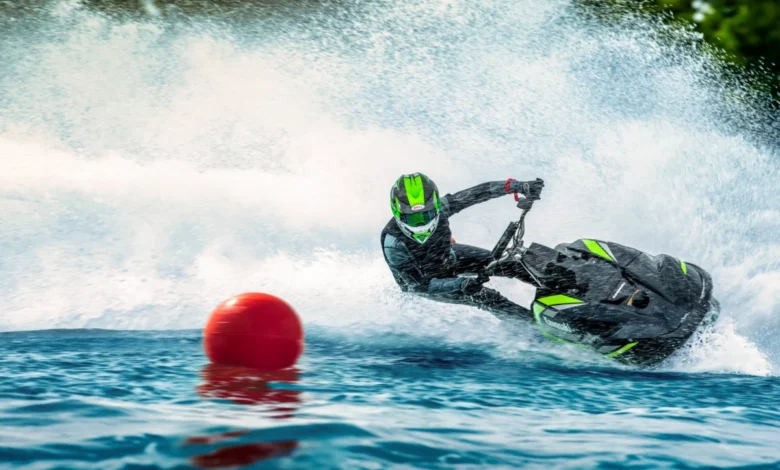
The intersection of automotive muscle-car philosophy and personal watercraft engineering has officially arrived for the 2027 model year. Kawasaki Motors, a pioneer in the personal watercraft (PWC) sector, has boldly re-engineered its product strategy by transplanting its most potent powerplant into its most agile chassis. This mechanical pairing mirrors the legendary automotive playbook of 1964, when then-Pontiac division president John Z. Delorean cemented automotive history by dropping a massive full-size V8 engine into an intermediate chassis to birth the Pontiac GTO.
For 2027, Kawasaki is deploying an identical strategy on the water. By housing its ferocious 310-horsepower, supercharged 1.5-liter engine inside the nimble Jet Ski STX sit-down hull, the manufacturer has created its fastest, most responsive production watercraft to date. This high-performance rollout headlines a broader, five-model 2027 lineup designed to reclaim market share and reignite consumer enthusiasm for a brand that established the industry over half a century ago.
A Historical Chronology of Personal Watercraft Evolution
To understand the magnitude of Kawasaki’s 2027 engineering shift, it is necessary to examine the timeline of the personal watercraft industry, which Kawasaki essentially created in 1973 with the launch of the JS400. Powered by a modest, smoky 400cc two-stroke engine producing just 27 horsepower, the original Jet Ski was an iconic stand-up model. While it offered razor-sharp handling and unmatched athletic engagement, it presented a steep learning curve. Novice riders faced a grueling initiation characterized by repeated falls as they attempted to master the delicate balance required to pilot a stand-up machine.
As consumer preferences shifted toward stability and accessibility, the market demanded a change. The introduction of sit-down watercraft solved the stability equation, allowing casual riders to enjoy the water without the exhaustion of a stand-up platform. Over time, this convenience captured the vast majority of consumer demand, prompting Kawasaki to phase out its stand-up models entirely by the late 2010s, save for brief, limited production runs.
Technological advancements mirrored those in the automotive sector. During the 1990s, environmental regulations and a desire for reliability pushed the industry away from two-stroke engines and toward cleaner four-stroke powerplants. In 1999, Kawasaki introduced a 1.5-liter four-stroke engine derived from its high-performance sport motorcycles, initially producing 150 horsepower. By 2007, engineers pushed the envelope further by bolting a supercharger to the platform, elevating output to 250 horsepower.
The current apex of this engineering trajectory arrives with Eaton’s Twin Vortices System (TVS) supercharger technology—a forced-induction system popularized by high-performance automotive applications such as the Chevrolet Corvette ZR1. Integrated into the Jet Ski STX platform, this advanced supercharger helps generate a staggering 310 horsepower, propelling the watercraft to top speeds of 65 mph.
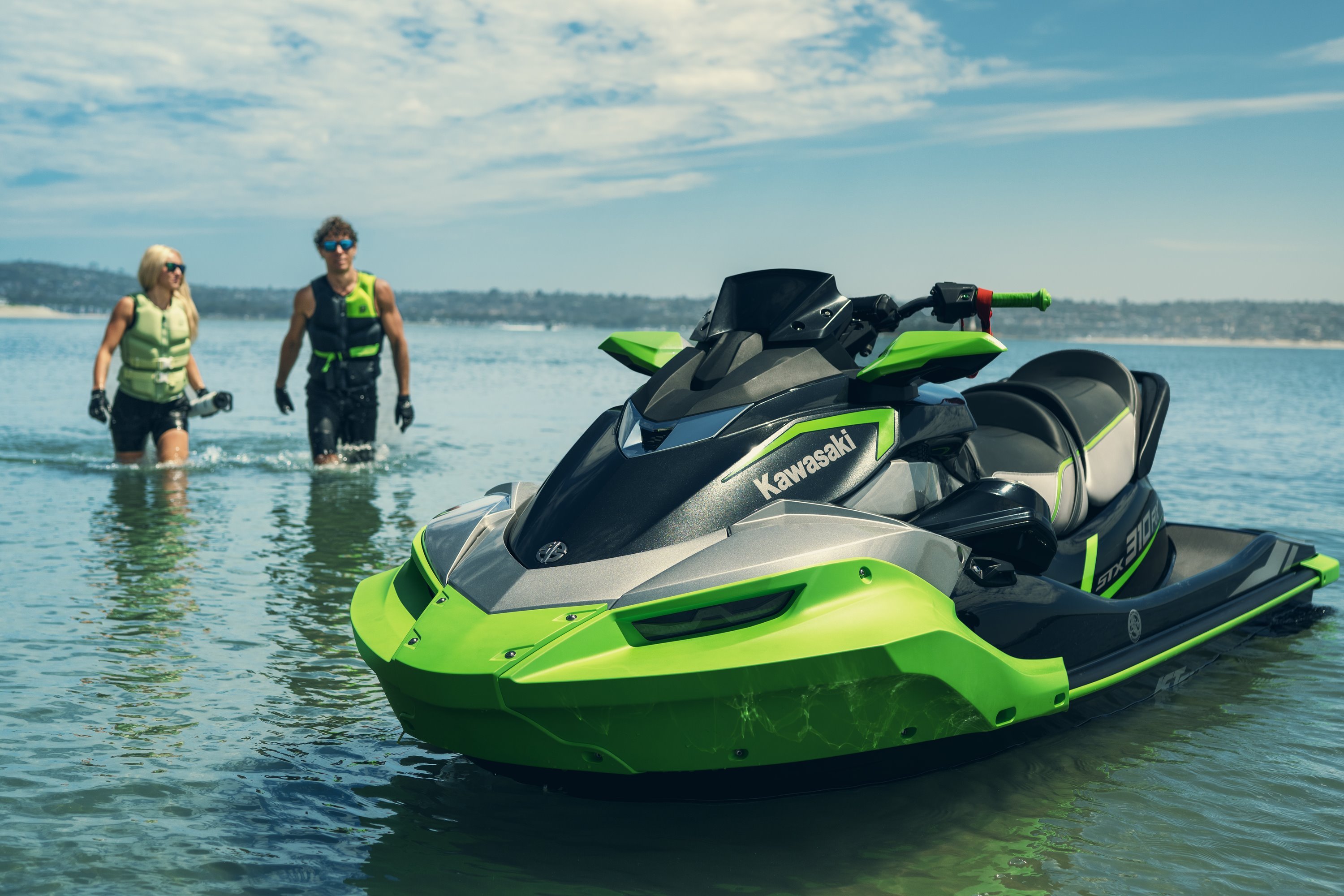
Engineering the 2027 STX 310: Performance and Drivetrain Specifications
The flagship of Kawasaki’s new strategy is the STX 310 series, which includes the top-tier STX 310RX priced at $20,199, and its mechanically identical sibling, the STX 310R, retailing for $18,799.
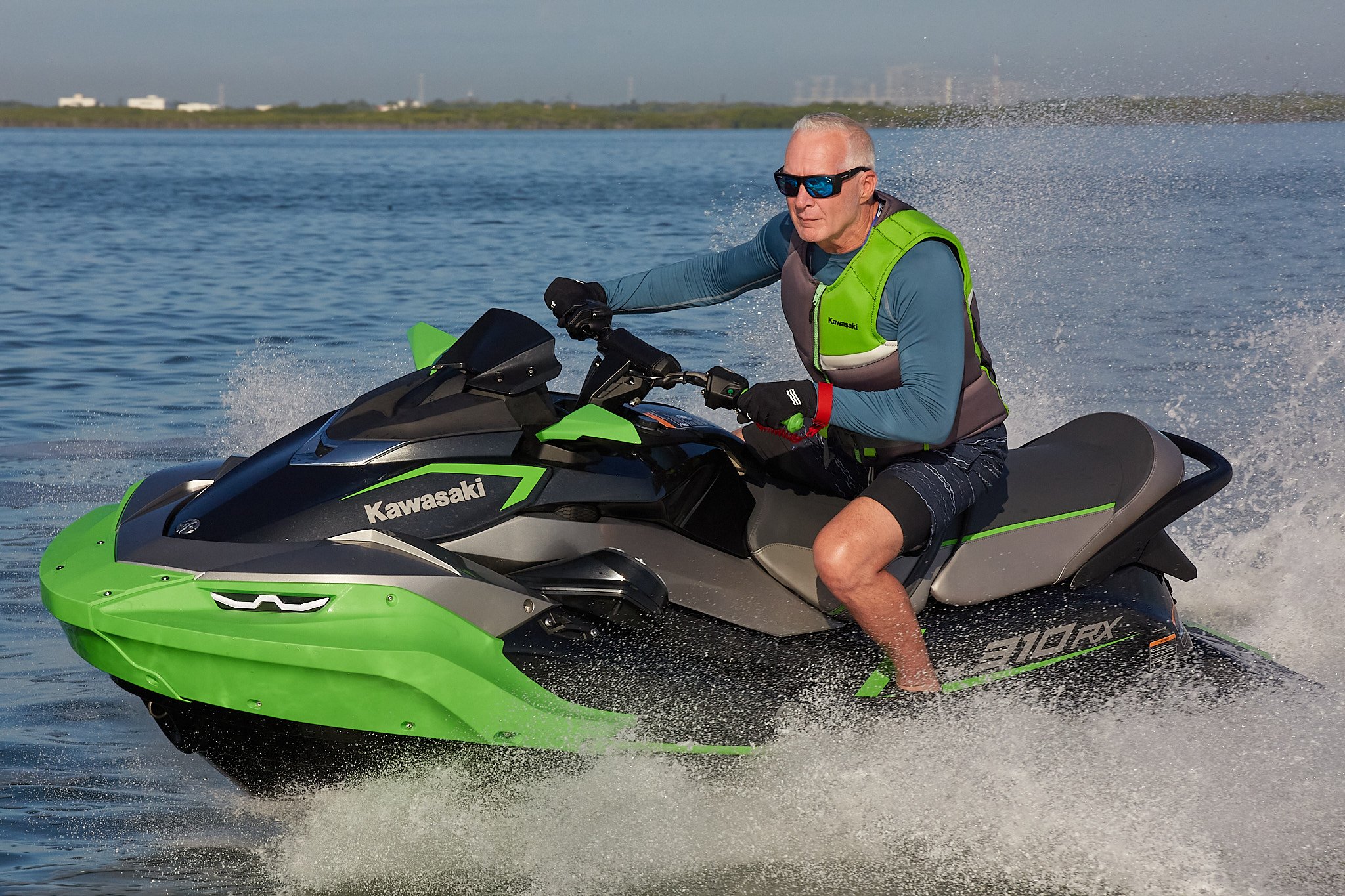
Achieving 310 horsepower in a watercraft requires meticulous management of airflow, exhaust backpressure, and hydrodynamic thrust. The STX 310 drivetrain relies on a sophisticated 4-into-2-into-1 exhaust system outfitted with dual water mufflers. This layout minimizes backpressure to optimize volumetric efficiency and maximize power delivery. Thrust is managed by a 160-millimeter jet pump featuring a three-blade impeller, with blade angles specifically optimized for instantaneous acceleration and sustained high-speed thrust.
Modern electronics play a pivotal role in harnessing this power safely and efficiently. Borrowing concepts from contemporary automotive and motorcycle industries, Kawasaki has integrated four distinct power modes into the STX 310RX:
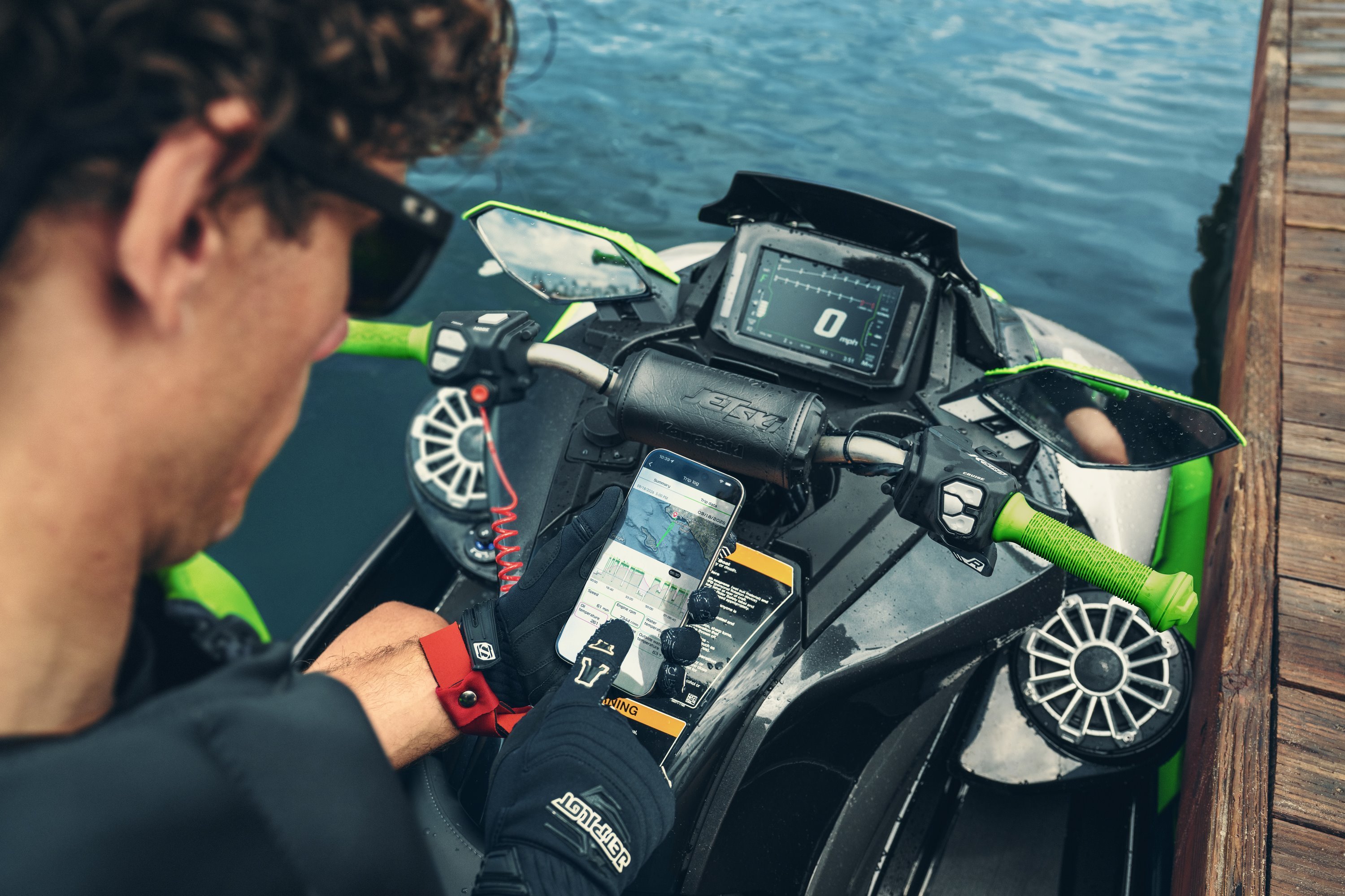
- Full Power Operation (FPO): Unleashes the complete 310-horsepower capability with razor-sharp throttle response.
- Middle Power Operation (MPO): Caps peak power at 80 percent, offering a balanced, high-performance experience suitable for learning the craft’s limits.
- Lower Power Operation (LPO): Further subdues throttle sensitivity and restricts maximum power output to 60 percent.
- Smart Learning Operation (SLO): Accessible exclusively via a designated yellow key, this mode is engineered for absolute beginners, severely limiting top speed and acceleration.
In addition to power modes, the STX 310RX features advanced rider aids such as Launch Control, which automatically adjusts the jet pump’s trim during acceleration runs to compensate for the changing attitude of the hull as it planes. A one-touch 5-mph cruise control system simplifies navigation through strictly enforced no-wake zones. Furthermore, the watercraft includes a comprehensive 7-inch digital display panel presenting real-time telemetry, including speed, RPM, boost pressure, fuel levels, trim settings, and a digital compass, alongside a rear-facing camera system designed to monitor towed skiers or tubers.
Hull Dynamics and Hydrodynamic Innovation
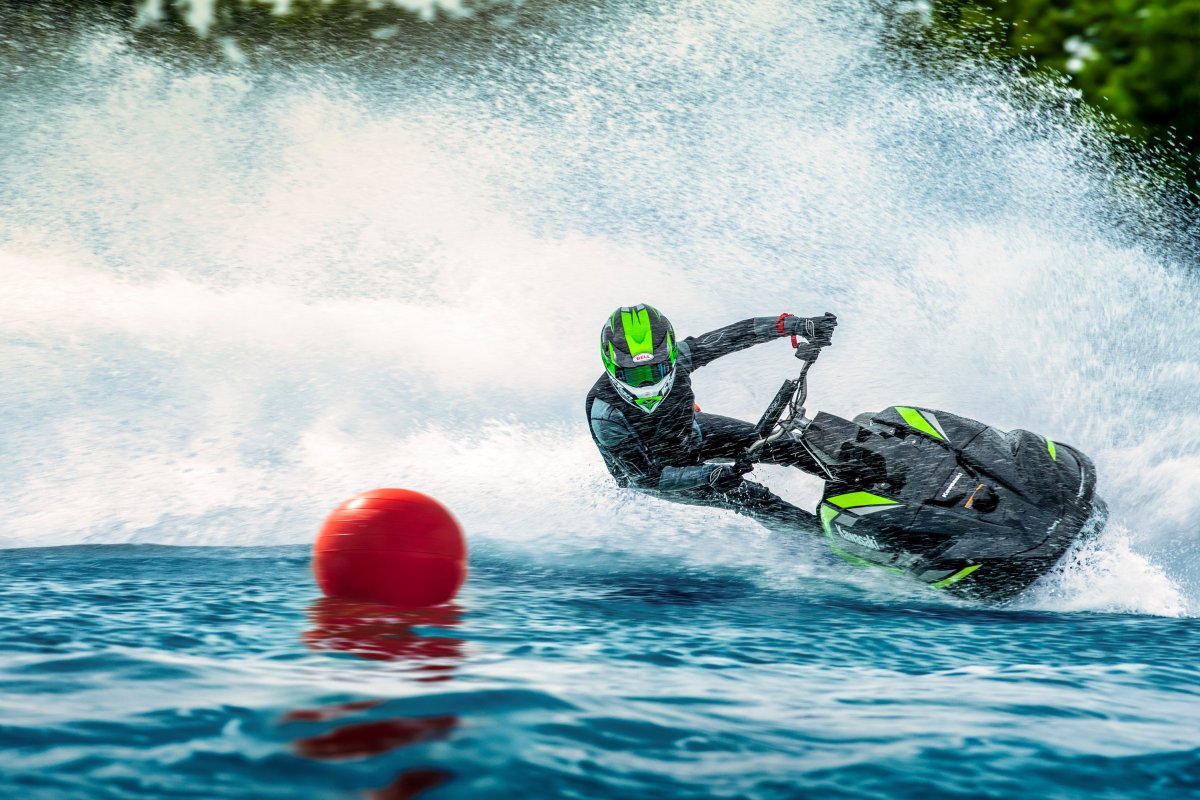
Power is meaningless without control, and the STX hull has been specifically optimized for aggressive cornering. Traditional watercraft can suffer from unexpected deceleration or "hooking" during hard turns, which can eject riders. The STX hull geometry allows riders to carve sharp turns with high confidence and minimal risk of mid-corner disruption.
A notable practical innovation on the STX 310 is its advanced thrust-reverser mechanism. Because personal watercraft do not utilize conventional rudders, steering typically relies entirely on directional water thrust generated by the jet pump. Cutting the throttle or shifting to neutral on older models meant losing steering control entirely. Kawasaki’s thrust-reverser system simultaneously neutralizes forward momentum while retaining a degree of directional steering capability, while also providing a reliable reverse function for docking and maneuvering in tight spaces.
The Return of the Stand-Up Jet Ski: SX-R 160 and SX-X 160
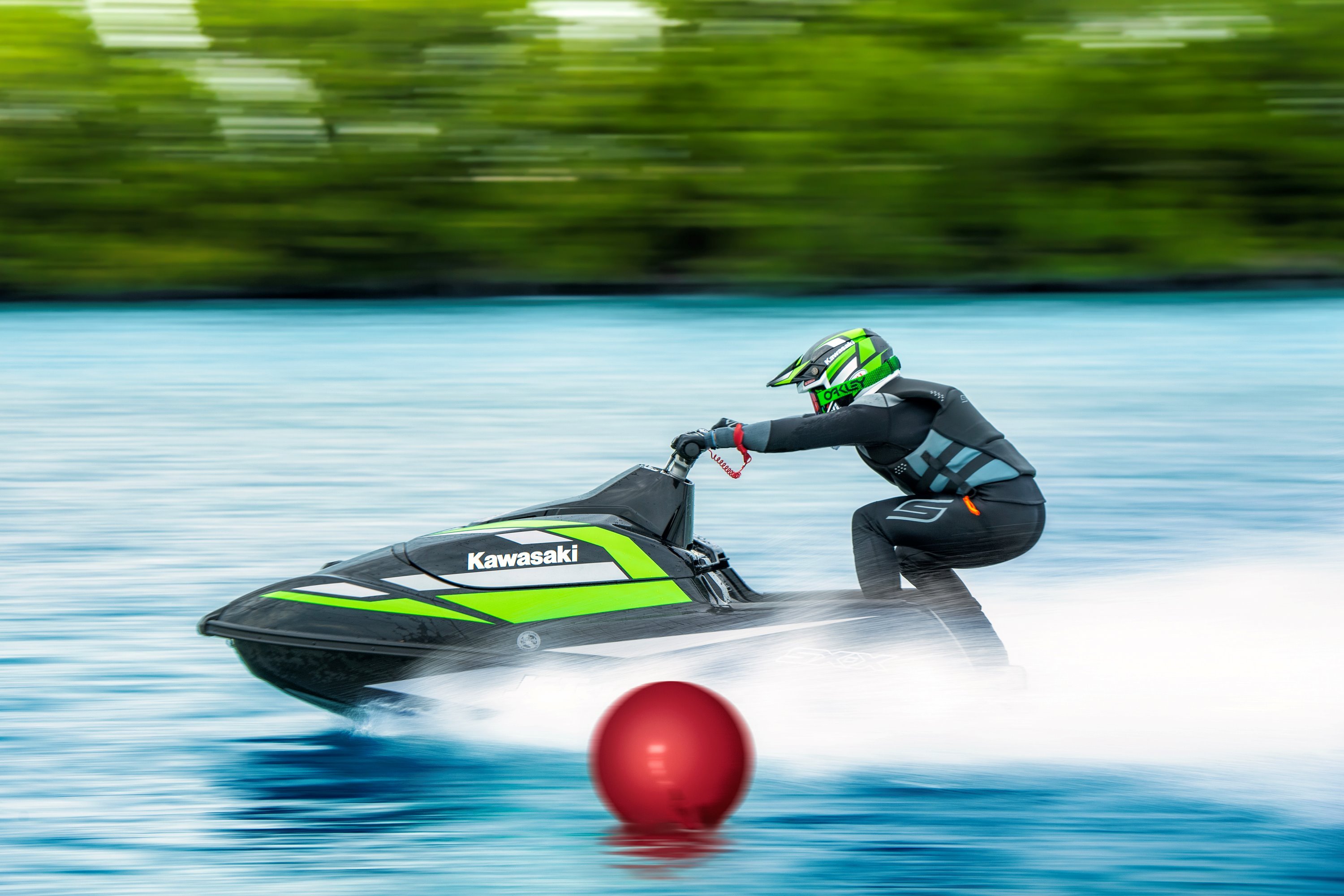
Perhaps the most surprising element of Kawasaki’s 2027 product strategy is the full-scale return of the classic stand-up Jet Ski format. Following previous attempts to revive the category, company leadership has confirmed that the newly redesigned stand-up models are a permanent fixture moving forward.
For 2027, Kawasaki offers two variants: the Jet Ski SX-R 160 and the SX-X 160, both priced at $11,999. Both models are powered by naturally aspirated, 160-horsepower versions of the proven 1.5-liter four-stroke engine. The primary distinction lies in their control configurations:
- SX-R 160: Features a traditional movable handlebar design that rests flat, requiring the rider to lift it into position as the craft gets underway.
- SX-X 160: Utilizes a fixed, motocross-style handlebar setup, which provides a rigid anchoring point that simplifies the process of pulling oneself out of the water and onto the craft during deep-water starts.
While these stand-up models offer unmatched agility, freestyle jumping capabilities, and a direct connection to the sport’s roots, they retain the physical demands that initially drove casual consumers toward sit-down models. Operating a stand-up Jet Ski requires physical endurance and balance, ensuring that these machines remain specialized tools for seasoned enthusiasts rather than casual weekend warriors.
Broader Market Implications and Strategic Analysis
Kawasaki’s aggressive 2027 product rollout signals a calculated pivot toward high-performance enthusiast segments within the powersports industry. By modernizing its legacy platforms, merging automotive-grade forced induction with lightweight hulls, and reviving classic form factors, the manufacturer is directly challenging competitors who have dominated market share in recent years.
The introduction of the STX 310 bridges the gap between raw, adrenaline-fueled power and modern technological refinement. Meanwhile, the resurrection of the SX series preserves the heritage that built the brand. As these units arrive in showrooms ahead of the 2027 season, industry analysts will closely monitor whether this high-horsepower strategy successfully revitalizes Kawasaki’s standing as the premier innovator in personal watercraft technology.