The Evolution of Visualizing Nature: From Ancient Cave Walls to Modern Photography and the Lens of Andrew Zuckerman

The human impulse to document and interact with the natural world is an ancient practice that spans tens of thousands of years, evolving from rudimentary pigments on stone to sophisticated photographic techniques that capture microscopic cells and distant galaxies. This continuous endeavor to frame non-human life forms has not only charted the history of artistic expression but has fundamentally shaped scientific discovery, environmental consciousness, and humanity’s understanding of its place within the biosphere.
An examination of this visual history reveals a profound narrative, recently highlighted in photographer Andrew Zuckerman’s upcoming 2026 publication, United Nature, published by Crown. Zuckerman’s reflections on his lifelong engagement with the camera provide a fitting lens through which to analyze how visual media has transitioned from human-centric interpretation to an unfiltered, direct encounter with the natural world.
A Chronology of Depicting the Living World
The historical record of human depiction begins long before the advent of written language. Approximately 40,000 years ago, anonymous artists utilized the natural contours, reliefs, and recesses of the stone walls in the Chauvet caves of France to render lions, rhinoceroses, mammoths, and bears with striking naturalism. These Paleolithic artists did not merely draw upon a flat surface; they integrated the physical structure of the cave into the anatomy of the beasts, allowing the animals to emerge directly from the stone.
Millennia later, the tradition continued in the caves of Lascaux, where herds of galloping horses and colliding bison demonstrated an advanced grasp of perspective and composition. As human civilizations developed, the motives behind animal representation diversified. In ancient Egypt, animals such as cats, jackals, and birds were rendered to accompany the deceased into the afterlife, imbued with sacred and symbolic meaning. On Greek pottery, recurrent motifs of dolphins reflected maritime life and mythological connections.
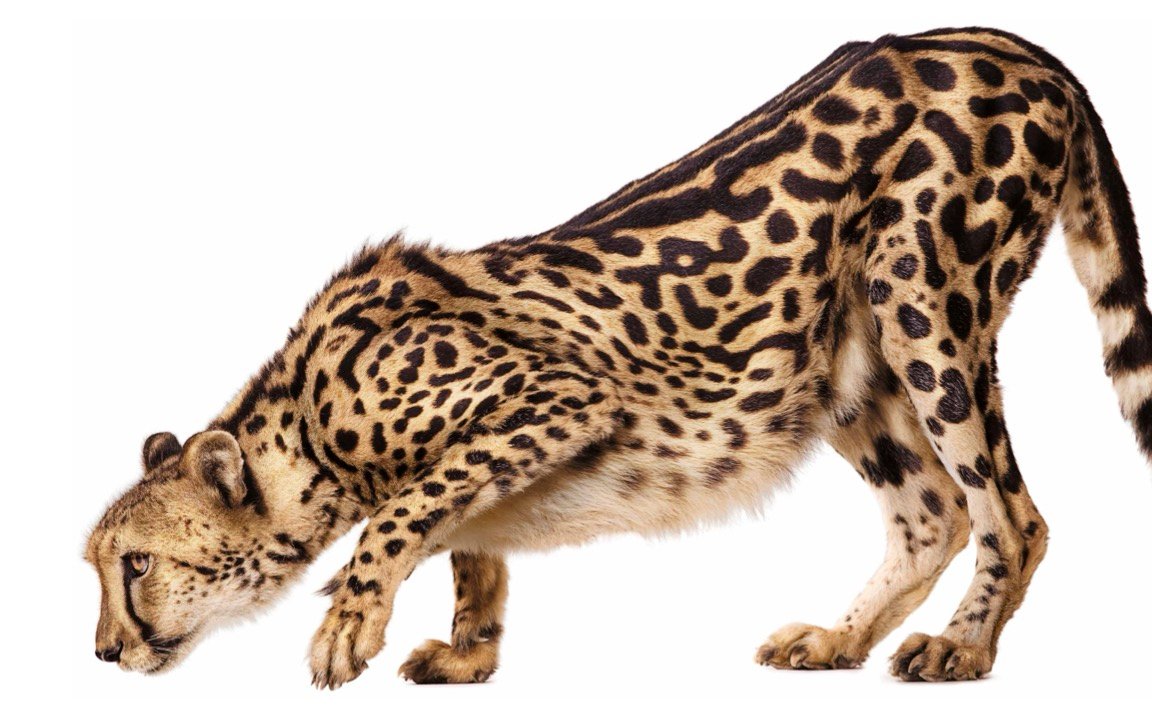
By the medieval period, artists incorporated creatures like lions and owls into illuminated manuscripts, transforming them into allegorical representations of human virtues and vices. The Enlightenment era shifted this paradigm toward empirical observation. Engravers and naturalists sought systematic order through meticulous detail, culminating in works like John James Audubon’s monumental 19th-century publication, The Birds of America. Audubon’s life-size depictions of herons, warblers, and owls set a new benchmark for natural history illustration through exquisite anatomical precision.
The Photographic Rupture: When Nature Records Itself
The invention of photography two centuries ago introduced a radical rupture in humanity’s relationship with visual representation. For the first time, images of the natural world were created not through the mediation of an artist’s hand or pencil, but through the direct agency of light and physical specimens.
In 1843, botanist and photographer Anna Atkins published Photographs of British Algae: Cyanotype Impressions, widely recognized as the world’s first book illustrated with photographs. Atkins utilized a chemical solution to treat paper, placed actual botanical specimens directly onto the surface, and exposed them to sunlight. The resulting white silhouettes against a Prussian blue background bypassed traditional artistic interpretation. As Zuckerman notes, the algae left its own impression directly on the material, granting the plant a form of visual agency.
A year later, in 1844, William Henry Fox Talbot published The Pencil of Nature, introducing calotypes—the first paper negatives that allowed multiple positive prints from a single exposure. Conscious of the novelty of this medium, Talbot included a formal notice emphasizing that the plates were impressed by the agency of light alone, without the aid of an artist’s pencil. These "sun-pictures" established a paradigm where the natural world was no longer simply portrayed by human artists, but allowed to record its own existence.
This technological shift coincided with monumental changes in scientific thought. In 1859, Charles Darwin published On_the_Origin_of_Species, introducing the theory of evolution by natural selection and establishing that all life exists in a state of dynamic flux, adaptation, and transformation. Retrospectively, early photographic experiments like Atkins’ cyanotypes served as a visual precursor to this scientific worldview, capturing life not as a static, immutable emblem, but as a continuous biological process.
Expanding Horizons: From the Microscopic to the Planetary
As photographic technology advanced into the late 19th and early 20th centuries, its applications expanded exponentially. Pioneers like Cherry Kearton revolutionized wildlife photography by constructing elaborate blinds and hollowed-out animal carcasses to observe elusive species in their natural habitats. Simultaneously, chronophotography—exemplified by Eadweard Muybridge’s motion studies of horses and birds—unlocked the mechanics of gait and flight at speeds imperceptible to the unaided human eye. Later, innovators like Jacques Cousteau brought the alien landscapes of the deep oceans into domestic living rooms through pioneering underwater filmmaking.
By the latter half of the 20th century, imagery of the natural world transformed from a tool of documentation into an instrument of ecological advocacy. This shift reached a watershed moment in the late 1960s when environmentalist Stewart Brand successfully lobbied NASA to release the first photographs of the entire Earth captured from space. Published on the cover of the Whole Earth Catalog, these images provided an unprecedented planetary perspective. For the first time, humanity could view the Earth as a singular, fragile organism—a blue sphere swirling with white clouds and devoid of artificial geopolitical borders.
The cultural and political impact of this single perspective was immense. Historians and sociologists frequently credit the Whole Earth photographs with catalyzing the modern environmental movement, inspiring systems ecology, and embedding the concept of a living biosphere into global consciousness.
In the decades that followed, technological innovations continuously widened the scope of human vision. Satellite imaging allowed for the continuous, real-time observation of planetary shifts, including shrinking polar ice caps, deforestation, and atmospheric storm formation. Simultaneously, advancements in microscopy revealed the hidden architectures of life, capturing cellular division, viral mutation, and neural networks firing in real time. Telescopes pushed observation to the cosmic scale, recording the birth of stars and colliding galaxies with fidelity equal to that of microscopic lenses.
The Philosophical Implications of the Frame
In United Nature, Andrew Zuckerman reflects on his own artistic trajectory, examining how the mechanics of framing dictate human perception. Zuckerman argues that the act of framing is inherently exclusionary and powerful, determining what information is deemed relevant within an image.
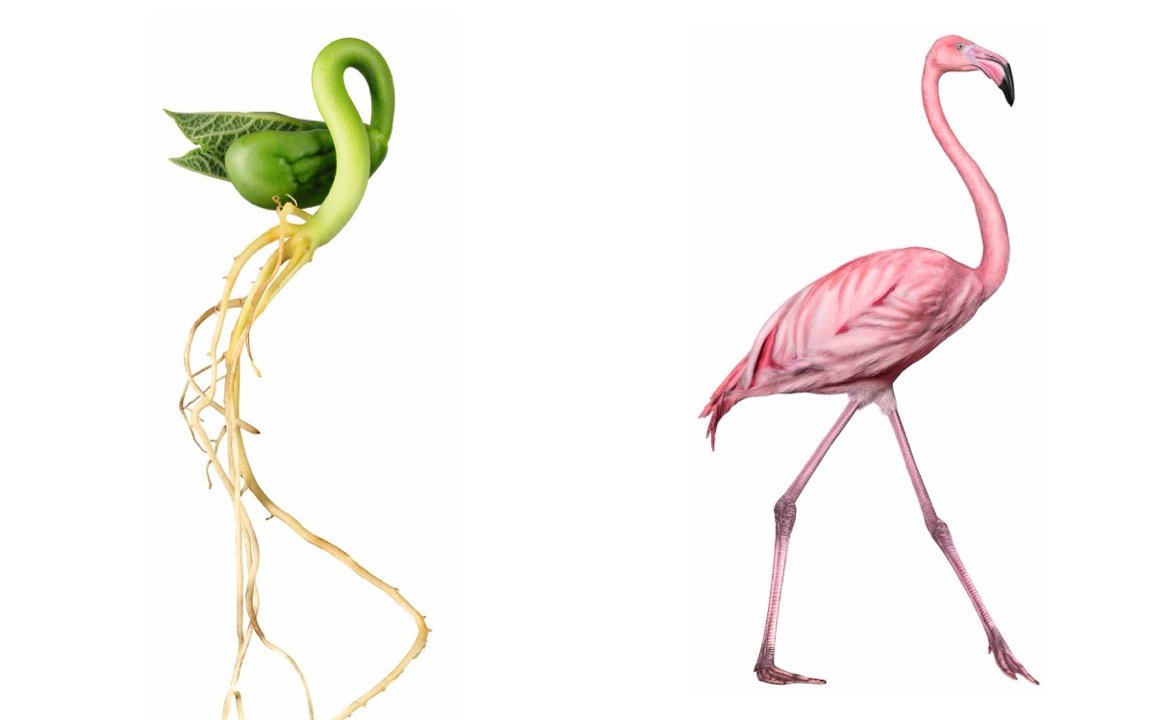
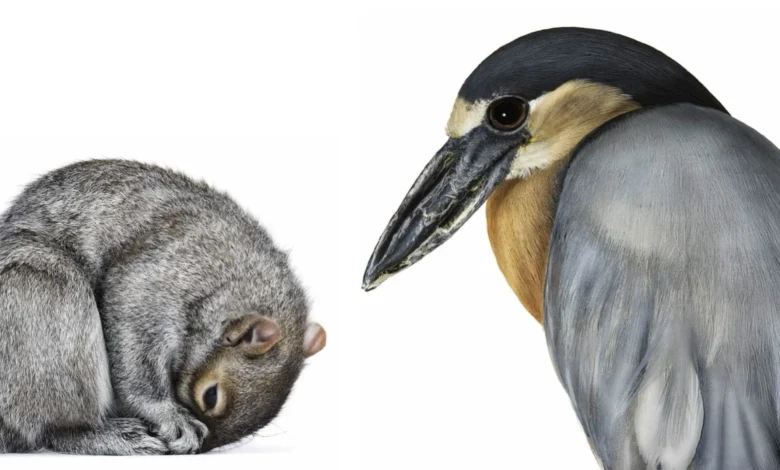
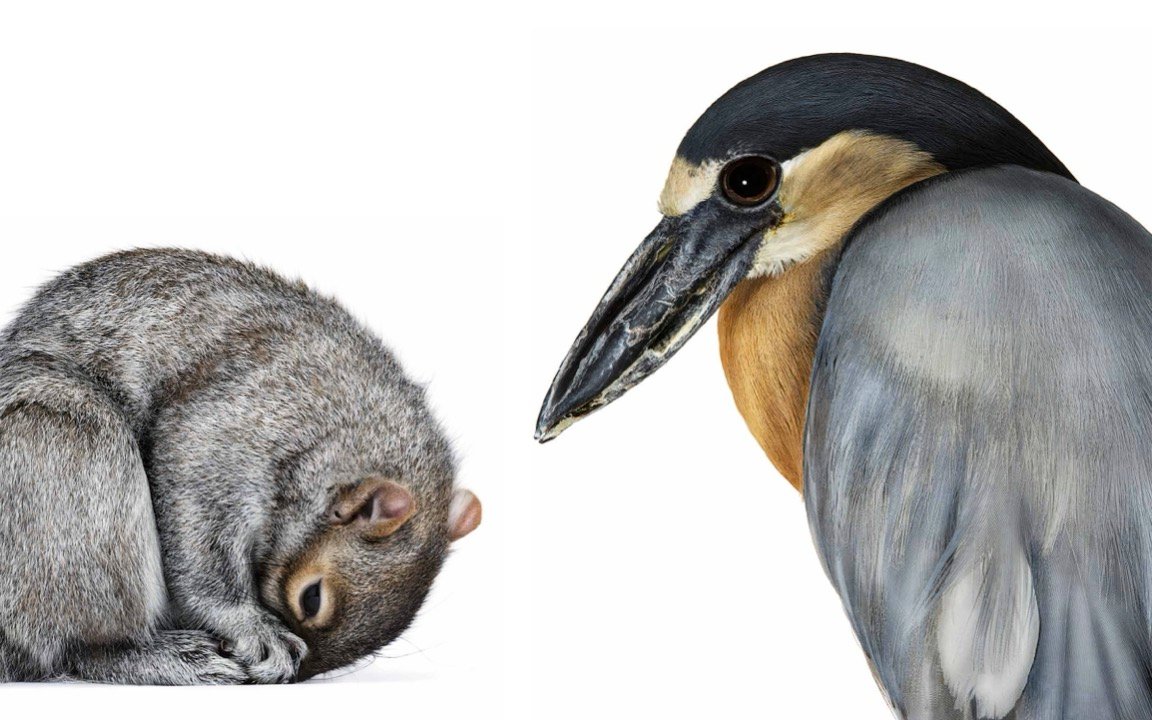
To move beyond traditional portraiture and human-centric narratives, Zuckerman adopted a minimalist approach: photographing diverse animal subjects against a pure white background. According to the artist, this choice is not merely aesthetic, but fundamentally functional. Human self-perception is largely abstract, existing independently of a specific background or ground. By isolating subjects against a neutral white space, Zuckerman seeks to remove contextual distractions and establish a shared, preconceptual plane of encounter between the viewer and the non-human subject.
This empty space acts as a perceptual condition, allowing the viewer to process the image directly through bodily recognition before intellectual categorization or cultural assumptions take over. In an era dominated by digital noise and environmental crises, such artistic methodologies invite a reevaluation of humanity’s relational history with the broader web of existence.
Broader Impact and Industry Analysis
The trajectory from Paleolithic cave paintings to contemporary high-fidelity digital and analog photography underscores a persistent human need to visualize and comprehend biodiversity. As global ecosystems face unprecedented anthropogenic pressures, the role of visual media remains critical.
Modern conservation science relies heavily on the continuous documentation provided by satellite remote sensing, camera traps, and field photography to track population declines, monitor habitat loss, and enforce environmental protections. Furthermore, contemporary art projects that focus on individual animal subjects—such as Zuckerman’s forthcoming collection—bridge the gap between empirical data and emotional empathy.
Analysts note that visual storytelling continues to be one of the most effective catalysts for public policy shifts and conservation funding. By altering how society perceives non-human life, visual media challenges anthropocentric worldviews and reinforces the interconnected reality of global ecosystems. As imaging technologies advance further into artificial intelligence and ultra-high-definition capture, the fundamental ethical responsibility of the image-maker remains unchanged: to frame reality in a manner that fosters deeper understanding, stewardship, and respect for the living world.