The 2026 Annoying Sibling Award Goes to a Persistent Alaskan Black Bear Named Nugget

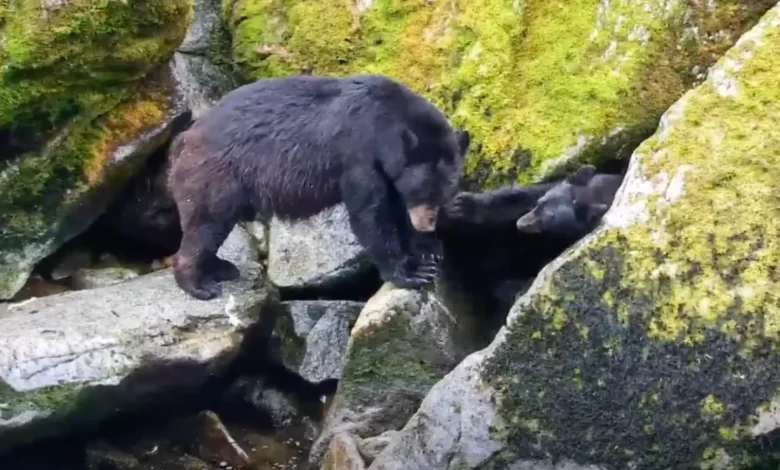
Anyone with brothers and sisters understands the complex, often contradictory dynamic of sibling relationships, where lifelong allies can instantaneously morph into relentless adversaries. This universal truth extends far beyond human families and into the wild, as demonstrated by a young black bear (Ursus americanus) in southeastern Alaska. Over the course of the summer, a petite black bear cub named Nugget captured the attention of wildlife biologists and global observers alike, ultimately earning the official 2026 Annoying Sibling Award from the U.S. Forest Service for his persistent, highly coordinated campaign of badgering his larger companion, Crescent.
The interaction, which played out against the backdrop of the Tongass National Forest, highlights the complex behavioral traits and social structures of North American bears during peak seasonal feeding frenzies. While much of the scientific and public focus on Alaskan wildlife traditionally centers on the massive brown bears of Katmai National Park or the iconic salmon-rich waters of Bristol Bay, the vibrant ecosystem of the Tongass offers an equally compelling window into ursine family dynamics.
Chronology of a Half-Hour Tussle
The award-winning incident occurred during the height of the summer salmon run at the Anan Wildlife Observatory, a premier viewing and research site managed by the U.S. Forest Service. According to rangers stationed in the Tongass National Forest, Nugget initiated a prolonged behavioral sequence directed at his sibling, Crescent, who is notably larger in stature and demonstrated remarkable patience throughout the ordeal.
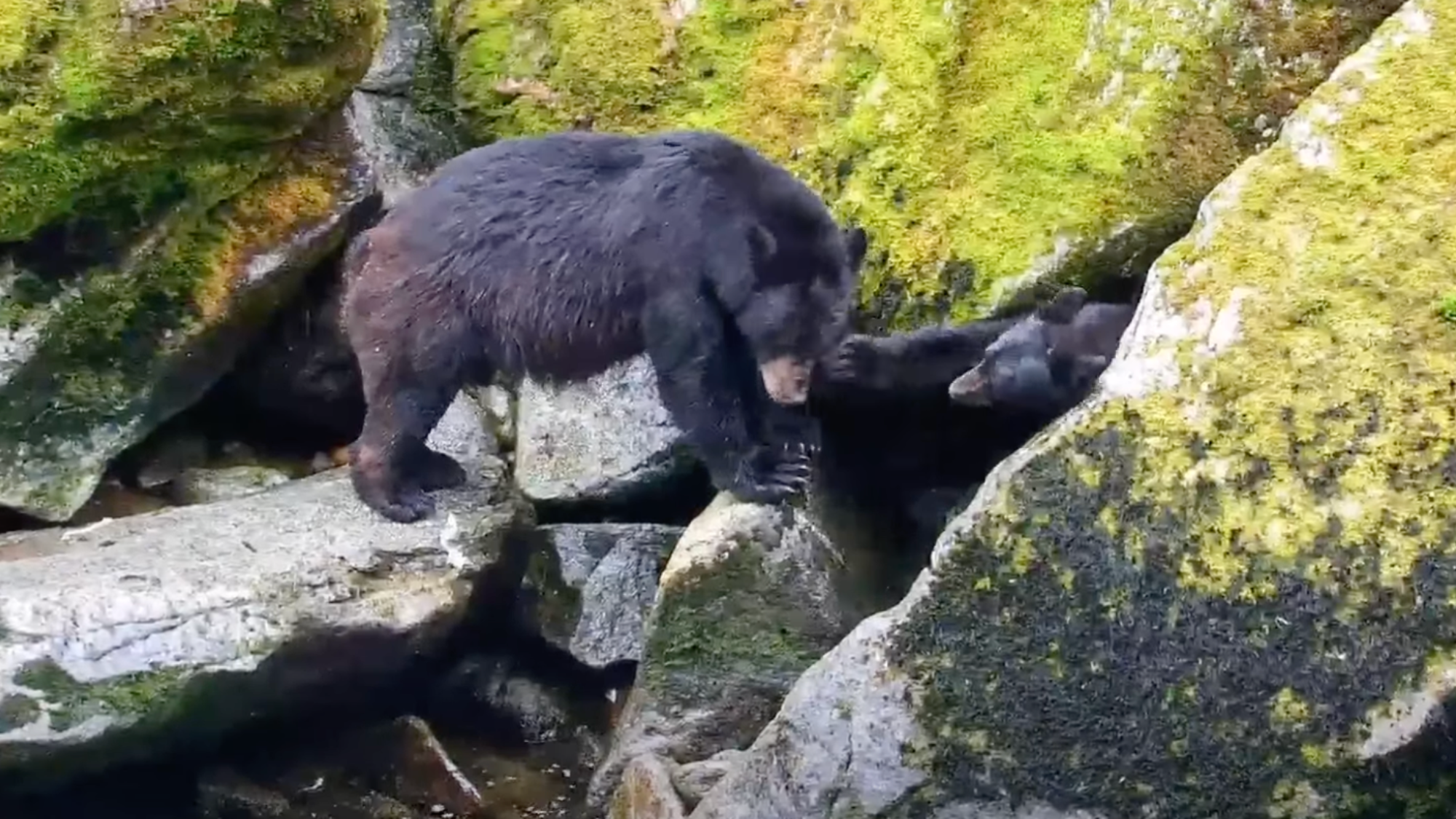
The encounter began as a slow, calculated approach. Nugget, characterized by his unusually small build, a distinctive facial fur pattern resembling swimming goggles, and a reddish coat that gradually darkens as summer progresses, crept toward Crescent between the rugged coastal rocks. Rather than initiating an aggressive territorial dispute or a competitive strike for food, Nugget engaged in a pattern of calculated harassment.
Foresters and park rangers observed that the interaction spanned nearly 30 minutes without escalation into severe aggression. Each time Nugget approached, he would gently poke or jab at Crescent before initiating a brief, reciprocal play-fight. The dynamic closely mirrored human sibling behavior: a smaller, persistent younger sibling testing boundaries, poking, and prodding until the larger counterpart finally reached its threshold of tolerance and put an end to the game. Rangers documented the scene in administrative updates, noting that it offered a textbook look into how young bears negotiate social hierarchy, physical boundaries, and play mechanics in the wild.
The Ecosystem of Anan Creek
The setting for Nugget and Crescent’s prolonged game of tag is one of the most ecologically productive wildlife viewing areas in North America. The Anan Wildlife Observatory is situated within the Tongass National Forest, which stands as the largest national forest in the United States. Spanning roughly 16.7 million acres, the Tongass covers the vast majority of southeastern Alaska, enveloping regional hubs such as Juneau, ancient temperate rainforests, sweeping glacial networks like the Mendenhall Glacier, and intricate coastal fjords.
At the heart of the Anan site is Anan Creek, which boasts one of the most prolific runs of pink salmon (Oncorhynchus gorbuscha) in the entire region. Every summer, millions of salmon migrate from the marine environment upstream to spawn, creating an immense, nutrient-dense seasonal feast. This concentrated food source draws a high density of predators, specifically black bears and brown bears (Ursus arctos), creating a unique seasonal congregation where individuals must negotiate personal space, fishing rights, and social hierarchies.
According to demographic tracking compiled by the U.S. Forest Service and conservation groups such as Friends of Anan, a stable population of approximately 39 individual bears utilizes the Anan Creek watershed during the peak summer months. This population is notably diverse, comprising roughly 31 black bears and eight brown bears. While interspecies interactions at Anan are carefully managed by wildlife officials to ensure both bear safety and human recreational access, the sheer concentration of apex predators provides an unprecedented opportunity for behavioral research.
Tracking and Technological Observation
The documentation of Nugget’s behavioral quirks is part of a broader, long-term monitoring effort by federal land managers and conservation technology partners. The U.S. Forest Service routinely tracks and catalogues the bears visiting Anan Creek, assigning them identifying names, monitoring lineage, and noting distinct physical characteristics such as Nugget’s goggle-like facial markings and coat color transitions.
In recent years, this monitoring has expanded beyond physical patrols by rangers on the ground. Through a partnership with explore.org, high-definition, 24-hour live-streaming cameras have been installed at strategic points along Anan Creek, including the Lower Falls and surrounding caves. These cameras allow wildlife biologists, behavioral researchers, and millions of armchair naturalists around the globe to observe ursine interactions in real time.
The live feeds have revolutionized public engagement with wildlife conservation. Observers can watch individual bears establish fishing spots, train their cubs in survival techniques, and navigate complex social negotiations. It was through a combination of on-site ranger surveillance and public broadcast footage that Nugget’s persistent badgering of Crescent was captured, reviewed, and ultimately selected for seasonal recognition.

Broader Behavioral Implications and Ecological Significance
While the naming of the "Annoying Sibling Award" introduces a lighthearted, anthropomorphic element to wildlife management, researchers emphasize that play-fighting and sibling harassment serve vital biological functions among juvenile bears.
Play in mammalian carnivores is not merely recreational; it is a critical developmental mechanism. Through sustained physical engagement—such as the 30-minute tussle observed between Nugget and Crescent—young bears hone their motor skills, test their physical strength, learn bite-inhibitory control, and establish social dominance hierarchies that will govern their interactions once they attain independence from their maternal sow.
Furthermore, the patience demonstrated by Crescent provides insight into energy conservation strategies among apex predators. Securing enough caloric intake to survive the winter hibernation period requires careful energy expenditure. By tolerating the minor provocations of a smaller sibling rather than escalating into a high-energy aggressive conflict, older subadults can maintain social cohesion within shared resource zones without risking injury or unnecessary caloric loss.
As national forests face increasing recreational pressures and shifting climate patterns impacting marine and terrestrial ecosystems, the management of sites like the Tongass National Forest remains critical. Well-managed recreational areas not only protect sensitive habitats and ensure sustainable salmon runs for predators and commercial fisheries alike, but they also maintain the ecological integrity necessary for researchers to document the nuanced social lives of North America’s iconic wildlife populations.