China’s TMS-10 Supersonic Passenger Jet Enters Final Assembly as the Global Race to Revive High-Speed Air Travel Accelerates

The global aviation landscape is inching closer to a new era of high-speed passenger transit as international aerospace agencies and research institutions race to overcome the historic barriers of supersonic flight. Earlier this month, Chinese state media and academic authorities announced that the experimental TMS-10 supersonic demonstrator aircraft has officially entered its final assembly phase. Developed through a collaborative partnership between the Tianmushan Laboratory and Beihang University, the full-scale prototype is currently on schedule to conduct its maiden test flight before the end of the year.
This milestone marks a critical transition from subscale concept testing to real-world atmospheric validation. The project follows a series of rigorous low-speed evaluations conducted in June 2025 using a 1:18-scale prototype. During those initial trials, researchers analyzed the aircraft’s handling characteristics, stability, control systems, and takeoff and landing behaviors at speeds below Mach 0.2. With the full-scale TMS-10 now taking shape, the engineering team faces the much more complex challenge of pushing the aircraft past the sound barrier while actively managing the disruptive acoustic signatures associated with supersonic travel.
The pursuit of commercial supersonic flight represents one of the most formidable engineering challenges in modern aviation. Ever since the retirement of the Concorde in 2003, passenger air travel has remained strictly subsonic, largely constrained by stringent regulatory bans on overland sonic booms, high fuel consumption, and prohibitive operational costs. Today, however, renewed geopolitical and commercial interest has ignited a modern supersonic space race, with international players vying to redefine global mobility.
Engineering the TMS-10: Design and Sonic Boom Mitigation
Unlike traditional supersonic designs that simply generate massive shockwaves, the TMS-10 employs a distinct aerodynamic configuration engineered to prevent structural pressure waves from coalescing into a single, deafening boom. The aircraft utilizes a forward canard wing paired with a distinct T-tail arrangement. This specific geometry is designed to decouple the shockwaves generated by the nose and the forward lifting surfaces, preventing them from merging into a single thunderous crack. Furthermore, the rear features of the aircraft are engineered to redirect and dissipate remaining sound energy, significantly lowering the decibel levels heard on the ground.
The targeted performance metrics for the TMS-10 are ambitious. Designers intend for the aircraft to achieve cruising speeds of up to Mach 2, which equates to roughly 1,300 miles per hour. In addition to its high-speed regime, the plane will support efficient subsonic cruising at approximately Mach 0.95, or 730 miles per hour. If successfully commercialized for business-class travel, these capabilities would dramatically shrink travel times across heavily trafficked regional corridors. For instance, a typical commercial flight between Beijing and Shanghai, which currently averages roughly two hours, could theoretically be slashed to a mere 30 minutes.
Despite these promising projections, substantial technical hurdles remain. Operating an aircraft at twice the speed of sound generates extreme aerodynamic heating, requiring advanced materials and thermal protection systems capable of maintaining structural integrity over extended flight durations. Additionally, Chinese aerospace engineers have noted that critical propulsion components—including the engine core, air inlet systems, and exhaust configurations—still require exhaustive refinement and empirical validation. Further wind tunnel testing and scale-model flights will be necessary before the definitive architecture of the TMS-10 is locked down.
The Global Context: NASA’s X-59 and the Regulatory Landscape
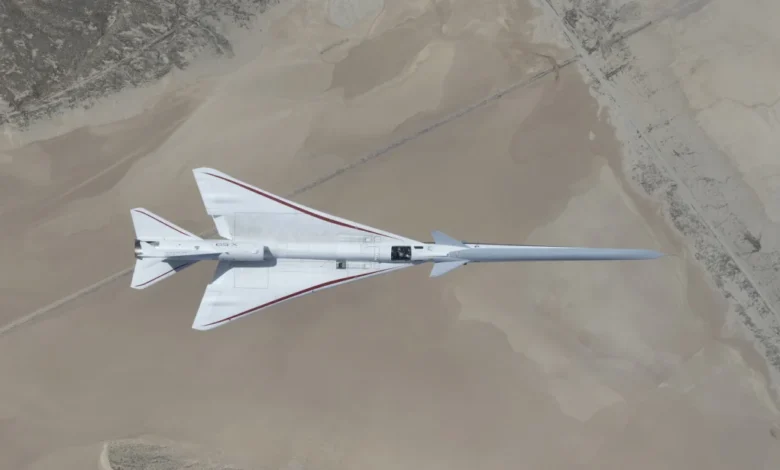
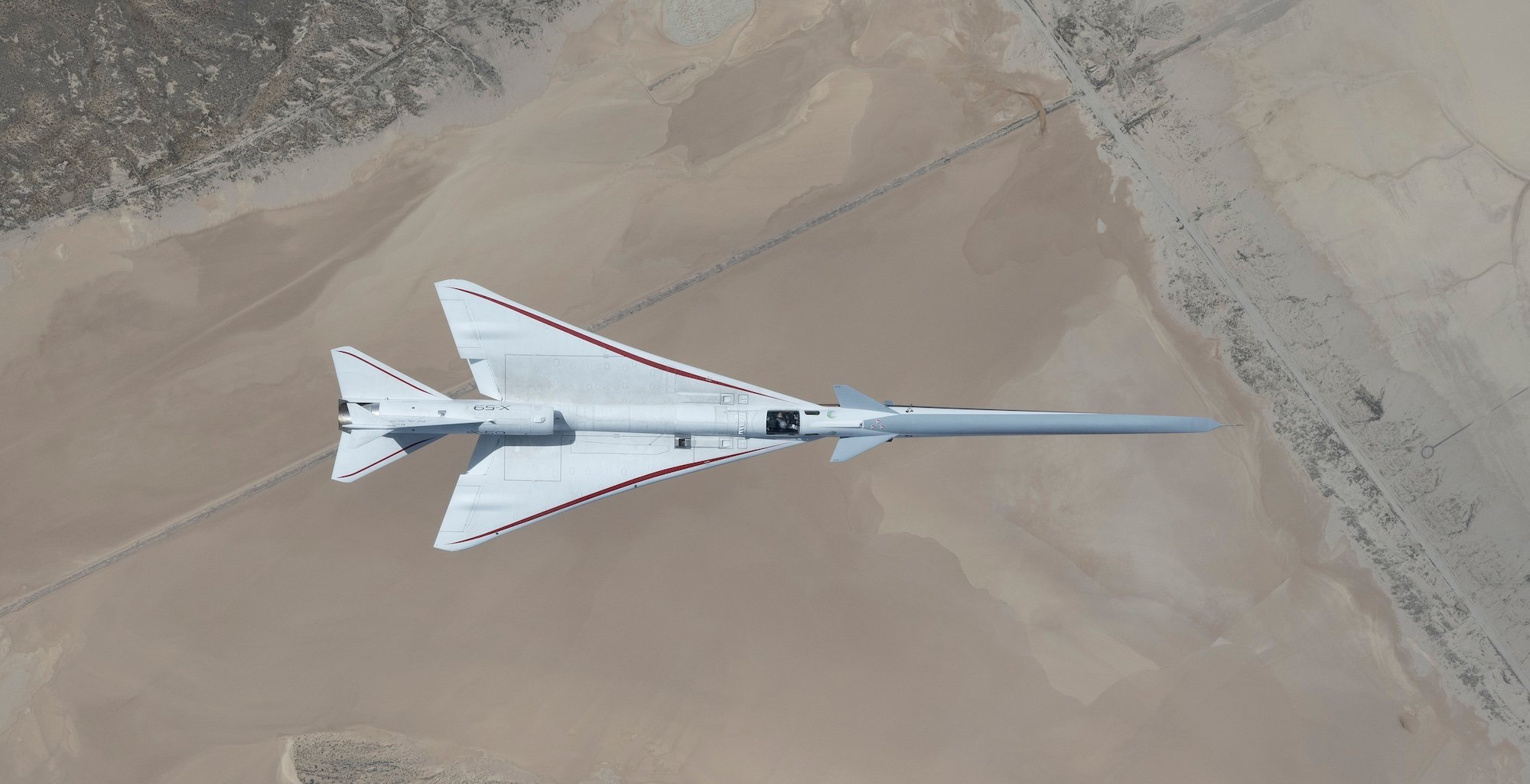
China is not operating in a vacuum in its pursuit of high-speed commercial flight. The United States has pursued its own advanced supersonic research program, headlined by NASA’s X-59 Quiet SuperSonic Technology (QueSST) aircraft, developed in partnership with Lockheed Martin. The X-59 represents a different philosophical approach to the sonic boom problem; rather than simply dispersing shockwaves, its elongated, needle-nose design is built to gently displace air molecules to dampen sonic booms into a quiet, barely perceptible "thump" or "bump" for observers on the ground.
The U.S. program has already achieved significant operational milestones. Earlier this year, the X-59 successfully executed supersonic test flights out of NASA’s Armstrong Flight Research Center at Edwards Air Force Base in California, achieving Mach 1.5 at an altitude of 55,000 feet. These ongoing American tests are designed to gather the precise acoustic and aerodynamic datasets necessary to convince regulatory bodies, such as the Federal Aviation Administration (FAA) and international counterparts, to lift historical bans on overland supersonic flight.
The regulatory environment remains a pivotal variable for all entities developing supersonic passenger jets. For decades, civil aviation authorities have maintained strict prohibitions against civilian aircraft breaking the sound barrier over land due to property damage risks and public disturbance caused by sonic booms. Successful noise-mitigation technology is therefore a strict prerequisite for commercial viability. Without proof that an aircraft can fly overland without rattling windows and disturbing communities, the market for supersonic travel would be legally restricted to oceanic routes, severely limiting its economic potential.
Chronology of Modern Supersonic Development
The current push toward reviving commercial supersonic travel is the culmination of more than two decades of advanced aerodynamic research, computational fluid dynamics (CFD) advancements, and shifting regulatory attitudes:
- 2003: The Concorde makes its final commercial flight, marking the end of the first generation of supersonic passenger transport.
- 2010s: NASA and various private aerospace startups begin investing heavily in quiet supersonic research, utilizing advanced computer modeling to design airframes capable of reducing shockwave intensity.
- June 2025: Tianmushan Laboratory and Beihang University conduct successful low-speed flight tests using a 1:18-scale model of the TMS-10 demonstrator to evaluate takeoff, landing, and low-speed stability.
- Early 2026: NASA’s X-59 successfully reaches supersonic speeds, hitting Mach 1.5 at 55,000 feet during flight evaluations over the Mojave Desert.
- September 2026: Chinese state media and institutional researchers announce that the full-scale TMS-10 demonstrator has entered final assembly, with its maiden test flight scheduled before the end of the year.
Economic Implications and the Future of Business Aviation
The ongoing development of aircraft like the TMS-10 and the X-59 signals a profound potential shift in global business logistics and elite travel. While initial iterations are targeted toward boutique business-class markets—seating limited capacities of 10 to 15 passengers—the underlying technologies are expected to lay the groundwork for larger commercial airliners in the decades to follow.
Economic analysts point out that the financial success of supersonic travel will depend heavily on fuel efficiency, maintenance costs, and regulatory approval for overland routes. Traditional supersonic jets suffered from notoriously high operating costs and exorbitant ticket prices, which ultimately priced out the majority of travelers and led to the demise of the Concorde fleet. Modern aerospace engineers are attempting to leverage lightweight composite materials, highly efficient turbofan engines, and optimized aerodynamics to bring operating costs down to a level that can sustain a niche commercial market.
As the TMS-10 approaches its initial rollout and test flight phase, the international aerospace community will be watching closely. Whether Chinese researchers can successfully validate their acoustic mitigation theories and propulsion systems will determine whether the TMS-10 can close the technical gap with Western competitors. Ultimately, the convergence of independent national programs in the United States, China, and elsewhere suggests that the return of commercial supersonic flight is no longer a matter of if, but when.