Ashton and Michael Kutcher Open Up About Surviving Medical Crises, Sibling Rivalry, and the Road Back to Brotherhood

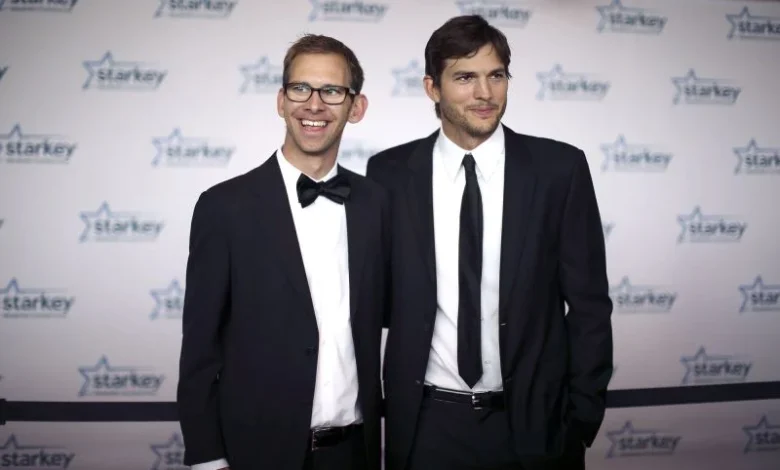
The complex, enduring bond between twin brothers Ashton and Michael Kutcher has long been shielded from the public eye, punctuated by rare glimpses into the profound medical trauma and emotional turbulence that shaped their formative years. In a candid and emotionally charged joint appearance on the Paramount+ medical docuseries The Checkup with Dr. David Agus, the brothers offered a deeply vulnerable retrospective of their lives. Hosted by Dr. David Agus—who also serves as Ashton Kutcher’s personal physician—the interview traversed decades of shared history, laying bare the harrowing health crises of their youth, the psychological weight of sudden Hollywood fame, and the lingering resentments that temporarily fractured their relationship before ultimately forging a renewed, unbreakable equality.
The conversation provided a rare dual perspective on twin dynamics under extraordinary circumstances. While Ashton Kutcher is internationally recognized for his prolific career in television and film, as well as his prominent venture capital investments and philanthropic endeavors, his brother Michael has charted a very different path. Living with cerebral palsy and surviving a near-fatal childhood heart condition, Michael has emerged as a dedicated advocate for individuals with disabilities. Together, their narrative is not merely a Hollywood human-interest story, but a profound exploration of systemic health challenges, survivor’s guilt, the psychological toll of chronic illness within a family, and the ultimate reclamation of brotherhood.
A Childhood Defined by Medical Emergencies
The foundation of the Kutcher brothers’ relationship was forged in the crucible of severe pediatric illness. Growing up in a working-class family in Iowa, the twins experienced a starkly divergent reality from an early age. While Ashton developed as a typical, active child, Michael was diagnosed with cerebral palsy—a neurological disorder that affects muscle tone, movement, and motor skills—requiring extensive medical management and physical adaptation.
However, the defining moment of their childhood occurred when the boys were teenagers, triggered by a viral infection that rapidly escalated into a life-threatening cardiac crisis. Michael contracted viral myocarditis, an inflammation of the heart muscle that caused his heart to dramatically enlarge and ultimately fail.
Recalling the harrowing episode during the interview, Ashton Kutcher fought back tears as he described walking into the intensive care unit and immediately recognizing the unmistakable auditory signature of medical failure. "I go in the room and I’m like ‘Whoa,’" Ashton recounted, his voice trembling. "I’m like… Everything is not okay. And he flatlines in the room, and I know that noise because now I’ve been visiting occasionally."
The medical emergency set off a frantic scramble to save Michael’s life. In a moment of sheer adolescent desperation and profound empathy, Ashton contemplated extreme measures, even briefly considering leaping from a hospital balcony in the irrational belief that his own healthy heart could somehow be harvested and transplanted into his twin. Fortunately, medical intervention averted the immediate tragedy. In a remarkable stroke of medical fortune, a donor heart became available within 24 hours, and Michael underwent a successful heart transplant.
The ordeal, however, was far from over. Shortly after the transplant, doctors discovered a dangerous blood clot, necessitating subsequent open-heart surgery. These cumulative medical traumas meant that Michael spent a significant portion of his adolescence navigating hospitals, surgeries, and extensive rehabilitation, while Ashton bore witness to his brother’s immense physical suffering from the sidelines.
The Rise to Stardom and the Burden of Survivor’s Guilt
As Michael fought for his survival within hospital walls, Ashton’s life took a dramatically different trajectory. Discovered by a modeling scout in an Iowa bar, Ashton won a local modeling competition in 1997, which quickly propelled him into the national spotlight. Within a short time, he secured a starring role as Michael Kelso in the hit Fox sitcom That ’70s Show, instantly transforming him into a recognizable celebrity and teen idol.
While the entertainment industry offered wealth, acclaim, and international recognition, Ashton experienced a profound psychological toll characterized by acute survivor’s guilt. Placed side-by-side with his brother’s daily struggles against cerebral palsy and the long-term management of a donor heart, the actor grappled with a deep sense of unearned fortune.
"How do I get to be this lucky?" Ashton recalled asking himself during the height of his early success. Reflecting on the vast disparity in their lived experiences, he noted the arbitrariness of fate: "For my brother… to be born with cerebral palsy, then have a heart transplant, then have this random blood clot, these things that you’re just like, ‘Who has to go through that?’"
This internal guilt manifested in how Ashton treated his brother, often viewing him through a lens of perpetual fragility and pity. According to the actor, this dynamic ultimately proved detrimental to Michael’s sense of autonomy and dignity, prompting a necessary confrontation that would redefine their relationship.
The Turning Point: A Brother’s Rebuke
The turning point in the brothers’ relationship came when Michael directly challenged Ashton’s sympathetic, yet disempowering, perspective. Tired of being viewed as a perpetual victim of circumstance, Michael confronted his famous brother with blunt honesty.
"He looked at me and he said, ‘Every time you feel sorry for me, you make me less,’" Ashton shared during the interview. "He said, ‘This is the only life I’ve ever known, so stop feeling sorry for the only thing I have.’"
This candid rebuke served as a catalyst for profound personal reflection and behavioral change. By recognizing that his pity was undermining Michael’s agency, Ashton shifted his approach, allowing his brother to define his own identity independently of his medical history. This pivotal moment dismantled the dynamic of pity and replaced it with mutual respect, ultimately restoring what both brothers describe as a relationship of true equals.
Navigating Sibling Rivalry and the Shadow of Fame
Despite their eventual reconciliation, the brothers acknowledged that Ashton’s rapid ascent to fame created a significant emotional rift between them. For Michael, watching his twin brother become a household name was a double-edged sword that stoked feelings of isolation and resentment.
"There was a moment when I viewed him as receiving more attention than I was," Michael admitted during the interview with Dr. Agus. "That kind of drove me down to a place where I was jealous."
The psychological weight of living in the shadow of a globally recognized celebrity is a challenge unique to families within the entertainment industry, but it was compounded in the Kutchers’ case by Michael’s pre-existing health vulnerabilities. The disparity in public visibility exacerbated underlying tensions, leading to a period of emotional estrangement where the brothers drifted apart.
However, open communication ultimately bridged the divide. Michael explained that by consciously separating Ashton’s celebrity persona from his identity as a brother, he was able to process his jealousy and rebuild their connection. "Once I took all of the fame and everything out of it, I was able to just, you know, come back to him," Michael said.
Unresolved Tensions and Boundaries in the Public Eye
The journey toward complete transparency was not without its missteps. During the interview, the brothers addressed a past friction point regarding privacy and disclosure. Early in Ashton’s career, the actor publicly revealed that his brother had cerebral palsy during an interview—a revelation that caught Michael off guard, as he had not yet chosen to publicly disclose his medical condition.
Ashton admitted during the docuseries that he was entirely unaware his brother had been keeping his diagnosis private, highlighting the delicate balance required when one sibling’s life is subjected to intense public scrutiny while the other values personal privacy. Despite the initial friction, the incident underscored the ongoing learning curve inherent in navigating dual lives: one intensely public, the other fiercely private.
Broader Impact, Advocacy, and the Legacy of Resilience
Today, the Kutchers’ narrative extends far beyond Hollywood anecdote, offering meaningful insights into the broader sociological and psychological implications of chronic illness, disability advocacy, and sibling dynamics.
Michael Kutcher has leveraged his lived experience to become a prominent advocate for individuals with cerebral palsy and organ donation awareness. Serving as a spokesperson for various organizations, he frequently speaks on the importance of inclusion, accessibility, and reframing societal perceptions of disability. His journey—from a near-fatal heart failure and subsequent transplant to living independently and advocating for others—serves as a testament to advancements in pediatric cardiology and post-transplant care.
Concurrently, Ashton Kutcher has increasingly used his platform to address health and wellness issues. In his prior disclosures regarding his own battle with vasculitis—a rare autoimmune condition that temporarily impaired his vision, hearing, and equilibrium—Ashton has demonstrated a growing willingness to speak candidly about physical vulnerability. His openness, paired with Michael’s advocacy, highlights a shared commitment to resilience in the face of physiological adversity.
Medical and psychological experts note that the Kutchers’ experience reflects common patterns observed in families navigating severe childhood illness. The phenomenon of survivor’s guilt in healthy siblings, coupled with the complex emotional landscapes negotiated by individuals with chronic disabilities, underscores the necessity of holistic family support systems in medical settings. By addressing these issues openly on a mainstream platform like Paramount+, the brothers have contributed to a broader cultural dialogue surrounding empathy, boundaries, and the enduring strength of familial bonds.
Ultimately, the interview on The Checkup with Dr. David Agus captured a mature, hard-won reconciliation. From the trauma of a hospital room flatline to the dizzying heights of Hollywood celebrity, Ashton and Michael Kutcher have navigated the extremes of human experience, emerging not merely as survivors of physical and emotional trials, but as equals rooted in a shared past and a mutual respect for each other’s distinct paths.