Behind the Blue Door: The Surprising Engineering, Maintenance, and Viral Culture of the Modern Porta Potty

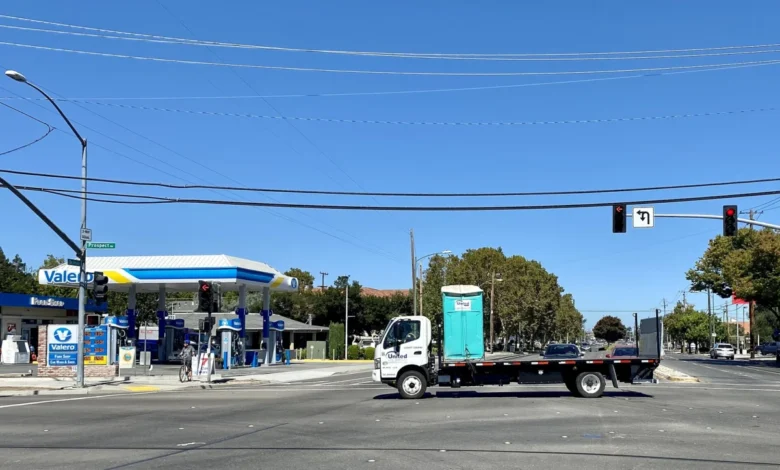
Ubiquitous at construction sites, massive music festivals, remote campgrounds, and outdoor weddings, portable restrooms are a silent anchor of modern public infrastructure. These modular facilities answer nature’s call when municipal plumbing falls short, operating as flushless, self-contained units that serve millions of people daily. Yet, despite their widespread utility, porta potties are largely misunderstood, universally dreaded, and routinely avoided as quickly as humanly possible. Beyond the stigma of unappealing aromas and cramped quarters lies a surprisingly elegant exercise in fluid dynamics, chemical engineering, and logistics. Understanding the anatomy of a portable restroom reveals a finely tuned system designed to meet one of humanity’s most fundamental needs efficiently and safely.
The stark contrast between conventional indoor plumbing and portable sanitation highlights the ingenuity required to manage waste without municipal infrastructure. Traditional toilets rely on a complex network of pressurized water supplies, gravity, and municipal sewer mains or private septic tanks. When a standard household toilet is flushed, water rushes from a tank to displace waste through a curved trap, creating an airtight liquid seal that prevents noxious sewer gases from entering living spaces. Wastewater is then transported underground to centralized treatment facilities, while fresh municipal water replenishes the ceramic bowl.
In contrast, portable restrooms operate entirely independent of municipal grids, relying on a closed-loop system of physical containment and chemical treatment. Walt Terry, director of operations for Metro Services, a family-owned portable toilet and dumpster rental enterprise based in Little Rock, Arkansas, notes the distinct operational reality of the industry. There is no plumbing, and the environment relies heavily on chemical intervention to neutralize waste safely away from civilization.
The Genesis of Portable Sanitation
The structural blueprint of the modern porta potty has evolved surprisingly little since its commercial inception in the late 1960s. The design traces its origins to George Hardig, an inventor who filed a patent in the late 1960s for a portable sanitation enclosure, eventually co-founding PolyJohn Enterprises, which remains a dominant manufacturing force today. Hardig’s original invention utilized lightweight, rigid plastic panels engineered to be weather-resistant, insect-proof, easily sanitized, and exceptionally mobile. While early models often featured cylindrical structures with removable waste tanks, contemporary units are predominantly rectangular with integrated, heavy-duty holding reservoirs.
Despite minor aesthetic updates, the fundamental architecture of the portable restroom cabana has remained virtually unchanged for nearly six decades. The standard unit consists of a tall, hollow plastic enclosure built around a large underlying void space. Katie Gossett, office manager at Tidy Tim’s, Inc., a portable restroom and septic service provider operating in central Ohio for over three decades, explains that the structural design prioritizes capacity and ease of transport. According to industry specifications, standard holding tanks typically possess a capacity ranging between 25 and 30 gallons, allowing them to accommodate substantial usage volumes before requiring mechanical servicing.

The Chemistry of Containment and Odor Control
One of the most defining characteristics of any porta potty is the distinct, vibrant blue liquid resting at the bottom of the holding tank. This specialized fluid is not merely water, but a complex chemical cocktail engineered to perform multiple critical functions simultaneously. Typically consisting of five to 10 gallons of water mixed with concentrated biocides, dyes, and masking fragrances, the solution actively suppresses odor-causing bacteria, accelerates the breakdown of organic waste and specialized single-ply paper, and obscures the visual contents of the tank.
The signature blue color also serves as a vital diagnostic tool for sanitation technicians. As the active ingredients break down waste over time, the chemical reaction eventually exhausts its efficacy, causing the fluid to shift from vibrant blue to an alerting green hue. This color change signals to sanitation crews that the chemical load has reached its functional limit and that the unit requires immediate servicing.
In addition to chemical containment, odor management relies heavily on passive architectural ventilation. Integrated directly into the rear corner of every standard porta potty is a vertical vent pipe. This simple yet effective conduit harnesses thermal dynamics and air pressure differentials to continuously draw foul gases out of the enclosed holding tank and vent them safely into the upper atmosphere, preventing noxious fumes from accumulating inside the cabin. Many modern configurations also incorporate specialized, molded urinals that directly funnel liquid waste into the primary holding reservoir, optimizing space and convenience for high-traffic environments.
Servicing Protocols and Waste Disposal Logistics
Maintaining public sanitation standards requires rigorous, scheduled maintenance executed by specialized technicians equipped with industrial vacuum trucks. These vehicles feature dual-compartment systems: one heavy-duty suction tank for extracting accumulated solid and liquid waste, and a secondary freshwater reservoir dedicated to high-pressure interior washing.
During a standard servicing procedure, technicians utilize heavy-gauge vacuum hoses to completely empty the holding tank. Once evacuated, the entire interior—including the holding tank, walls, ceiling, and flooring—is thoroughly power-washed using fresh water. Sanitizing agents and microfiber finishes are then applied to restore the cabin to a hygienic baseline. According to industry professionals, routine maintenance ensures that units remain remarkably clean and structurally sound throughout their deployment lifecycle.
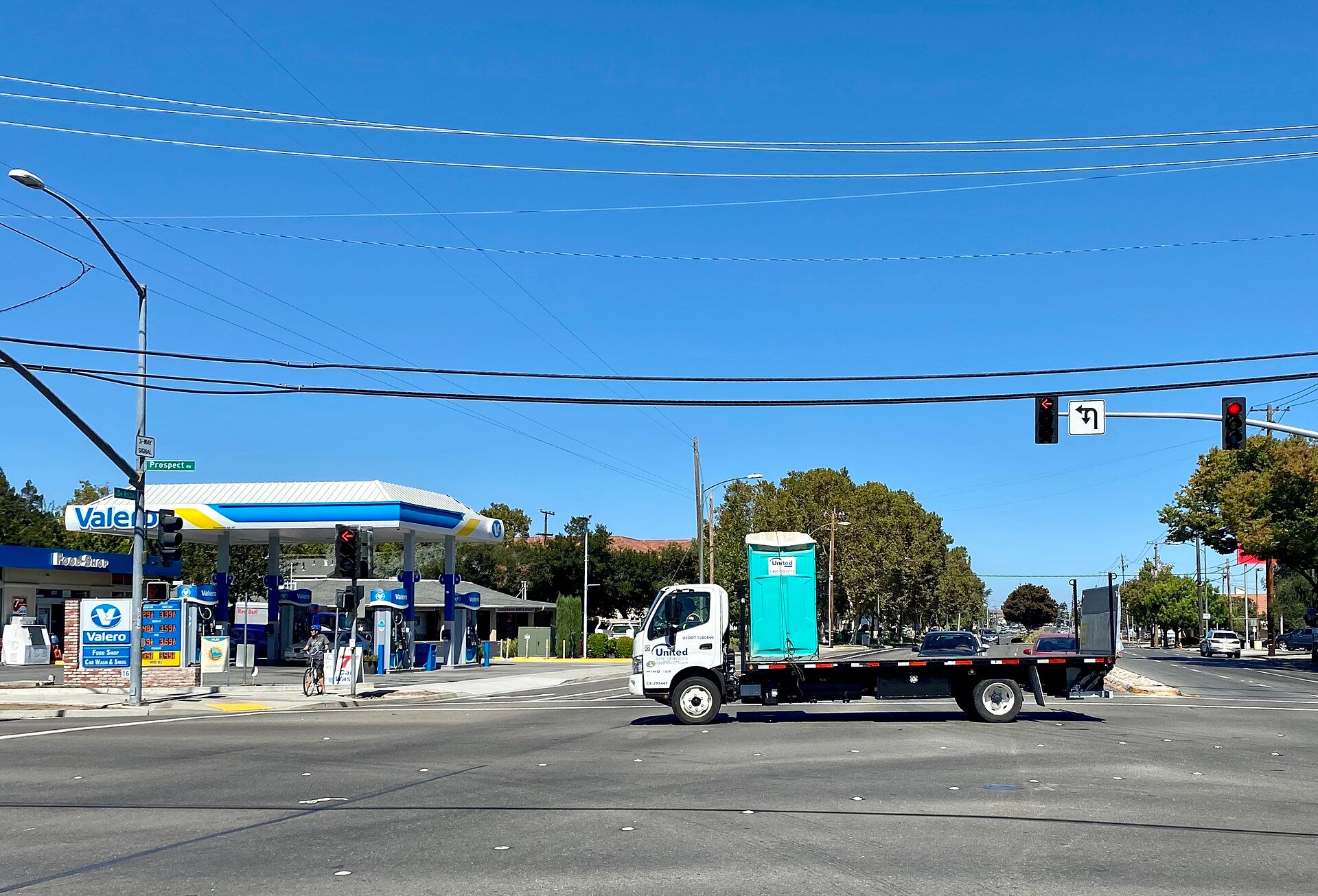
The frequency of maintenance depends entirely on usage volume and environmental conditions. As a general operational rule of thumb within the sanitation industry, a single standard portable restroom can comfortably accommodate approximately 10 individuals during a standard 40-hour workweek before requiring a complete cleanout. Contrary to popular anxiety regarding overflowing facilities, sanitation companies carefully calculate placement ratios for events and construction sites to ensure capacity limits are rarely, if ever, breached.
Once vacuum trucks reach their maximum capacity, technicians transport the collected waste directly to authorized municipal wastewater treatment facilities. These municipal plants possess the infrastructure and processing capacity necessary to safely integrate and treat portable sanitation waste alongside standard municipal sewage loads. Kade Jensen, owner of Minty Pine Sanitation Solutions Ltd. in southern Alberta, Canada, emphasizes that public fears regarding catastrophic tank overflows are largely unfounded due to rigorous scheduling and predictive logistical planning.
The Unlikely Rise of Porta Potty Media Culture
In recent years, the portable sanitation industry has experienced an unexpected cultural resurgence, finding a massive, highly engaged audience across digital and social media platforms. Platforms like Instagram and TikTok have birthed a thriving niche of content creators within the sanitation sector, turning routine maintenance and waste extraction into viral phenomena.
Kade Jensen inadvertently triggered this digital trend when he began publishing point-of-view video documentation of his daily porta potty cleanouts on social media. Each video typically begins with a candid look inside a utilized holding tank before transitioning to the satisfying, transformative process of pressure-washing the unit into a pristine condition. The striking visual contrast between a heavily used interior and a newly sanitized cabin has captivated hundreds of millions of viewers globally.
This digital transparency has fundamentally shifted public perception surrounding an industry that consumers traditionally prefer to ignore. By pulling back the curtain on the mechanics of portable sanitation, creators like Jensen have demystified the profession, demonstrating that porta potties are far more sanitary, structurally sophisticated, and scientifically managed than their intimidating reputations suggest. As public fascination continues to grow, the portable sanitation sector stands as a testament to the intersection of industrial engineering, essential public health logistics, and the unpredictable nature of modern digital connectivity.