New House members say affordability, holding Trump administration accountable are top priorities

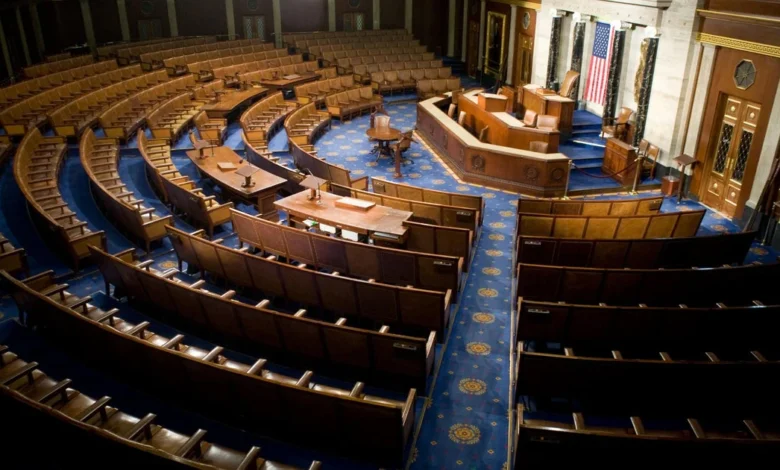
The political landscape of the United States underwent a tectonic shift following the 2026 midterm elections, resulting in a decisive transition of power that saw the Democratic Party secure control of both the House of Representatives and the Senate. As the dust settles on a campaign season characterized by aggressive redistricting efforts and intense national debate, newly elected lawmakers arrived in the nation’s capital this past Sunday to begin the formal orientation process. For these incoming representatives, the mandate is clear: navigate a polarized electorate, address the persistent strain of the cost of living crisis, and establish a framework for oversight of the Trump administration.
The Political Landscape and the Shift in Power
The 2026 midterms represented a historic reversal for the Republican Party, which had entered the election cycle with high expectations of expanding their influence. Despite a concerted national effort to leverage congressional redistricting—often described by political analysts as "dummymandering" due to its failure to solidify long-term GOP gains—the party lost more than three dozen seats. The losses extended across diverse geographic regions, reaching deep into suburban strongholds in the Northeast and traditional GOP-leaning territories in South Texas.
This electoral wave has fundamentally altered the legislative geometry of Washington. With the Democratic Party now holding the gavel in both chambers, the incoming freshman class faces the immediate pressure of translating campaign promises into policy action. For many, the primary objective is to address the economic anxieties that dominated voter sentiment throughout the cycle.
Economic Priorities and the Affordability Agenda
For members of the new Democratic majority, the focus is squarely on the "affordability agenda." During initial briefings and media appearances on Sunday, several representatives-elect underscored the necessity of tackling systemic economic issues that have eroded the purchasing power of the average American household.
Scott Wiener, representing California’s 11th Congressional District and stepping into the seat long held by former Speaker Nancy Pelosi, emphasized the need for a multi-faceted approach to governance. "We can walk and chew gum, but lowering people’s cost of living is the most important," Wiener stated. His sentiment was echoed by colleagues across the country who view economic stability as the primary driver for their legislative priorities.
In Maryland’s 5th Congressional District, Rep.-elect Adrian Boafo highlighted the plight of federal workers as a centerpiece of his legislative mission. With roughly 85,000 federal employees residing in his district and an additional 30,000 across the state who have faced recent workforce reductions, Boafo signaled that protecting the stability of the federal labor force will be his "number one, two, and three priority."
Infrastructure and Bold Legislative Action
The call for bold action is not limited to fiscal policy. Luke Bronin, representing Connecticut’s 1st Congressional District, argued that the current economic climate demands courage from the Democratic caucus. He identified healthcare, the volatile housing market, and surging electricity prices as "deeply broken" sectors requiring immediate intervention.
"We cannot be afraid to offer bold answers and be courageous about pushing through," Bronin said, advocating for an offensive strategy that moves beyond incremental change. His comments highlight a growing sentiment within the party that the scale of the 2026 electoral victory provides a mandate for transformative legislative efforts that were previously stalled by narrow margins.
The Role of Oversight and Accountability
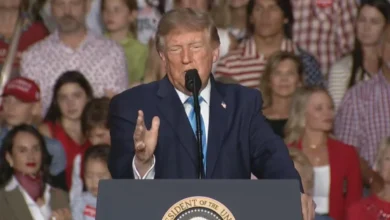
While economic recovery remains the primary focus, the issue of institutional oversight has emerged as a significant secondary pillar for the new House majority. Many incoming members expressed a strong desire to investigate the activities of the Trump administration, citing concerns regarding ethics and government integrity.
Bronin noted that the public sentiment, as evidenced by the election results, indicates a clear demand for accountability. "The type of corruption we’re seeing right now is unlike anything we’ve seen in our history, and the American people just made pretty clear that they’re disgusted by it and they want to see an end to it," he asserted. This focus on oversight suggests that the early months of the new congressional session will likely be defined by a robust use of committee subpoena power and rigorous investigative scrutiny of executive branch actions.
The Republican Response: Rebuilding and Bipartisanship
For the Republican Party, the transition to minority status has prompted an urgent period of internal reflection. GOP Rep.-elect Chris Stigall of Missouri’s 6th Congressional District acknowledged that the party must reckon with the message delivered by voters. "There was a message sent last Tuesday night," Stigall admitted. "I hope, as a new member, I can be on the ground level of figuring out how we can reconnect and better message to the needs of the American people."
Some incoming Republican members are focusing on specific, localized economic concerns as a bridge to common ground. Charlie Hatcher, representing Tennessee’s 5th Congressional District, pointed to the high cost of diesel fuel as a critical issue affecting both his constituency and the broader national logistics chain. As a farmer, Hatcher emphasized the interconnectedness of fuel prices, transportation costs, and grocery inflation, suggesting that infrastructure and energy policy could provide areas for potential bipartisan cooperation.
Other Republicans expressed a pragmatic willingness to work across the aisle, provided the legislation aligns with conservative principles such as deregulation and tax reduction. Rep.-elect Jon Bonck of Texas’ 38th Congressional District noted that he is eager to collaborate with Democrats on issues like housing affordability and healthcare, provided the solutions involve "cutting taxes" and "getting the government out of the way."
The Progressive Caucus: A New Power Bloc
The Congressional Progressive Caucus, which is set to welcome at least 25 new members, held an introductory press briefing that signaled a more assertive role for the party’s left wing. Rep. Greg Casar, the newly appointed chair of the caucus, described the group as the "largest class of progressive members" in recent history, positioning them to act as a primary driver of the party’s legislative agenda.
Casar highlighted that the expanded majority offers a unique opportunity to achieve long-standing policy goals that were previously blocked by narrow margins. He specifically identified the expansion of Social Security and the implementation of higher tax rates for billionaires as critical objectives. "In the past, Democrats, with a narrow majority, have failed to pass Social Security expansion or taxing billionaires because special interests have been able to peel off just one or two members," Casar said.
Rep. Pramila Jayapal, Chair Emerita of the caucus, reinforced these priorities, emphasizing a focus on "taking on corruption" and "ending endless wars." The size and influence of this incoming class suggest that the Democratic leadership will face internal pressure to pursue a more progressive platform than in previous sessions.
Analytical Outlook: Challenges and Implications
The legislative session ahead will be defined by the tension between the Democratic Party’s desire for bold, systemic change and the practical realities of a still-divided nation. The incoming House majority holds the power to pass legislation, but they must navigate the complexities of a Senate that, while also under Democratic control, often requires broad consensus to move significant reforms.
Furthermore, the "affordability agenda" faces the headwinds of global economic instability. While members of Congress can influence local housing policy and federal workforce protections, broader issues such as global energy costs and international supply chain disruptions remain largely outside the direct control of domestic legislative bodies.
The commitment to oversight of the Trump administration also carries inherent risks. A focus on aggressive investigations may galvanize the Democratic base, but it also carries the potential to polarize further the electorate and distract from the legislative successes that the party has promised to deliver.
As these newly elected members undergo their orientation, they are essentially preparing for a high-stakes environment. The effectiveness of this freshman class will be measured not just by their ability to pass legislation, but by their capacity to balance the immediate economic needs of their districts with the broader ideological goals of their respective parties. With the national spotlight firmly fixed on their first hundred days, the incoming Congress has a narrow window to prove that they can deliver on the promises that shifted the balance of power in 2026.
Related posts: