Mechanical engineer builds his own four-seater plane from a kit during the global pandemic

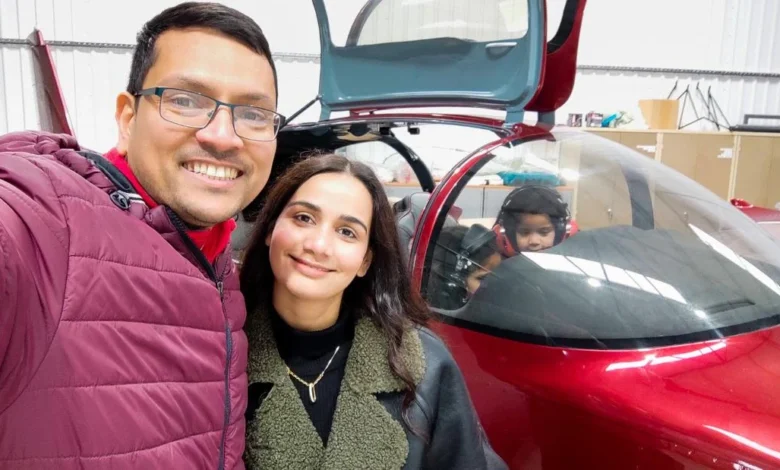
The dream of personal flight is often dismissed as a hobby reserved for the ultra-wealthy or career aviators, but for Ashok Aliseril Thamarakshan, an Essex-based mechanical engineer, the sky became an accessible destination through a combination of engineering prowess and pandemic-era determination. Over the course of 18 months, Aliseril transformed a collection of raw components into a fully functional, four-seater Sling TSi aircraft. His project, which began in the confines of a home-built garden shed during the height of the United Kingdom’s Covid-19 lockdowns, has since evolved into a testament to the viability of amateur-built aviation and the shifting landscape of private travel.
The journey toward the skies for Aliseril was not an overnight endeavor. Having lived near an airfield in the United Kingdom for over a decade, he found his curiosity piqued by the constant movement of light aircraft. The catalyst for his transformation from a bystander to a pilot occurred when his wife, Abhilasha, gifted him a 30-minute flight experience for his birthday. That brief excursion, which included a trip to the Isle of Wight off the English south coast, served as an “eye-opener.” It demonstrated that with the right equipment and training, the horizon was no longer a boundary but a gateway.
By 2019, Aliseril had earned his private pilot’s license. However, he quickly encountered the limitations of the general aviation market. Most readily available rental aircraft were aging two-seaters, ill-suited for his growing family of four. Seeking to purchase a plane, he surveyed the market for vintage aircraft from the 1960s and 1970s. He ultimately rejected this path, citing concerns over maintenance reliability and the discomfort of flying his family in legacy airframes that lacked the modern safety and avionics standards he required.
The Engineering Approach to Homebuilt Aviation
Faced with a choice between buying an unsuitable plane or finding a more bespoke solution, Aliseril turned to the concept of amateur-built aircraft. The decision to construct his own plane was rooted in engineering logic: by building the aircraft from the ground up, he would possess an intimate, granular understanding of its systems, which would prove invaluable for long-term maintenance and safety.
He selected the Sling TSi, a four-seater kit aircraft manufactured by the South African firm Sling Aircraft. Known for its modern design and efficiency, the TSi provided a balance of performance and buildability that appealed to his engineering background. In January 2020, just before the global health crisis brought international travel to a standstill, Aliseril traveled to Johannesburg to test-fly the model. Satisfied with its performance, he placed his order. When the kit arrived in the UK, the country was under strict lockdown measures, forcing him to adapt his plans significantly.
A Pandemic Project in the Back Garden
With social distancing rules preventing him from enlisting the help of colleagues, Aliseril constructed a custom shed in his garden to serve as his primary workspace. The project was subject to strict oversight by the Light Aircraft Association (LAA), the UK body responsible for regulating the construction and maintenance of homebuilt aircraft under authority from the Civil Aviation Authority (CAA).
The regulatory process for amateur-built aircraft is rigorous. In the United Kingdom, the CAA mandates that such aircraft receive a “Permit to Fly” only after meeting stringent airworthiness standards. Throughout the 18-month build, the LAA performed approximately 12 individual inspections at key milestones, ensuring that every rivet, electrical connection, and structural component met safety specifications before the project could proceed to the next phase.

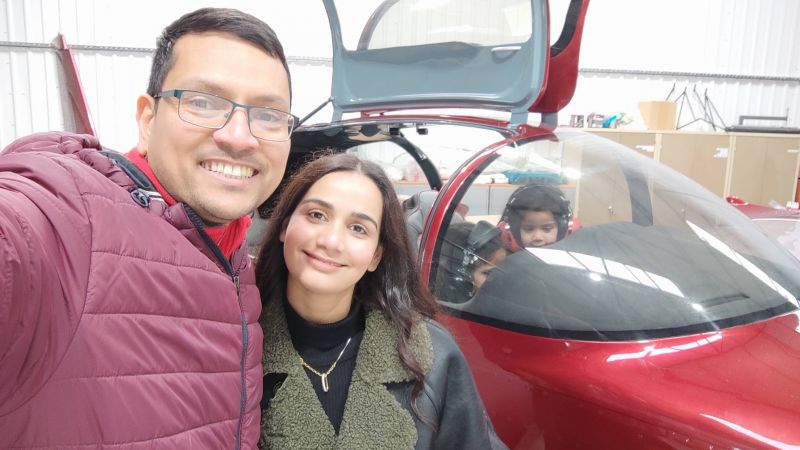
Aliseril notes that while his formal engineering training was an asset, the project required a specific set of practical, hands-on skills—many of which he drew from his experience with home improvement. He described the instructions provided by the kit manufacturer as akin to complex furniture assembly, albeit with significantly higher stakes. His wife, Abhilasha, assisted with complex manual tasks requiring multiple hands, while their nine-year-old daughter, Tara, contributed by assisting with the unwrapping and cataloging of parts.
Chronology of the Build
- January 2020: Aliseril conducts a test flight in Johannesburg and orders the Sling TSi kit.
- April 2020: Construction begins in a purpose-built garden shed following the arrival of the kit and LAA approval.
- Summer 2020: Tail and wing sections are completed.
- October 2020: Fuselage construction begins.
- Late 2021: The project is moved to a hangar near Cambridge for final assembly and engine integration.
- January 2022: The aircraft, registered as G-Diya in honor of his youngest daughter, is signed off for its first flight.
- May 2022: The aircraft receives its final permit to fly.
- 2023: Construction of a dedicated hangar at an Essex airfield is completed.
The First Flight and Beyond
The inaugural flight of G-Diya in early 2022 was a pivotal moment in the project’s lifecycle. Aliseril recalls the profound psychological shift that occurred once the plane transitioned from a “project” to a flying aircraft. During the test flights, he opted for an experienced test pilot to push the machine to its operational limits, a move that provided him with the confidence that the aircraft could handle rigorous flight conditions.
Since its certification, G-Diya has logged over 300 flight hours. The family has utilized the aircraft for extensive travel, including trips to France and Norway. Their journey is documented on the social media account fly_home_or_away, highlighting the freedom afforded by their own aircraft—a luxury that allows for spontaneous weekend trips across the English Channel that would otherwise take significantly longer via commercial or surface transport.
Economic and Practical Implications
A significant challenge in private aviation is the high cost of ownership, which includes hangar fees, maintenance, fuel, and insurance. Aliseril mitigated these costs by forming a four-person syndicate. By sharing the aircraft, the financial burden is distributed, making the cost of operation comparable to that of a mid-sized SUV.

The aircraft is notably fuel-efficient, consuming approximately 20 liters of unleaded fuel per hour, which renders it cost-competitive with driving when considering time saved and efficiency. The total investment for the project, including the kit, avionics, a Rotax engine, and additional supplies, amounted to approximately £180,000 (roughly $203,000 at the time of completion). While a significant capital expenditure, Aliseril argues that for those with the patience to undertake the build, it offers a pathway to aviation that is more accessible than purchasing a pre-manufactured plane.
The Future of Amateur Aviation
Aliseril’s experience highlights a growing trend of individuals bypassing traditional barriers to entry in aviation through kit building. The LAA and similar organizations worldwide continue to facilitate this by providing the necessary safety framework. However, the barrier to entry remains primarily one of time and dedication rather than just capital.
The impact of such projects extends beyond the individual. By fostering a community of pilots who share ownership and knowledge, Aliseril has created a support network that enhances safety and encourages continued learning. He advocates for more young people to consider such ventures, noting that the combination of technical education and communal ownership could revitalize the light aircraft sector.
As G-Diya continues to traverse European skies, the story of its creation stands as a modern example of how amateur engineering, supported by rigorous regulatory oversight, can yield professional-grade results. It challenges the conventional narrative of aviation accessibility and demonstrates that with a clear plan, the right resources, and a willingness to learn, the barrier between a dream and the cockpit can be bridged—even from the humble confines of a back garden.
Related posts: