Senate Republicans Redirect Millions to Kansas as North Carolina Battleground Shifts in Final Midterm Push

The struggle for control of the United States Senate has reached a critical inflection point as the Republican Party’s primary financial engine, the Senate Leadership Fund (SLF), makes a strategic pivot to protect its majority. In a move that underscores the volatility of the 2026 midterm landscape, the super PAC is redirecting millions of dollars toward the Senate race in Kansas, a state historically considered a GOP stronghold, while simultaneously scaling back its investment in North Carolina. This reallocation, confirmed by sources familiar with the internal deliberations, highlights the mounting pressure on the GOP to defend traditional red states against a surging Democratic opposition.
The strategic shift comes as Republicans face an increasingly unfavorable political environment, characterized by intense public discourse surrounding foreign conflicts, energy costs, and the domestic economic outlook. While the GOP currently maintains a narrow majority, the party’s path to retaining control requires a disciplined defense of incumbent seats that were previously expected to be safe. With only weeks remaining until the November elections, the financial maneuvers of the SLF serve as a bellwether for the party’s confidence levels and tactical priorities.
A Changing Map: From the Midwest to the Atlantic
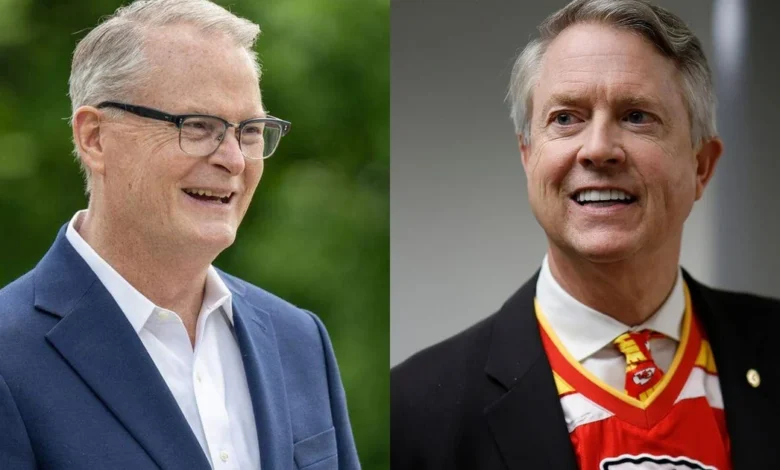
For decades, the political map for Senate Republicans has relied upon the stability of states like Kansas. However, the current cycle has proven to be an outlier. As of early October 2026, the Senate Leadership Fund has reserved nearly $10 million in television and digital advertising to bolster incumbent Senator Roger Marshall. This infusion of capital is designed to counter the momentum of Democratic challenger Adam Hamilton, a pastor who has mounted an unexpectedly strong campaign.
The contrast with North Carolina is stark. Having already spent over $30 million in the North Carolina race to support GOP nominee Michael Whatley, the SLF has opted to pause further future ad spending in the state. This decision signals a triage approach: allocating resources where they are most needed to prevent a loss of a seat that could threaten the party’s overall control of the upper chamber.
The race in Kansas, which has not elected a Democratic senator since 1932, is now effectively a statistical dead heat. Hamilton has successfully localized his platform, drawing on voter frustration regarding domestic energy prices and the geopolitical implications of the ongoing conflict in Iran. The Republican response has been aggressive, with the Marshall campaign utilizing recent television spots to levy serious allegations against Hamilton, questioning his conduct as a senior pastor. This heated rhetoric has drawn sharp rebukes from the Hamilton camp, which describes the tactics as a sign of desperation from a campaign struggling to hold its base.
The Chronology of the 2026 Senate Campaign
The trajectory of the 2026 midterms has been marked by a slow erosion of expected Republican margins. In early 2026, the GOP leadership maintained that their focus would remain on reclaiming seats in states like Michigan and New Hampshire. However, the political environment shifted by mid-summer as inflation concerns persisted and the international situation regarding the Iran war became a central pillar of voter anxiety.
- Early 2026: The Senate Leadership Fund outlines a strategy to aggressively target seats currently held by vulnerable Democrats in the Rust Belt.
- August 2026: Polling in Kansas begins to tighten, with independent analysts shifting the race from "Solid Republican" to "Lean Republican."
- September 2026: Michael Whatley, the GOP nominee in North Carolina, sees his polling lead evaporate against Democratic Governor Roy Cooper. President Trump visits North Carolina to hold a rally, expressing public concern over the state of the race.
- October 2, 2026: The Senate Leadership Fund officially shifts funding priority, moving resources away from the North Carolina media market and into Kansas.
Supporting Data and Political Implications
The financial data provides a clear narrative of the current electoral stress. FEC filings indicate that the SLF has been the primary financier for the GOP’s defensive efforts. In 2020, during the height of the previous presidential cycle, the group spent $17.5 million on the Kansas seat to ensure Marshall’s victory. By committing $9.8 million in the final weeks of the 2026 cycle alone, the party is signaling that the seat is now in a precarious position.
In North Carolina, the situation is similarly complex. The state has been a battleground for years, but the presence of Governor Roy Cooper—a two-term incumbent with significant name recognition—has created a challenge for Michael Whatley, the former RNC chair. Despite Trump’s endorsement and vocal support, the polling indicates that undecided voters, who typically break for the Republican in the state, remain elusive.
Political analysts suggest that the GOP’s need to defend Kansas is a direct result of the party’s inability to capitalize on broader national trends. By focusing on defensive maneuvers in deep-red territory, the party is effectively forced to fight on two fronts: preventing losses in their own backyard while attempting to flip seats in competitive states like Michigan and Maine.
Official Responses and Campaign Rhetoric
The rhetorical battle between the campaigns has reached a fever pitch. Tyson Brody, a spokesperson for the Hamilton campaign, framed the influx of outside money as a tactical error. "Washington is panicking over a desperate, failing politician," Brody stated, arguing that the millions being poured into the state are intended to distract voters from Marshall’s record on healthcare and the economy.
Conversely, the Whatley campaign in North Carolina maintains that the race is far from over. Spokesman DJ Griffin emphasized that late-breaking voters in North Carolina historically lean toward the Republican candidate. Griffin expressed confidence that the party’s resources are sufficient to overcome what he termed "40 years of failures" under Governor Cooper.
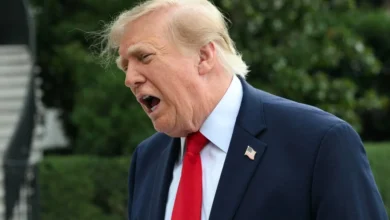
The Trump administration’s involvement remains a key variable. President Trump’s public admission of concern regarding Whatley’s chances highlights the importance of the North Carolina seat to the party’s national image. A loss in North Carolina would be viewed as a significant rebuke of the party’s alignment with Trump-endorsed candidates who lack traditional legislative experience.
The Road to Election Day: Broader Impact
As the November election approaches, the Republican strategy is being dictated by the math of the Senate floor. The party can afford to lose no more than three seats and still maintain a majority. With seats in Maine and Texas also requiring defensive attention, the margin for error has effectively vanished.
Senator Tim Scott of South Carolina, the chair of the National Republican Senatorial Committee, has been consistent in his messaging to GOP lawmakers: the party is in the "fight of our lives." The focus, he noted in a recent closed-door briefing, must remain on a small but critical cluster of toss-up races.
The redirection of funds from North Carolina to Kansas is not merely a budgetary change; it is a tactical retreat designed to secure a vital foothold. If the GOP fails to hold Kansas, the political fallout could be severe, potentially leading to a re-evaluation of the party’s national platform and its reliance on traditional red-state demographics. Conversely, if the investment succeeds in stabilizing the Kansas seat, it may provide the necessary breathing room to focus on the final sprint toward securing a durable, if narrow, Senate majority.
The final weeks of the campaign will likely see an escalation in attack advertising, with both parties betting that the last impression left on the voter will be the deciding factor in these razor-thin contests. For the Senate Leadership Fund, the goal is simple: hold the line, regardless of the cost. For the voters, the flood of advertisements represents the final stage of an exhausting, high-stakes battle for the direction of the legislative branch.