The Rise of Independent Horror and the Strategic Shift in Modern Film Production at the Toronto International Film Festival

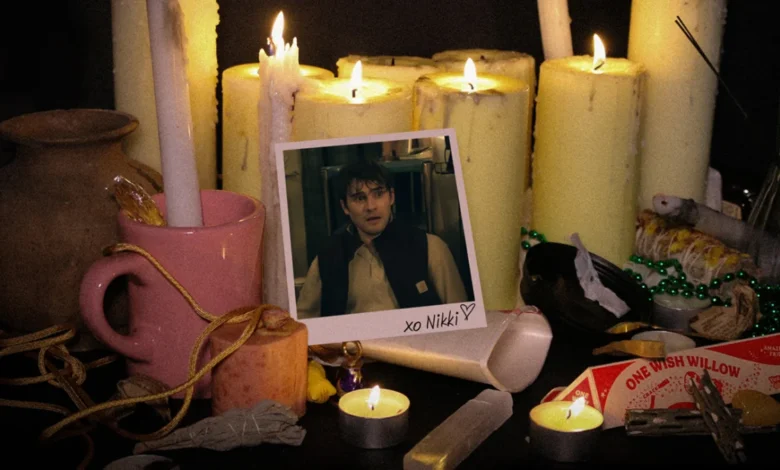
Haley Nicole Johnson is currently navigating the dizzying reality of a breakout producer’s life, a journey catalyzed by the meteoric success of Curry Barker’s psychological thriller, Obsession. For many in the industry, the transition from independent filmmaking to mainstream dominance is a treacherous path, yet Johnson’s recent work serves as a blueprint for the current era of horror production. Speaking during a high-profile panel at the Toronto International Film Festival (TIFF): The Market this past Saturday, Johnson addressed the practical challenges of sustaining momentum in an industry that has suddenly found itself ravenous for genre-bending horror.
"It’s a lot. I’m not going to lie," Johnson admitted to an audience of industry professionals and aspiring filmmakers. "But I’ve been overwhelmed with how welcoming the industry has been to everyone from the Team Obsession camp." Johnson’s transition from the success of Obsession to her recent production of Alex Ullom’s 4X4: The Event for Neon highlights a shift in how studios are identifying talent. By leveraging the low-cost, high-reward nature of independent horror, producers are finding that a clear, singular vision can capture the global box office in ways that traditional tentpole films increasingly struggle to achieve.
A Historic Run: The Obsession and Backrooms Effect
The narrative of Curry Barker’s Obsession is now frequently cited as a case study for modern distribution success. Initially emerging from the independent circuit, the project caught the attention of Focus Features, which acquired the film for $15 million—a significant figure for a debut feature. The subsequent performance of the film was nothing short of historic. By the summer of 2026, Obsession had shattered expectations, pulling in $500 million in global ticket receipts.
This success was not an isolated anomaly. It occurred alongside the rise of Kane Parsons’ Backrooms, another digital-first project that successfully transitioned to the big screen. Together, these two films redefined the financial ceiling for horror projects, proving that audiences were not merely looking for familiar slasher tropes, but for original, high-concept narratives that could translate across cultural and linguistic barriers. These successes effectively lowered the barrier to entry for independent producers while simultaneously raising the expectations for narrative innovation.
The Producer’s Toolkit: Industry Perspectives at TIFF
The panel at TIFF: The Market provided a rare, behind-the-scenes look at how veteran producers are responding to this new market landscape. Adam Hendricks, co-founder of the production powerhouse Divide/Conquer, emphasized that the current hunger for horror is fundamentally rooted in the genre’s unique ability to resonate with human experience.
"This is the place where we can do the most," Hendricks argued. According to Hendricks, the appeal of horror lies in its visceral nature—it connects with audiences on a profound level, often bypassing the need for A-list celebrity talent. In an era where production costs are skyrocketing, the horror genre offers a rare opportunity to produce films that are both creatively ambitious and economically viable.
However, the producers were quick to warn that the market is becoming increasingly crowded. Nyla Innuksuk, the creative force behind Mixtape VR, brought a nuanced perspective to the discussion. Following her debut feature, Slash/Back, Innuksuk debuted her latest project, In the Heart of the South, at this year’s TIFF. She noted that while the appetite for horror is high, the audience’s sophistication is evolving.
"There’s this desire to connect with ideas and feelings that are universal," Innuksuk explained. "Being able to tell something unique to a place and culture, while also connecting to strong feelings that are familiar—whether that’s fear or obsessive love—is the key to longevity."
Navigating the Minefield of Genre Tropes
One of the most critical takeaways from the TIFF discussion was the shared consensus on the danger of derivative storytelling. The modern horror audience is exceptionally well-versed in cinematic history; they recognize beats, foreshadowing, and genre cliches almost immediately. Consequently, producers are facing a "minefield" when it comes to script selection.
"We are averse to stories we have seen before," Hendricks noted, specifically citing the exhaustion surrounding traditional horror icons like zombies and werewolves. For producers, the challenge is no longer just finding a good story, but inventing new mythologies. The question, as posed by Hendricks, is: "What are the new mythologies?"
This sentiment is echoed by Greg Gilreath, Hendricks’ partner at Divide/Conquer. Gilreath emphasized that the next wave of successful horror films will be defined by those who utilize the "full toolkit" of filmmaking. In his view, a strong script is only the foundation. Exceptional horror in the modern era requires a mastery of practical effects, intricate stunt choreography, and an immersive soundscape that creates a sensory experience rather than just a visual one.
Implications for the Future of Distribution
The success of films like Obsession and Backrooms has fundamentally altered the acquisition strategies of major distributors. Historically, mid-budget horror was often relegated to secondary status, but the 2026 box office performance has shifted the calculus. Distributors are now more willing to bet on independent filmmakers who bring a strong digital footprint or a unique, "un-spoiled" aesthetic to the table.
This shift has created a dual-track ecosystem. On one side, established studios are seeking to mirror the "indie-to-mainstream" pipeline by fostering relationships with boutique production houses like Divide/Conquer. On the other side, independent producers are finding that their leverage is at an all-time high. They are no longer simply looking for funding; they are looking for partners who understand how to market unconventional, high-concept horror to a generation of viewers who consume content primarily through social media and digital platforms.
Chronology of the New Horror Wave
The trajectory of this movement can be traced back to the late 2020s, a period marked by the convergence of digital creators and traditional studio infrastructure.
- Early 2024: Independent horror projects began garnering significant attention at film festivals, with buyers noting a dip in the performance of traditional blockbuster sequels and a surge in original horror.
- Late 2025: The acquisition of Obsession by Focus Features signaled a major pivot. The industry began to view digital-first creators not as fringe risks, but as essential pipelines for future intellectual property.
- Summer 2026: The $500 million performance of Obsession solidified the genre’s status as a "safe haven" for investment, leading to a surge in production activity for 2027 and beyond.
- Present Day (TIFF 2027/2028): Producers are now moving from a "gold rush" mentality to a "sustainability" model, focusing on the development of long-term mythologies rather than quick, one-off viral hits.
The Human Element: Why Horror Prevails
Beyond the financial data and the distribution strategies, the panel concluded on a humanistic note. The success of these films is inextricably linked to the audience’s need for catharsis. As Innuksuk pointed out, the themes of horror—fear, isolation, and the struggle against the unknown—are universal. When these themes are grounded in a specific culture or a unique location, they become more than just "scary movies." They become mirrors that reflect contemporary anxieties.
The transition from the independent scene to the global stage is fraught with risk, as many creators struggle to maintain their voice under the pressure of studio demands. However, the success of producers like Haley Nicole Johnson suggests that a balance is possible. By focusing on narrative authenticity and respecting the intelligence of the audience, the next generation of horror producers is poised to keep the genre at the forefront of the cinematic experience for the foreseeable future.
As the industry looks toward the next cycle of film releases, the lessons from TIFF are clear: the market does not want more of the same. It wants, and expects, the unexpected. For those willing to push the boundaries of myth-making, the doors of the multiplex remain wide open.