Raiders Star Tight End Brock Bowers Remains Sidelined as Status for Week 2 Matchup Against Chargers Hangs in the Balance

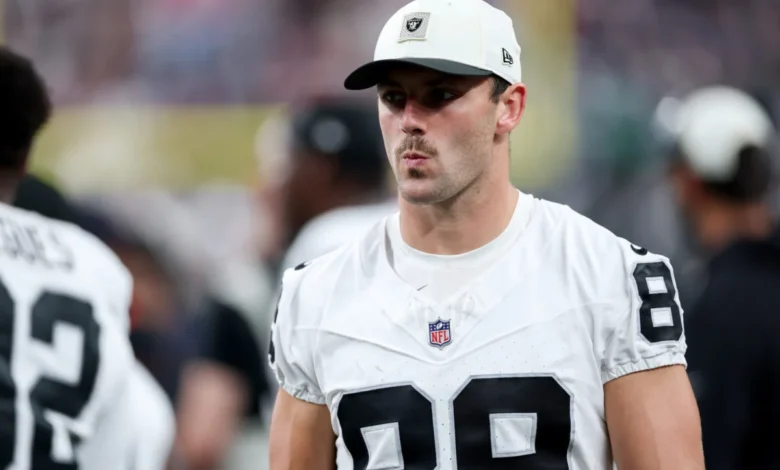
The Las Vegas Raiders entered the crucial preparations for their Week 2 divisional showdown against the Los Angeles Chargers without their dynamic offensive centerpiece. Star tight end Brock Bowers was restricted to the sidelines during Wednesday’s practice session, leaving his availability for Sunday’s game at SoFi Stadium increasingly uncertain.
This absence extends a carefully guarded recovery timeline that began when Bowers underwent a targeted meniscus trim last week. While the procedure was characterized as minor, the precise date of his return has sparked considerable speculation among analysts and fantasy football managers alike. Raiders head coach Klint Kubiak, maintaining a guarded stance with the media, once again categorized the explosive pass-catcher as "day-to-day" when pressed by reporters following Wednesday’s workout.
"That’s my hope," Kubiak said when asked if he anticipates Bowers returning to the practice field before the team finalizes its game plan. "Just keep getting them better every day."

A Murky Injury Timeline and Internal Caution
The path to Bowers’ recovery has been subject to conflicting reports and organizational caution. Industry insiders, including ESPN’s Dan Graziano, have noted that the underlying knee issue is not deemed overly serious. In fact, internal discussions within the Las Vegas organization suggested that medical staff believed Bowers could have potentially suited up for the Week 1 opener against the Miami Dolphins if emergency circumstances demanded it.
However, prudent leadership prevailed. Rather than risking a premature comeback that could compromise the long-term health of their premier offensive weapon, the Raiders opted for a conservative approach. The franchise’s overarching goal is to ensure that Bowers is entirely free from functional limitations before inserting him back into the high-speed environment of regular-season competition.
Graziano offered a broader window for optimism in his weekly column, indicating that while a Week 2 appearance remains up in the air, a return by Week 4—when the Raiders face the division-rival Kansas City Chiefs—represents the absolute outer bound of his expected absence.
"I believe the latest you’ll see Bowers is Week 4 against the Chiefs, but again, it could be sooner than that," Graziano wrote.

Week 1 Success Proves Depth, Highlights Difference-Maker Value
The unfolding situation underscores a complex tactical reality for the Raiders coaching staff: Las Vegas demonstrated in Week 1 that it possesses the structural depth to survive without Bowers, yet it remains profoundly aware that his unique skill set elevates the offense from competent to formidable.
During their commanding 27-13 victory over the Miami Dolphins, the Raiders leaned heavily into their established tight-end-heavy offensive architecture. Veteran backup Michael Mayer absorbed a massive workload, logging 55 of a possible 68 offensive snaps. Mayer rewarded the coaching staff’s trust by hauling in six of his seven targets for 32 yards.
Mayer’s steady performance came just days after the front office rewarded him with a lucrative three-year, $45 million contract extension, cementing his role as a foundational piece of the franchise’s intermediate passing game. Operating alongside quarterback Kirk Cousins, Mayer proved to be a reliable, chains-moving option in the short-to-intermediate zones of the field.
Yet, a granular review of the Week 1 offensive output reveals the distinct absence of the vertical stretch and post-catch explosiveness that defines Bowers’ game. While running back Ashton Jeanty also stepped up—leading the team with 45 receiving yards and matching Mayer with six receptions—the offense predominantly functioned through underneath check-downs and horizontal spacing.

Mayer and Jeanty capably managed the conservative elements of the game plan, but neither possesses the rare physical traits that allow Bowers to dictate defensive coverages, draw bracketed attention, and create mismatches against elite linebackers and safeties from multiple alignments across the formation.
Tactical Implications for the Chargers Matchup
As the Raiders turn their attention toward the Chargers, the absence or presence of Bowers fundamentally alters defensive coordinator strategies for Los Angeles. Without Bowers on the field, opposing defenses can allocate more resources toward containing perimeter threats and crowding the short-to-intermediate zones where Mayer and Jeanty traditionally operate.
Conversely, inserting Bowers back into the lineup instantly stretches the field vertically and forces linebackers into impossible leverage assignments. Even on a theoretical snap count, his presence commands immediate safety help, opening up space for the rest of the offensive personnel.
The decision on whether to activate the star tight end for Sunday will ultimately depend on functional benchmarks met during Thursday and Friday practice sessions. If Bowers demonstrates the necessary cutting ability, lateral mobility, and explosive burst during individual drills, the coaching staff may give him the green light. If any hesitation or lingering discomfort remains, the Raiders appear fully prepared to exercise patience once again, trusting their depth to weather another week while prioritizing the long-term health of their most dangerous offensive weapon.