Heathrow Expansion and Net Zero: The Clash Between UK Aviation Growth and Climate Commitments

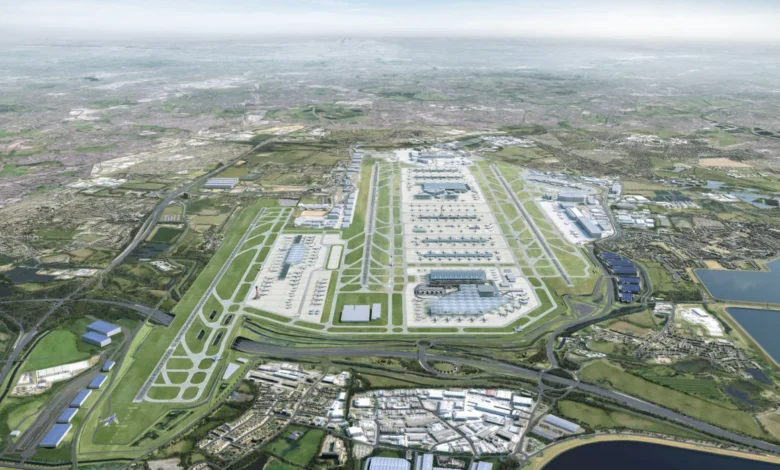
The ongoing debate surrounding the potential expansion of London Heathrow Airport has reached a critical juncture as climate advisors, government officials, and aviation industry stakeholders lock horns over the feasibility of balancing massive infrastructure growth with legally binding carbon reduction targets. At the heart of this friction is a paradoxical proposal gaining traction among UK climate experts: that curbing passenger demand may be the only viable method to permit airport expansion while keeping national emissions in check. This assertion, championed forcefully by the government’s official climate advisory body, has injected renewed urgency into a decades-long controversy over the future of British aviation.
The friction between aviation expansion and environmental stewardship highlights a fundamental policy contradiction. While economic stakeholders argue that a third runway at Heathrow is indispensable for maintaining the United Kingdom’s status as a premier global aviation and trade hub, environmental scientists and policy advisors warn that the carbon footprint of such a project threatens to torpedo the nation’s pathway to net-zero emissions by 2050. As pressure mounts on Westminster to deliver coherent climate strategies, the debate transcends local zoning laws and economic forecasts, transforming into a litmus test for the credibility of the UK’s climate commitments on the international stage.
The Evolution of the Heathrow Expansion Controversy
To understand the gravity of the current standoff, it is necessary to examine the protracted chronology of the Heathrow expansion debate. For decades, London’s primary hub has operated near maximum capacity, leading to constrained flight schedules, elevated ticket prices, and intense competition among international carriers for landing slots.
The modern phase of the expansion saga began in earnest in 2006, when the UK government first signaled support for additional runway capacity in the South East of England. Following years of studies, public consultations, and political indecision, the Airports Commission—chaired by Sir Howard Davies—was established in 2012 to conduct an independent review of the UK’s long-term airport capacity needs. In July 2015, the Commission published its final report, unanimously concluding that a new northwest runway at Heathrow was the best option for meeting the nation’s future connectivity requirements.
Subsequent milestones in this complex timeline include:
- October 2016: The UK government formally expresses support for Heathrow expansion, setting the stage for a statutory National Policy Statement (NPS).
- June 2018: Parliament votes overwhelmingly in favor of the Airports National Policy Statement, solidifying the policy framework for the third runway project.
- December 2019: Heathrow Airport Limited submits its initial development consent order application, though legal challenges from local authorities, residents, and environmental groups immediately follow.
- February 2020: The Court of Appeal rules that the government’s approval of the expansion was unlawful because the Secretary of State failed to take into account the UK’s commitments to the Paris Agreement on climate change.
- December 2020: The Supreme Court overturns the Court of Appeal’s ruling, declaring the expansion lawful and clearing the legal path for the planning process to resume, albeit with significantly altered post-pandemic economic realities.
- 2021–Present: The debate shifts focus from legal technicalities to the overarching challenge of decarbonisation, culminating in sharp warnings from the Climate Change Committee regarding the absolute incompatibility of unchecked aviation growth with net-zero mandates.
Current Stances and Expert Warnings
The debate has intensified following recent interventions by the Climate Change Committee (CCC), the independent statutory body established under the Climate Change Act 2008 to advise the UK government on emissions targets. Nigel Topping CMG, serving as a prominent voice within the climate advisory landscape, has articulated deep skepticism regarding the current trajectory of the aviation sector.
"Emissions from flying are projected to rise, even without Heathrow expansion, and the UK does not currently have a credible plan to bring them down. That poses a serious challenge to our climate commitments," Topping stated during a series of recent briefings. He asserted unequivocally that a Heathrow expansion is "not currently compatible with the UK’s Net Zero target."
Topping further emphasized that the regulatory framework governing the industry remains inadequate. "Government needs to ensure that the aviation industry takes responsibility for the emissions it creates and bears the costs of decarbonisation. Those conditions do not exist today," he added, pointing to a regulatory vacuum where airlines are not sufficiently incentivized or penalized to drive rapid, systemic change.
Supporting Data: The Carbon Accounting Reality
The quantitative context underpinning these warnings illustrates the monumental scale of the challenge. Globally, commercial aviation accounts for approximately 2.5% of total carbon dioxide emissions. However, when factoring in non-CO2 warming effects—such as the formation of condensation trails (contrails) and cirrus clouds at high altitudes—aviation’s total contribution to effective radiative forcing is estimated to be significantly higher, roughly double its CO2-only impact.
Within the UK, domestic and international departing flights represent a major share of the national transport carbon inventory. Key data points illuminating the sector’s trajectory include:
- Baseline Emissions: Aviation contributed over 36 million tonnes of CO2 equivalent to the UK’s greenhouse gas emissions in pre-pandemic 2019, making it one of the country’s most carbon-intensive single sectors.
- Growth Projections: Even accounting for projected improvements in fleet fuel efficiency and operational practices, baseline passenger demand models indicate that air travel volume will rebound and exceed 2019 levels over the coming decade.
- The Mitigation Gap: Government projections show that without explicit demand-management policies or revolutionary technological breakthroughs, aviation emissions will consume a disproportionate percentage of the UK’s legally binding carbon budgets set for the 2030s and 2040s.
- Sustainable Aviation Fuels (SAF): While SAF is widely touted by industry stakeholders as the primary vehicle for decarbonisation, current global production accounts for less than 1% of total jet fuel consumption. Scaling production to meet the demands of a expanded Heathrow and the broader UK aviation network requires unprecedented capital investment, feedstock availability, and refinery infrastructure over a compressed timeframe.
Broader Implications for UK Climate Policy and Economic Strategy
The standoff over Heathrow places the UK government in a classic policy trilemma: balancing economic growth, regional connectivity, and strict environmental accountability.
Advocates for the expansion argue that constraining Heathrow undermines the UK’s post-Brexit trade ambitions, stifles foreign direct investment, and cedes competitive advantage to rival European megahubs such as Amsterdam Schiphol, Paris Charles de Gaulle, and Frankfurt Airport. Proponents maintain that technological innovation—specifically electric propulsion, hydrogen-powered aircraft, and scaled SAF deployment—will eventually decouple aviation growth from carbon emissions without requiring artificial caps on passenger numbers.
Conversely, environmental economists and climate scientists counter that relying on unproven or nascent technologies to solve near-term emissions crises represents an unacceptable gamble. They argue that throttling passenger demand—either through carbon pricing mechanisms, frequent flyer levies, or direct caps on flight movements—is an unavoidable interim strategy. Throttling demand directly challenges the foundational business model of major international airports, which rely on volume to generate retail, landing, and operational revenue.
Furthermore, the implications extend beyond British borders. As a self-proclaimed global leader in climate legislation, the UK’s handling of the Heathrow expansion serves as a bellwether for other industrialized nations grappling with similar infrastructure dilemmas. If the UK permits massive airport expansion without a watertight, technologically verified plan for net-zero compliance, it risks signaling a dilution of international climate resolve at a time when global emissions require aggressive downward adjustments.
Outlook and Future Trajectory
As the Department for Transport reviews national aviation policy alongside updated advice from the Climate Change Committee, policymakers face a definitive fork in the road. The traditional model of uninhibited aviation expansion is colliding directly with the physical limits of atmospheric carbon capacity.
Whether the government will heed the warnings of climate advisors and implement stringent demand-management frameworks, or whether it will prioritize immediate economic expansion and pin its hopes on speculative technological leaps, remains the central policy question for British transport infrastructure. What is certain is that the path forward for Heathrow can no longer be evaluated in isolation from the overarching imperative of planetary survival.
Related posts: