President Trump Announces Formation of AI Force and Appointment of New AI Czar to Accelerate Technological Dominance

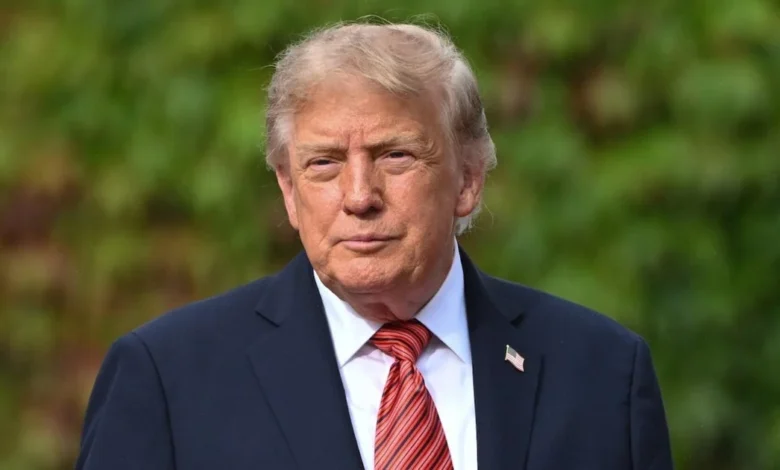
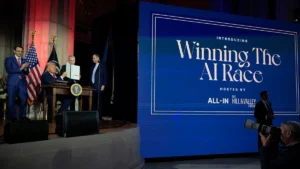
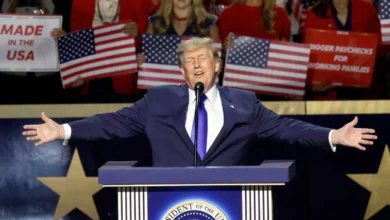
President Trump officially announced on Saturday the formation of a dedicated "AI Force," signaling a robust shift in federal policy toward the rapid acceleration of artificial intelligence development. Rejecting widespread concerns regarding the potential for superintelligence to pose existential threats, the President framed the initiative as a critical component of American economic and geopolitical strategy. The announcement, delivered via a statement on Truth Social, characterizes the burgeoning AI sector as the "next Industrial Revolution" and underscores a commitment to fostering innovation by minimizing regulatory hurdles.
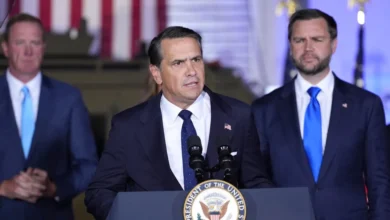
This move follows a period of administrative transition regarding the oversight of emerging technologies. Having previously appointed David Sacks as the "White House A.I. & Crypto Czar" in December 2024—a role that concluded in March 2026—the administration is now poised to install new leadership to helm the newly established AI Force. By drawing parallels between this initiative and the creation of the Space Force during his first term, the President has signaled that the administration views AI governance through the lens of national security, global competition, and industrial capacity.
The Strategic Vision for AI Development
The administration’s stance is rooted in the belief that the American legal framework—specifically the existing civil and criminal justice systems—is sufficient to mitigate any potential risks associated with AI. By explicitly stating that the federal government will "not in any way hinder or stifle the Growth of this incredible Industry," the President has effectively prioritized market expansion over the cautionary regulatory frameworks favored by some industry leaders.
Economic projections cited by the administration suggest that the artificial intelligence sector could eventually account for as much as 25% of the United States’ Gross Domestic Product (GDP). This aggressive growth trajectory is framed as a mandatory response to the intensifying technological race against international competitors, most notably China. The focus is on ensuring that American firms maintain an insurmountable lead in both compute capacity and algorithmic efficiency, viewing any delay or heavy-handed regulation as a strategic disadvantage in a global theater where the first-mover advantage often dictates future geopolitical influence.
A Chronology of Policy and Oversight
The evolution of the federal government’s relationship with the AI industry has been marked by distinct shifts in philosophy over the last twenty-four months:
- December 2024: President Trump formalizes his commitment to the sector by appointing David Sacks as the White House A.I. & Crypto Czar. The role was designed to harmonize regulatory approaches toward digital assets and machine learning.
- Early 2025: Throughout the year, debates regarding the safety of self-improving models intensified within the technology community, with various industry leaders calling for federal oversight.
- March 2026: David Sacks concludes his tenure as a special government employee, creating a vacancy in the administration’s tech-oversight hierarchy.
- September 8, 2026: Former Anthropic researcher Jacob Coxon issues a public warning, alleging that leading AI labs are "gambling with our lives" by accelerating the development of potentially uncontrollable superintelligence.
- September 19, 2026: The President announces the formation of the AI Force and the impending appointment of a new AI Czar, formally rejecting the "hoax" narrative surrounding existential risk.
Industry Dissent and the Debate Over Safety
The President’s announcement comes at a time of deep division within the technology sector. While the White House advocates for unencumbered growth, several prominent voices in the research community have expressed alarm. The core of the disagreement lies in the definition of "risk." The administration maintains that risks can be handled post-hoc through legal systems, whereas critics argue that once a superintelligent system is deployed, the speed of its operation could render human legal remedies obsolete.
Anthropic CEO Dario Amodei, a leading voice in the "safety" camp, has publicly urged the industry to implement voluntary slowdowns. In recent interviews, Amodei asserted that the industry had previously downplayed the risks inherent in deep-learning models, suggesting that the drive for market dominance has historically outweighed the necessary safety testing. These sentiments echo the concerns of researchers like Jacob Coxon, who argue that the race to achieve Artificial General Intelligence (AGI) is creating a scenario where safety protocols are sacrificed for speed.
Economic and Infrastructure Implications
The push for rapid AI expansion brings significant logistical challenges, primarily regarding energy consumption and data center infrastructure. The massive demand for electricity required to train and run next-generation models has placed significant strain on local power grids, particularly in regions like California. This has led to friction between technology companies and utility providers, as energy costs for residential and commercial users have fluctuated in response to the massive intake required by data centers.
Despite these infrastructure hurdles, the administration’s new policy signals that it intends to use the power of the federal government to expedite the permitting and construction of energy projects required to support AI. By framing the industry as a cornerstone of the national economy, the administration is likely to prioritize the needs of tech companies over local opposition, aiming to ensure that the U.S. power grid remains robust enough to support the compute demands of the coming decade.
Analytical Implications of the AI Force
The creation of an "AI Force" suggests a move toward a more centralized, mission-oriented approach to technology. If modeled after the Space Force, this entity could eventually serve as a bridge between the private sector’s research capabilities and the Department of Defense’s national security requirements.
The primary implication is the blurring of lines between civilian technological advancement and military applications. As AI systems become more capable, the ability to monitor, secure, and defend digital infrastructure—or conversely, to project power through automated systems—will become a central pillar of national defense. By appointing a dedicated Czar to lead this effort, the President ensures that there is a single point of accountability for achieving these goals, likely streamlining the procurement of AI-related technologies for federal use.
However, the dismissal of "existential risk" as a hoax carries long-term policy consequences. By signaling that the government will not preemptively regulate AI development, the administration has effectively provided a green light to firms that have been hesitant to pursue more advanced, autonomous models due to public or ethical pressure. This move is expected to trigger a significant influx of capital into the sector, as investors view the federal stance as a clear indicator of a favorable, low-regulation environment for the foreseeable future.
Public and Stakeholder Reactions
Reaction to the announcement has been polarized along lines of technological optimism versus cautious realism. Proponents of the policy argue that the U.S. cannot afford to be the only nation in the world to "pause" or "slow down," as doing so would only cede technological dominance to rivals who may not share the same ethical or safety constraints. For these stakeholders, the AI Force is a necessary evolution in the state’s role as an enabler of industrial might.
Conversely, civil liberties groups and safety advocates have expressed concerns that the lack of proactive oversight could lead to irreversible societal harms, including algorithmic bias, the degradation of privacy, and the potential for autonomous systems to cause physical or economic disruption. The challenge for the incoming AI Czar will be to navigate these competing interests while satisfying the President’s mandate to maintain a high-growth environment.
Conclusion
The formation of the AI Force and the appointment of a new AI Czar marks a definitive turn in American technology policy. By framing the rapid deployment of AI as a national imperative and characterizing safety-related concerns as unfounded, the administration has set the stage for an era of accelerated, market-driven innovation. Whether this approach successfully maintains American leadership without incurring catastrophic technological or social costs remains the central question of this new industrial era. As the administration prepares for its next phase of AI policy, all eyes will remain on the selection of the new Czar and the specific mandates assigned to the newly formed AI Force.