IHG Hotels & Resorts Prepares for the AI Search Era While Betting That Direct Guest Relationships Remain King

The global hospitality landscape is undergoing a profound structural transformation, driven largely by the rapid integration of artificial intelligence into consumer travel planning. As generative AI assistants and intelligent discovery engines increasingly dictate which hotels secure coveted recommendations, major hospitality groups are racing to adapt their digital footprints. Among them is IHG Hotels & Resorts, which is fundamentally overhauling its content architecture to ensure maximum legibility for machine learning models. However, even as the enterprise invests heavily in optimizing for AI algorithms, leadership insists that algorithmic recommendation engines will never replace the profound, direct connections forged between hotel brands and their guests.
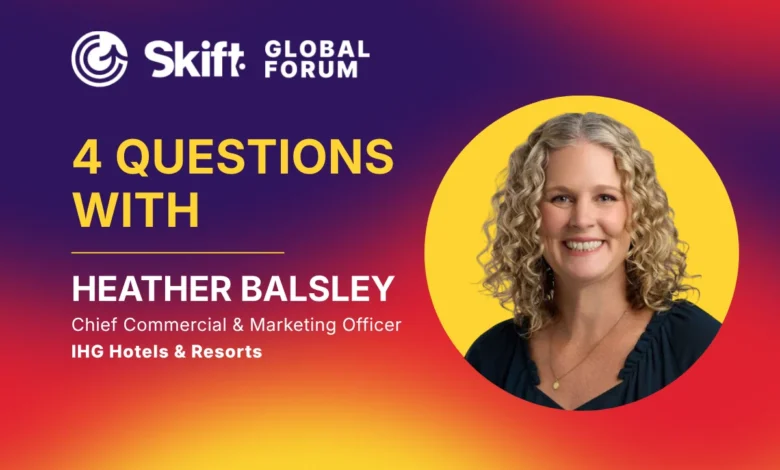
Heather Balsley, Chief Commercial & Marketing Officer at IHG Hotels & Resorts, is set to address these shifting paradigms at the upcoming Skift Global Forum, scheduled for September 22–24, 2026, in New York. Ahead of the high-profile industry gathering, Balsley has detailed the dual-pronged strategy guiding one of the world’s largest hotel companies through an era defined by technological disruption, fragmented customer journeys, and the rise of automated search.
The Mechanics of AI Legibility and the Content Overhaul
In the traditional digital travel marketplace, search engine optimization (SEO) relied heavily on keywords, metadata, and backlink profiles to push hotel properties to the top of browser results. Today, the advent of generative AI chatbots and conversational travel assistants has fundamentally rewritten the rules of discovery. When modern travelers ask an AI assistant to curate an itinerary or recommend a boutique hotel tailored to specific nuanced needs, the system pulls exclusively from content it can parse, process, and contextualize.
Recognizing this operational reality, IHG is deploying significant capital toward a comprehensive digital infrastructure upgrade. Later this year, the company will officially roll out a proprietary content management platform designed to completely revolutionize how hotel data is structured, stored, and distributed.
According to corporate leadership, basic property descriptions and static amenity lists are no longer sufficient. AI models demand granular, dynamic, and highly relevant data to accurately match a traveler’s unique purpose, preferences, and contextual constraints. The new IHG platform aims to streamline this process, enabling individual properties to dynamically showcase their unique selling propositions across multiple digital channels simultaneously. By sharpening these underlying digital signals, IHG ensures that its global portfolio of brands remains prominently surfaced when AI platforms formulate recommendations, effectively future-proofing the company’s digital distribution strategy.
The Shifting Traveler Journey and the Rise of the Super-App
The modern consumer path to purchase has evolved from a linear funnel into a fragmented, multi-channel ecosystem. Modern travelers frequently bounce between social media platforms for visual inspiration, online travel agencies for comparative pricing, and dedicated mobile applications for seamless transactions. Increasingly, however, AI assistants are emerging as the initial "front door" to travel planning, consolidating destination research, logistical scheduling, and property shortlisting into single, conversational sessions.
Despite the proliferation of these complex discovery pathways, consumer expectations remain steadfastly anchored in reliability, speed, and personalization. Whether a customer is embarking on a high-stakes corporate trip or a leisure vacation, the fundamental human desire for frictionless decision-making has intensified.
To meet these rising expectations, IHG has leaned heavily into diversifying its brand portfolio—ranging from luxury and lifestyle properties to extended-stay accommodations—while strengthening its enterprise loyalty ecosystem. By integrating personalized digital experiences directly into its proprietary mobile platforms, the hospitality giant aims to capture consumer intent early in the booking cycle, mitigating the risk of disintermediation by third-party tech platforms.
Historical Precedents: Why New Channels Do Not Equal Monopolies
Industry observers frequently express anxiety that dominant search platforms, online travel agencies (OTAs), and emerging AI gatekeepers will ultimately erode the profit margins and market power of traditional hotel brands. However, IHG’s commercial leadership maintains a historical perspective that refutes this zero-sum narrative.
The hospitality sector has navigated major distribution shifts before. The explosive rise of OTAs in the early 2000s, the subsequent mobile booking revolution, and the meteoric rise of hyper-localized super-apps in markets like China all fundamentally disrupted how consumers interacted with travel brands. While each technological wave introduced unique operational challenges and competitive pressures, none succeeded in eliminating the intrinsic value of strong, trusted brands and direct customer relationships.
In Balsley’s assessment, generative AI discovery engines and conversational platforms represent the next logical iteration of this evolution. While travelers will undoubtedly rely on AI for inspiration and initial curation, long-term brand equity, guest retention, and profitability will continue to hinge on tangible touchpoints: consistent on-property execution, personalized recognition through robust loyalty programs, and authentic human hospitality.
Strategic Decision-Making: The Core Test for Hospitality Executives
Amid relentless technological advancement and industry hype surrounding artificial intelligence, corporate decision-makers face mounting pressure to adopt every emerging trend. To filter out costly distractions, IHG applies a rigorous, foundational evaluation metric to all prospective investments.
The core guiding principle is remarkably straightforward: Does the proposed technological enhancement genuinely elevate the guest experience while simultaneously driving measurable financial value for hotel owners? If a tool successfully reduces customer friction, empowers travelers to make more confident booking decisions, strengthens long-term brand loyalty, or optimizes property performance, it earns a place in the strategic roadmap. Innovations that fail to meet this dual threshold of guest utility and owner value are systematically filtered out as technological noise.
Contextualizing the Skift Global Forum 2026
The strategic disclosures from IHG leadership arrive at a critical juncture for the international travel sector. The Skift Global Forum 2026 stands as one of the industry’s premier executive platforms, convening influential leaders to debate the future of travel, technology, and commerce.
This year’s conference features a powerhouse roster of chief executives, including Glenn Fogel of Booking Holdings and Ariane Gorin of Expedia Group, alongside IHG’s Heather Balsley. The dialogue in New York is expected to focus heavily on the tension between automated discovery platforms and direct-to-consumer brand loyalty, providing a crucial barometer for how legacy travel giants plan to navigate the next decade of digital disruption.
Broader Industry Implications and Future Outlook
The aggressive content modernization strategy pursued by IHG offers a compelling blueprint for the broader hospitality and tourism ecosystem. As machine learning models increasingly act as primary intermediaries between service providers and consumers, companies that fail to optimize their digital content risk commercial obscurity.
At the same time, the broader industry implication points toward an intensifying battle for data ownership and customer loyalty. While AI models can efficiently aggregate listings and streamline the search process, they lack the capacity to deliver physical hospitality. Consequently, the hotels and resort groups that successfully harmonize machine legibility with exceptional on-property execution will likely capture the lion’s share of market value in the AI-driven economy.
As the industry converges in New York for the Skift Global Forum, the dialogue surrounding AI legibility and brand autonomy will undoubtedly set the strategic agenda for hospitality brands worldwide, establishing new benchmarks for digital transformation in the years ahead.