Airbnb Wants Hotels to Become Its Next Multi-Billion-Dollar Business But Can It Keep Them Exclusive

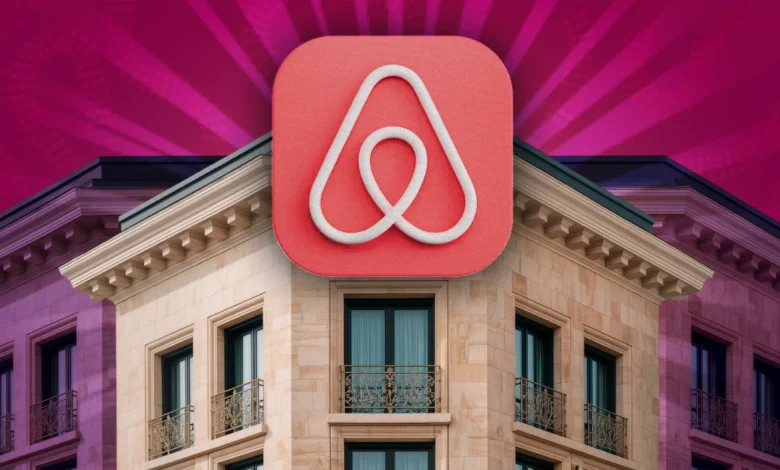
The evolution of Airbnb from an unconventional peer-to-peer couch-surfing platform into a publicly traded accommodation giant has been marked by strategic pivots, regulatory battles, and shifting consumer expectations. Yet, perhaps no turnaround in the company’s corporate strategy has been as stark as its embrace of traditional hotels. Once positioned by its founders as the definitive antidote to the homogenized hospitality industry, Airbnb is now actively courting boutique hotels, bed-and-breakfasts, and independent properties in an effort to forge what CEO Brian Chesky has boldly termed one of the company’s next multi-billion-dollar businesses.
This strategic about-face comes at a time when the online travel agency (OTA) landscape is fiercely competitive. Dominated for decades by heavyweight platforms such as Booking Holdings and Expedia Group, the digital booking ecosystem leaves little room for radical disruption. However, Airbnb’s approach to incorporating hotels diverges sharply from its legacy competitors. Rather than operating as an open directory that lists every available room on the market, Airbnb is intentionally curating its inventory, leveraging its massive global user base, and offering lower commission structures to entice hoteliers. As the platform scales this nascent business model, industry analysts are watching closely to see whether Airbnb can successfully bridge the gap between alternative accommodations and traditional hospitality without alienating its core host community.
From Ideological Rivalry to Pragmatic Partnership
The history of Airbnb’s relationship with the hotel sector is rooted in friction. When the company launched in 2008 under the iconic, albeit provocative, tagline "Forget hotels," it promised travelers a more authentic, localized alternative to staying in sterile corporate rooms. For years, leadership reinforced this positioning. CEO Brian Chesky famously maintained that the platform would never list traditional hotels, arguing that the company’s mission was to offer homes, not hospitality establishments.
That ideological stance, however, collided with the harsh realities of consumer demand and market saturation. Speaking candidly at a Goldman Sachs financial conference earlier this month, Chesky reflected on the pivotal moment his perspective shifted. "At some point, I stopped being ideological," Chesky told attendees. "I started becoming practical."
The catalyst for this shift was simple: customers kept asking for hotels. As Airbnb expanded into a mainstream travel utility, users frequently searched the platform for professional hospitality options, particularly in urban centers where regulatory crackdowns on short-term rentals constrained supply, or among travelers seeking the amenities of a hotel combined with the ease of the Airbnb interface. Recognizing that millions of potential bookings were slipping through its fingers because the platform lacked traditional inventory, leadership began laying the groundwork for a cautious reentry into the hotel sector.

The Numbers Behind the Push
While Airbnb’s core business remains rooted in private apartments, vacation homes, and unique stays—approaching a staggering $100 billion in gross booking value—its hotel footprint is steadily expanding. Data compiled by short-term rental analytics firm AirDNA reveals that as of September 4, exactly 3,939 hotels were utilizing Airbnb’s newly designed listing format across hundreds of global markets.
Despite this growth, hotels currently represent a modest share of the platform’s overall volume. During Airbnb’s second-quarter earnings report, Chesky acknowledged that hotels still constitute a "single-digit percentage of nights booked." Nevertheless, the strategic importance of this segment far outweighs its current revenue share. By integrating curated hotels, Airbnb can capture high-value business travelers, weekend urban tourists, and demographics that might otherwise default to Booking.com or Expedia.
To differentiate itself from these established OTAs, Airbnb has structured its hotel proposition around distinct value propositions for property operators:
- Curated Supply: Unlike Booking.com, which aggregates vast quantities of properties, Airbnb is maintaining a selective approach, ensuring that listed hotels align with the platform’s aesthetic and experiential branding.
- Competitive Commission Structures: Reports from industry insiders indicate that Airbnb is offering lower take-rates to early hotel partners, undercutting the traditional 15% to 25% commissions frequently charged by legacy OTAs.
- Unmatched Traffic Reach: With over 1.6 billion devices accessing its app and website annually, Airbnb offers hoteliers access to a distinct audience of younger, experience-driven travelers who might not use traditional booking engines.
Chronology of Airbnb’s Hotel Integration
The path toward Airbnb’s current hotel strategy has evolved over several distinct phases over the past decade:
- 2015–2016 (Initial Exploration): Rumors began circulating that Airbnb was quietly meeting with boutique hotel chains and independent operators to test the waters of traditional inventory integration.
- 2017 (The Acquisition of HotelTonight): In a clear signal of its ambitions, Airbnb acquired Luxury Retreats in 2017, followed by the high-profile acquisition of last-minute hotel booking app HotelTonight in March 2019 for over $400 million. This provided the technical infrastructure and industry relationships necessary to onboard traditional properties.
- 2020–2022 (Pandemic Pivot): The COVID-19 pandemic temporarily shifted Airbnb’s focus toward domestic travel, rural short-term rentals, and long-term stays, putting aggressive hotel expansion on the back burner as the travel industry reeled.
- 2023–2024 (Redesign and Relaunch): Airbnb introduced major platform redesigns, categorized stays, and began rolling out a dedicated hotel listing format designed to seamlessly blend professional hospitality options into search results without disrupting the user experience.
- 2025–Present (Scaling and Curation): With thousands of hotels now utilizing the new format across hundreds of markets, CEO Brian Chesky publicly identifies hotels as a primary engine for the company’s next phase of multi-billion-dollar growth.
Reactions from Hoteliers and Industry Competitors
For independent hoteliers and boutique operators, the early returns on Airbnb’s hotel push have been largely positive. Participating properties report that the customer pool arriving via Airbnb tends to skew younger and stays longer on average than traditional OTA bookers. Furthermore, because Airbnb’s brand is culturally synonymous with unique exploration, boutique hotels that emphasize design, local culture, and personalized service find a naturally receptive audience on the platform.
However, the initiative has not been without its skeptics. Traditional hoteliers affiliated with major global brands (such as Marriott, Hilton, and Hyatt) generally view Airbnb’s hotel experiment as a niche play rather than an existential threat. These legacy operators rely heavily on robust loyalty programs, corporate travel contracts, and proprietary booking channels—assets that Airbnb is only beginning to replicate.

Meanwhile, legacy OTAs like Booking Holdings and Expedia Group maintain a massive structural advantage in terms of sheer inventory volume, business travel infrastructure, and deep relationships with multinational hotel chains. Yet, industry analysts note that Airbnb’s distinct brand loyalty gives it a psychological edge with consumers who actively dislike traditional booking sites.
Broader Market Implications and Future Outlook
The integration of hotels into Airbnb’s ecosystem carries profound implications for the broader travel economy. For destinations grappling with housing shortages and stringent short-term rental regulations, the inclusion of legal, licensed hotels offers a compliant growth vector for Airbnb. By pivoting toward traditional properties, the company can expand its inventory in dense urban centers where municipal governments have heavily restricted residential short-term rentals.
The central question facing Airbnb moving forward is one of exclusivity and brand identity. As the platform opens its doors wider to commercial operators, critics wonder how long Airbnb can maintain the distinct, community-driven charm that defined its meteoric rise. If the platform becomes indistinguishable from Booking.com or Expedia, it risks diluting the very brand equity that attracted 1.6 billion annual device users in the first place.
Conversely, if Chesky and his executive team successfully navigate this balancing act, Airbnb could redefine the online travel marketplace. By harmonizing private homes, unique stays, and curated boutique hotels under a single digital roof, the company may well achieve its ambition of building a multi-billion-dollar hotel business—proving that even the most stubborn ideological stances can yield to the undeniable gravity of market demand.