COP31 Climate Summit Commences in Antalya Amidst Growing Global Urgency and US Absence

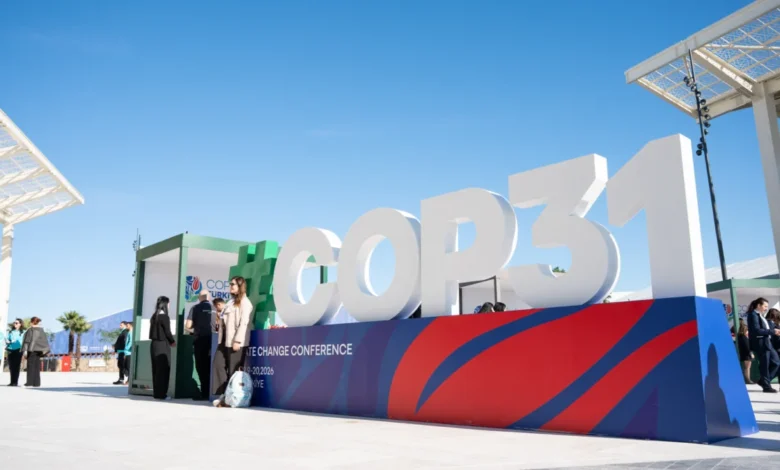
The United Nations Climate Change Conference, known as COP31, officially opened its doors in Antalya, Türkiye, on November 9, 2026. As thousands of delegates, climate scientists, activists, and industry representatives gathered in the Mediterranean city, the atmosphere was defined by a stark juxtaposition: the rapid advancement of climate-driven catastrophes and the persistent, sluggish pace of international diplomatic consensus. While Türkiye hosts the event, the procedural gavel rests in the hands of the Australian government, which is tasked with mediating the complex and often contentious negotiations among more than 190 participating nations.
The summit takes place against a backdrop of geopolitical tension and environmental record-breaking. With the United States—the world’s second-largest emitter of greenhouse gases—absent from official negotiations for the second consecutive year, the conference faces significant questions regarding its efficacy and the reach of its final mandates.
A Chronology of Climate Diplomacy: From Copenhagen to Antalya
The history of the Conference of the Parties is a thirty-year chronicle of incremental progress and frequent disillusionment. To understand the stakes of the Antalya summit, one must look back at the trajectory of these gatherings:
- 1992 (Rio Earth Summit): The establishment of the United Nations Framework Convention on Climate Change (UNFCCC), which laid the foundation for all future climate cooperation.
- 2009 (COP15, Copenhagen): A watershed moment often cited for its failure to produce a binding treaty, leaving the international community in a state of diplomatic paralysis.
- 2015 (COP21, Paris): The landmark agreement that set the goal of limiting global warming to well below 2 degrees Celsius, preferably 1.5 degrees, compared to pre-industrial levels.
- 2023 (COP28, Dubai): The first instance in the history of the summits where an agreement explicitly acknowledged the need to "transition away" from fossil fuels, though it lacked a definitive timeline or enforcement mechanism.
- 2025 (COP30, Belém): Despite high hopes for a breakthrough in the Amazon, the summit ended without substantial new commitments to move away from coal, oil, and gas, highlighting the influence of petrostates.
The Antalya summit marks the beginning of a new chapter in this timeline. However, the failure to address the core issue—the systemic reliance on fossil fuels—remains the primary point of friction. Observers note that while the language of "transition" is now present in official texts, the lack of a "phaseout" schedule remains the Achilles’ heel of the entire UNFCCC process.
The Scientific Reality: Why 1.5 Degrees is Slipping Away
The urgency surrounding COP31 is not merely rhetorical; it is rooted in empirical data provided by leading climatological bodies. The world is currently experiencing an extended El Niño cycle, which has exacerbated extreme weather events globally.
According to data from the World Meteorological Organization and various independent climate research groups, 2026 has seen a series of temperature records shattered. The consequences are no longer theoretical. The catastrophic flooding in Nepal earlier this year served as a grim reminder of the vulnerability of developing nations to climate-induced disasters.
A report released last month by the United Nations Environment Programme (UNEP) issued a sobering assessment: current national pledges are insufficient to keep the world on the 1.5-degree path. In fact, current trajectories suggest that the planet is likely to overshoot this target entirely, raising concerns about the potential for crossing irreversible climate tipping points. As Johan Rockström, director of the Potsdam Institute for Climate Impact Research, noted during an October briefing, the window of opportunity is "still open, but rapidly shutting."
Geopolitical Realities and the US Absence
The absence of a formal US delegation has cast a long shadow over the proceedings in Antalya. While a contingent of Democratic members of Congress is in attendance, their presence lacks the weight of an executive-branch-led delegation.
The rationale for the US absence stems from the current administration’s withdrawal from the Paris Agreement—a move that has isolated the nation on the global stage. Critics of the absence, including former government officials and international climate diplomats, argue that the climate crisis is a collective action problem. Without the world’s largest historical emitter and second-largest current emitter at the table, the ability of the UNFCCC to enforce accountability is severely diminished.
However, the vacuum left by the United States is being partially filled by a growing coalition of mid-sized and developing nations. The "Santa Marta Process," initiated in Colombia earlier this year, represents an emerging effort by over 60 nations to move the conversation regarding a fossil fuel phaseout outside the formal, often gridlocked, COP structures. This suggests a shift toward "minilateralism," where smaller groups of willing nations pursue aggressive climate targets independent of the consensus-based COP framework.
Economic and Policy Implications
For the business and financial sectors, COP31 serves as a barometer for future regulatory risk. The transition toward a low-carbon economy is no longer viewed as a peripheral environmental concern but as a central component of global fiscal stability.
Market analysts point out that while the official COP agreements are non-binding, they influence national legislation, carbon pricing, and investment standards. The "Paris Effect"—the tendency for the agreement to trigger domestic policy changes—has already led to a significant boom in renewable energy projects worldwide. Despite the slow pace of intergovernmental negotiations, global energy demand growth has slowed, and the projected end-of-century warming has been revised downward from 3.6 degrees to approximately 2.6 degrees, according to Climate Action Tracker.
While 2.6 degrees is far from the target of 1.5 degrees, it represents a deviation from the worst-case scenarios envisioned a decade ago. The challenge for the Antalya summit is to accelerate this trend. The primary obstacle remains the conflict of interest inherent in economies that rely heavily on the export and consumption of fossil fuels.
Outlook for the Antalya Negotiations
As the two-week summit progresses, eyes will be on whether the Australian presidency can facilitate a breakthrough on "Climate Finance." This involves the contentious issue of how developed nations will fund the transition and climate adaptation in the Global South. For many nations, the conversation at COP31 is not about the science of climate change, which they acknowledge as settled, but about the economic justice of the transition.
The cynicism surrounding these summits is well-documented. A majority of the global population, according to recent polling cited by Covering Climate Now, expects their governments to take more decisive action. Yet, the disconnect between public expectation and diplomatic output remains the defining feature of the COP process.
Whether COP31 will be remembered as another "rhetoric-heavy, action-light" summit or as the inflection point where the world finally moved toward a concrete fossil fuel phaseout depends on the ability of the delegates in Antalya to transcend the political repression and vested interests that have historically defined the region’s energy landscape.
Ultimately, the proceedings in Antalya are a reflection of a world in transition. The infrastructure of the fossil fuel era is deeply embedded in the global economy, making its removal a monumental task. The participants in the Blue Zone are engaged in a race against time, attempting to build a new global architecture while the very environment they seek to protect undergoes rapid, and often destructive, change. The coming days of negotiations will test whether the international community has the political resolve to match the gravity of the crisis at hand.
Related posts: