Rep. Thomas Massie introduces articles of impeachment against Defense Secretary Pete Hegseth as political tension mounts in Washington

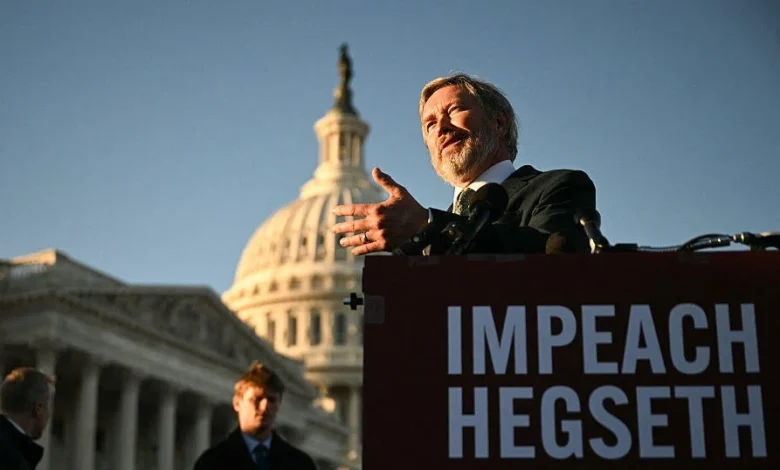
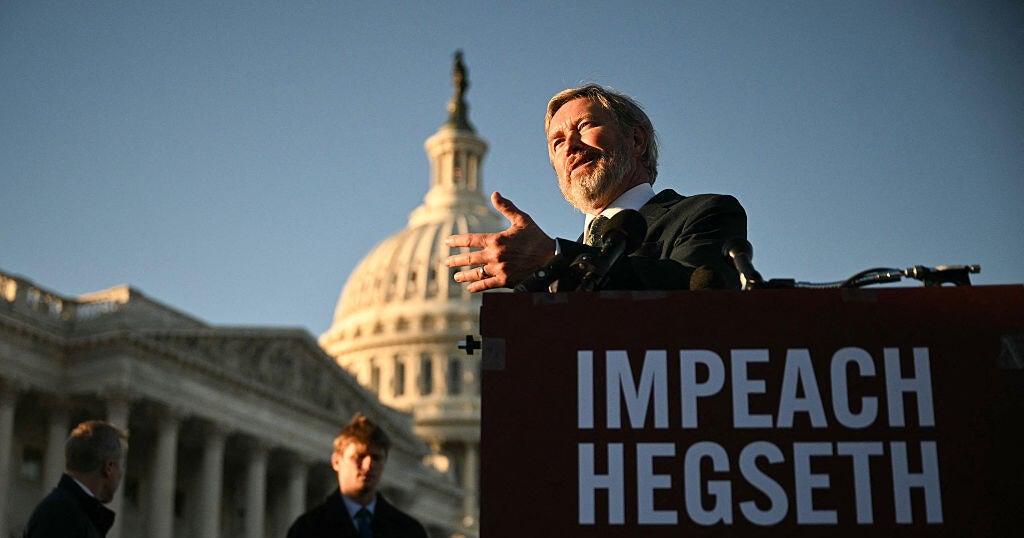
The political landscape on Capitol Hill shifted into a state of heightened volatility on Monday as Representative Thomas Massie, a Republican from Kentucky, officially introduced a comprehensive set of impeachment articles against Secretary of Defense Pete Hegseth. The filing, which spans 34 pages and outlines eight distinct articles, marks a significant escalation in the ongoing friction between the legislative branch and the Pentagon regarding the conduct of the conflict in Iran. As lawmakers return to Washington for the remainder of the lame-duck session, the introduction of these articles forces a procedural clock into motion, mandating that House leadership address the resolution within two legislative days.
This legislative maneuver follows months of mounting frustration among both Republican and Democratic lawmakers. The grievances center on the executive branch’s military strategy in Iran, which critics argue has bypassed the constitutionally mandated requirement for congressional authorization. For the GOP, the impeachment effort arrives at a precarious moment; the party is currently grappling with the fallout of significant midterm election losses, leading to a fractured caucus that is increasingly questioning the efficacy of the current administration’s national security policies.
A Chronology of Escalation
The roots of the current impeachment bid trace back to early 2026, when the conflict in Iran began to intensify. By September, Representative Massie—a staunch constitutionalist known for his frequent departures from party orthodoxy—first circulated the intent to file articles of impeachment. At that time, House leadership opted to recess the chamber, effectively shelving the debate and delaying any potential vote.
The following timeline details the progression of the current impasse:
- Early 2026: Military engagements in Iran escalate, leading to concerns among lawmakers regarding the scope and legal justification for the mission.
- September 2026: Representative Thomas Massie formally announces his intent to introduce articles of impeachment, citing unauthorized military actions.
- October 2026: Amidst intense midterm campaigning, House leadership pushes the debate into the post-election period to prevent a floor vote during the height of political volatility.
- November 9, 2026: Lawmakers return for the lame-duck session. Massie files updated, expanded articles of impeachment, formally triggering the two-day legislative window for a floor vote.
The Substance of the Charges
The 34-page document authored by Massie is exhaustive in its accusations. Beyond the central charge of conducting war without congressional approval—a violation of the separation of powers as outlined in Article I of the Constitution—the articles delve into specific operational decisions.
One of the most contentious points in the filing involves a strike on an Iranian school, which Massie contends violated international laws and internal Department of Defense protocols designed to minimize civilian casualties. Furthermore, the impeachment articles highlight the Pentagon’s tactical decisions in the Caribbean, specifically referencing naval boat strikes, as well as the controversial capture of Venezuelan President Nicolas Maduro, which critics describe as an overreach of executive authority.
Perhaps most notably, the articles address the intersection of military authority and constitutional rights. Massie cites the Pentagon’s scrutiny of Senator Mark Kelly. The scrutiny followed a video release in which Kelly and other lawmakers urged service members to consider the legality of their orders—a move that triggered an internal Pentagon review. Massie argues that this represents a retaliatory abuse of power, stating that Hegseth has demonstrated a disregard for the rule of law that renders him unfit to hold office.
Political Reactions and the Path Forward
Secretary Pete Hegseth has dismissed the impeachment effort as "political theater" orchestrated by a "disgruntled, defeated congressman." In a video statement released via social media last week, Hegseth drew parallels to the two impeachments of former President Donald Trump, framing the current move as an attempt at "the politics of personal destruction." He has maintained that the military’s strategic objectives are sound and that his focus remains on national security rather than the shifting winds of Capitol Hill politics.
Within the Republican caucus, reactions remain deeply divided. House Speaker Mike Johnson has signaled his disapproval, expressing concern that a move toward impeachment while the nation is engaged in active hostilities abroad would project an image of instability and weakness. Conversely, some members are signaling a newfound willingness to engage with the inquiry. Representative James Comer, chair of the House Oversight Committee, recently noted that there are "a lot of questions" surrounding the Pentagon’s strategy, suggesting that the party’s midterm losses may have emboldened members to distance themselves from the administration’s defense policies.
Other members, such as Representative French Hill, are adopting a more cautious, deliberative stance. Hill stated on Sunday that he intends to weigh the evidence presented during the debate to determine whether the alleged actions meet the constitutional threshold for "high crimes and misdemeanors," or whether they constitute a matter of administrative policy disagreement that warrants alternative disciplinary measures.
Broader Implications and Historical Context
The impeachment of a Cabinet secretary is a rare and profound event in American political history. Only two such figures have previously faced this process: Secretary of War William Belknap in 1876, who was impeached over corruption allegations, and Secretary of Homeland Security Alejandro Mayorkas, who was impeached by the House in 2024. Neither resulted in removal from office; Belknap was acquitted by the Senate, and the charges against Mayorkas were ultimately dismissed.
If the House were to vote in favor of the resolution, the focus would immediately shift to the Senate. However, the current political math presents a significant hurdle. With a narrow Republican majority in the House, the success of the impeachment relies heavily on party unity. Should the resolution pass the House, the timeline for a Senate trial remains unclear. Massie has urged his colleagues to act swiftly, warning that if the current Senate does not address the matter, the responsibility will fall to the next Congress, which will be under Democratic control.
Analytical Outlook
The impeachment effort against Secretary Hegseth serves as a mirror for the current state of the American legislative branch. It highlights a growing tension regarding the "forever war" doctrine and the extent to which the executive branch should be permitted to deploy military force without an explicit "declaration of war" from Congress.
Regardless of the final vote count, the mere existence of these articles signals a permanent change in how Congress views the Department of Defense’s autonomy. The move reflects a bipartisan sentiment—though for different reasons—that the balance of power between the Article I and Article II branches of government has shifted too far in favor of the executive. As the debate proceeds, the outcome will likely hinge on whether lawmakers view Hegseth’s actions as genuine violations of the Constitution or as standard, albeit controversial, executive maneuvers. The next 48 hours in the House will prove to be a critical indicator of whether the Republican party is prepared to exert a new level of oversight on its own administration, or if the impeachment will be relegated to the history books as another chapter of partisan confrontation.
Related posts: