
For nearly twenty-five years, the relationship between SpaceX and the United States government was defined by a symbiotic, if occasionally volatile, pursuit of space dominance. From the company’s inception, CEO Elon Musk and President Gwynne Shotwell navigated the federal bureaucracy like pioneers charting unknown territory, eventually transforming a scrappy startup into an essential pillar of American national security and scientific ambition. However, recent indicators suggest that this quarter-century partnership is undergoing a profound, perhaps permanent, decoupling. As SpaceX pivots its massive engineering resources toward artificial intelligence and high-density computing, the federal government finds itself in an increasingly precarious position: reliant on a contractor that has begun to view its public-sector obligations as a distraction from its commercial destiny.

The shift in strategic priority was underscored by recent earnings commentary. While SpaceX remains the dominant launch provider for NASA and the Space Force, Musk has explicitly signaled a transition in the company’s internal culture. During a third-quarter earnings call, Musk described his elite engineering team—the same group that achieved nearly 90 percent of the world’s mass-to-orbit launch share—as being redirected toward terrestrial compute infrastructure. Rather than focusing exclusively on Starbase, Texas, for lunar or deep-space exploration, the company is now channeling its intellectual capital into projects like the massive Colossus data center in Memphis, Tennessee. In Musk’s view, the company’s current engineering capabilities are akin to the New York Yankees playing in a Little League, and the ultimate application of that power is no longer just orbit, but the global AI revolution.
A Chronology of Interdependence and Divergence

The foundation of the modern space economy was built on a series of critical NASA contracts. In 2006, the agency provided a $278 million award for cargo development, followed in 2008 by a $1.6 billion contract for commercial resupply services. At the time, these funds were the lifeblood of a company teetering on the brink of bankruptcy. This period established a "golden era" of cooperation. By 2014, SpaceX was fighting the military-industrial establishment, suing the Air Force to open national security launch contracts to competition. The effort was successful; SpaceX broke the monopoly held by legacy contractors, lowered launch costs, and became the bedrock of U.S. space access.
The pivot point arrived in mid-2020 with the successful Crew Dragon demonstration mission, which ended the nation’s reliance on Russian Soyuz rockets. Almost immediately, NASA awarded SpaceX the Human Landing System (HLS) contract, cementing the company’s role in the Artemis program. However, as dependence grew, so did the friction. The relationship reached a nadir in June 2025 during a public dispute with the administration, in which Musk threatened to decommission the Dragon spacecraft in response to political pressure. Although the two sides reconciled, the episode exposed a fundamental power imbalance: the U.S. government needed SpaceX to function, but SpaceX no longer needed the government to survive.

Supporting Data and Operational Realities
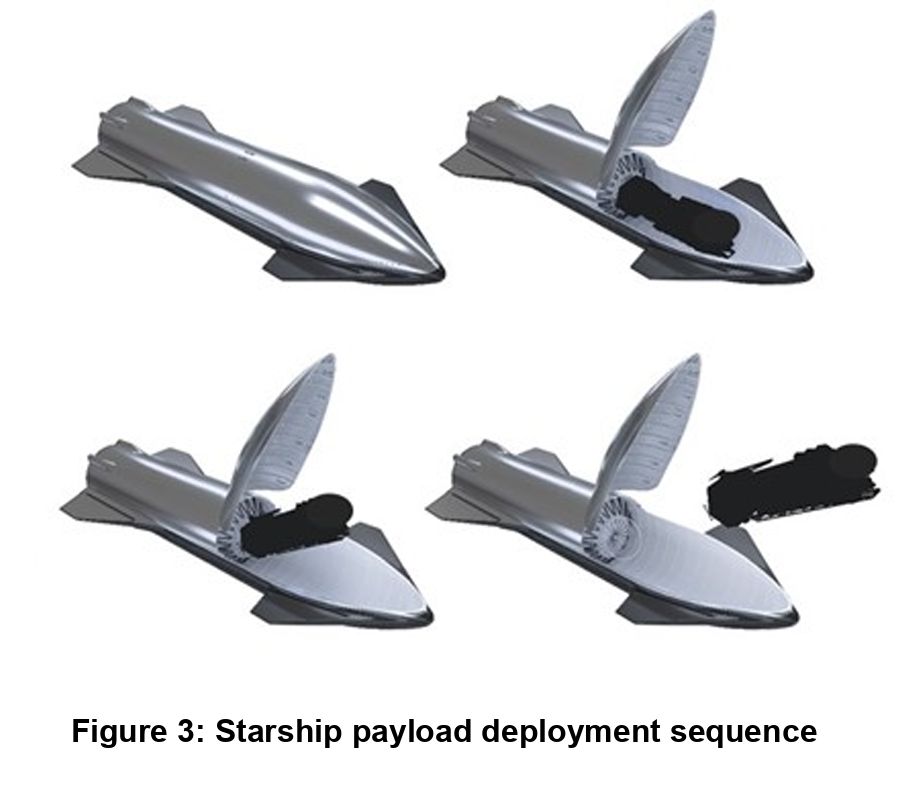
The current disconnect is best observed in the discrepancy between NASA’s lunar ambitions and SpaceX’s technical development. NASA’s Artemis program is predicated on the Starship vehicle becoming a reliable, high-cadence lunar lander. Yet, the current design path of Starship has diverged from traditional NASA requirements. SpaceX has largely abandoned the development of a large, clamshell-style payload fairing in favor of a "Pez-dispenser" style internal deployment mechanism. While this is efficient for launching thousands of Starlink or potential "Starmind" data-center satellites, it is largely unsuitable for the delicate, high-value scientific payloads typical of NASA missions.
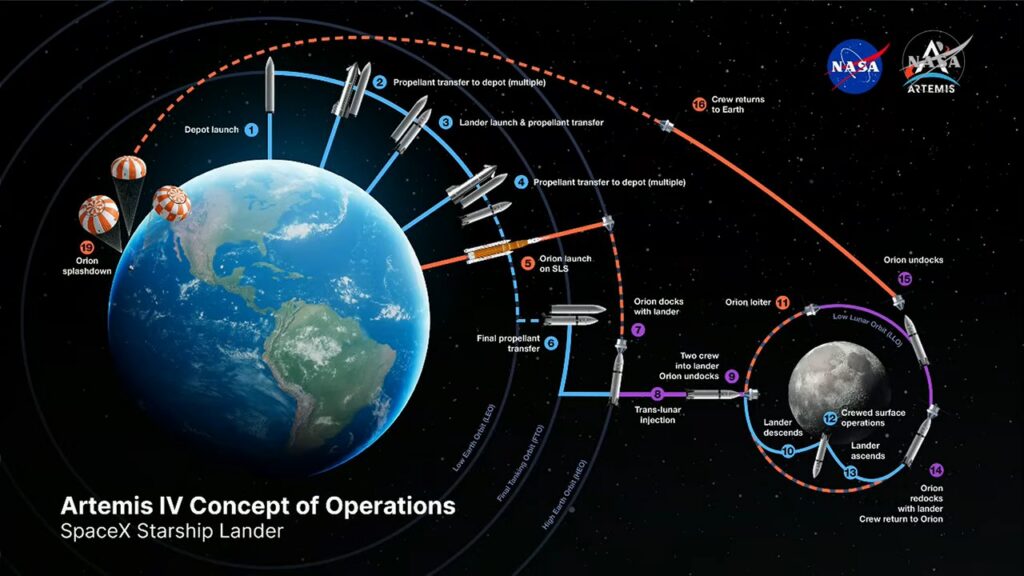
Furthermore, the logistical requirements for a lunar landing remain daunting. Internal NASA estimates suggest that a single lunar landing mission would require approximately 20 Starship launches to facilitate necessary in-orbit refueling. While SpaceX has projected a "potential end state" where that number drops to six or eight, such efficiency remains years away. With SpaceX prioritizing its own commercial constellation and AI infrastructure, dedicating twenty launches to a single NASA mission represents an enormous opportunity cost. A single Starship launch devoted to Starlink generates significant, long-term revenue, whereas an HLS mission is effectively a fixed-price commitment with high technical risk and minimal financial upside.
Official Responses and Institutional Implications
NASA officials, while publicly optimistic, are increasingly forced to address the optics of this divergence. Jeremy Parsons, manager of the Artemis Program, has maintained that SpaceX management remains committed to lunar missions, citing regular visits to company facilities. However, the lack of a public commitment to a large-scale payload deployment timeline suggests that SpaceX’s public-sector focus is secondary. The company has declined to provide a formal commitment or roadmap for the traditional payload door functionality that would make Starship a versatile tool for broader NASA scientific objectives.
This leaves the U.S. space agency in a defensive posture. In an effort to mitigate the risk of over-reliance on a single, potentially distracted partner, NASA has turned to Blue Origin as a secondary provider. Under the leadership of Dave Limp, Blue Origin has demonstrated a marked change in corporate strategy, shifting from a litigious, competitive stance to one of rapid cooperation. By redesigning its Blue Moon lunar lander to remove the requirement for in-space refueling, Blue Origin has signaled a willingness to adapt its engineering to NASA’s immediate, time-sensitive needs. This "tortoise" approach is now being contrasted with SpaceX’s "hare," as Blue Origin works to become the reliable backup—or even the primary—partner for lunar surface operations.
Broader Economic and Geopolitical Impact
The implications of this shift extend far beyond the balance sheets of two aerospace firms. The global race to establish a permanent presence on the Moon has moved from a theoretical objective to an urgent geopolitical imperative. With China actively pursuing its own lunar base, the window for American leadership is narrowing. The U.S. government’s ability to coordinate a multi-billion dollar, multi-year lunar program is currently anchored to a company that is rapidly migrating its core business from spaceflight to artificial intelligence.

If SpaceX continues to view government contracts as "lead shoes" that hinder its ambition to move fast and break things, the Department of Defense and NASA may face a significant strategic crisis. The transition to a "post-government" SpaceX suggests that the next generation of American spaceflight will be defined not by the needs of scientific exploration or national security, but by the commercial priorities of a massive, vertically integrated technology conglomerate.
As the decade progresses, the burden of proof will shift to the newer, "leaner" players like Blue Origin, Rocket Lab, and Relativity Space. Whether these companies can scale their operations rapidly enough to compensate for the potential withdrawal of SpaceX’s focus remains the central question of the 2020s. For now, the "Starbase" that once represented the future of American spaceflight is being joined—or perhaps overshadowed—by the infrastructure of Memphis and the logic of AI. The U.S. government, having spent a decade tethering its destiny to a single visionary partner, is now learning the difficult lesson that in the realm of private enterprise, the customer is not always the priority. The result is a landscape where the U.S. space program must either find a new way to incentivize its most capable partner or find a way to thrive without it.