Bluesky Blocks DDoSecrets Links Following Major Data Breach Exposing U.S. Department of Homeland Security Personnel Records

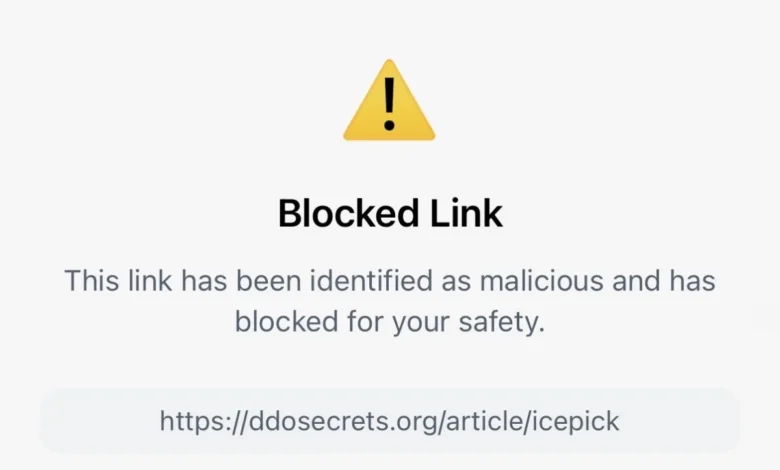
The decentralized social media platform Bluesky has begun blocking its users from sharing links to the nonprofit transparency collective DDoSecrets, following the publication of a massive and sensitive personnel data leak originating from the U.S. Department of Homeland Security (DHS). Users attempting to direct traffic to the hosting organization found their posts flagged or links categorized as malicious, igniting a fierce debate over platform governance, content moderation, safety guidelines, and the public’s right to access government accountability records.
The controversy erupted after hackers successfully breached the internal login systems of the Department of Homeland Security, exfiltrating more than 40,000 user account records. The compromised dataset contained critical employment details of personnel working across several prominent DHS subdivisions, including Immigration and Customs Enforcement (ICE) and Customs and Border Protection (CBP). While the breach did not immediately expose personal, non-work identifiers such as home addresses or private financial data, it did lay bare professional contact channels—names, official titles, and work-issued phone numbers and email addresses—comparable to the information typically found on a corporate business card.
The incident underscores the growing vulnerability of federal cyber infrastructure and highlights the complex friction points that emerge when leaked state data intersects with public interest journalism, open-government advocacy, and the policies of private technology platforms.
Chronology of the Breach and Subsequent Digital Crackdown
The unfolding events trace back to a rapid sequence of disclosures and counter-measures executed by hackers, journalists, civil rights researchers, federal agencies, and technology corporations over a matter of days.
The timeline began when cybersecurity reporters broke the news that the DHS login framework had been compromised, exposing tens of thousands of agency worker accounts. Shortly after the initial reporting, the transparency collective DDoSecrets—an organization known for archiving and publishing leaked datasets in the public interest—made the trove of stolen DHS information accessible on its platform.
Simultaneously, independent journalist and researcher maia arson crimew launched a dedicated, searchable directory hosted on a specific domain (icepi.cx) to allow individuals to query the database. Recognizing the utility of the leak for government oversight, researchers investigating administrative policies quickly pointed to the repository as a vital resource for filing Freedom of Information Act (FOIA) requests.
However, the federal government reacted swiftly to curtail the dissemination of the leaked employee data. Homeland Security officials engaged ZeroFox, a specialized external security vendor contracted with the federal authority to proactively seek the removal of unauthorized data exposures through 2028. Utilizing this mandate, formal takedown notices were issued to domain registrars demanding the suppression of the search site.
By Thursday morning, the searchable index went offline. Internet records confirmed that the domain had been placed on a "serverHold" status, a technical designation indicating that the registrar had locked or suspended the domain name following external legal or security complaints. In response to the domain seizure, crimew released a locally hosted alternative, enabling users to download and run the searchable database locally on private hardware, thereby circumventing traditional web hosting constraints.
Concurrently, mainstream social networks began implementing internal safety protocols. Users on Bluesky attempting to share URLs directing traffic to DDoSecrets reported that their links were heavily restricted or flagged as malicious.
Anatomy of the Leaked Data and Differing Perspectives
The core of the dispute centers on the nature of the leaked information and whether it constitutes a violation of platform safety rules or a protected act of journalistic transparency.

According to representatives for DDoSecrets, the dataset is composed strictly of official, professional contact credentials belonging to public servants operating in government capacities. Emma Best, co-founder of DDoSecrets and a prominent investigative journalist, argued that the classification of this data as a severe privacy violation is fundamentally flawed. Best emphasized that the information contained within the leak does not include private residential addresses, personal banking details, or non-work-related telephone numbers.
"The data contains professional contact information for government employees at a time when the public interest in that exact information has never been higher," Best stated. She further noted that because citizens are routinely required to direct formal inquiries and Freedom of Information Act applications to these exact professional channels, the federal government itself has entrenched these contact points as the foundational mechanisms of public accountability.
Conversely, technology platforms like Bluesky have adopted a different standard regarding the dissemination of breached materials. While Bluesky did not immediately issue a public statement due to timing outside of U.S. West Coast business hours, a company representative confirmed to technology publication Wired that the exposed data directly violated the platform’s established community guidelines. Rather than adopting a heavy-handed approach of wholesale account suspensions or post deletions, Bluesky opted for link-level filtering, blocking the specific URLs hosting the leaked dataset to mitigate the spread of compromised material.
Official Responses and Institutional Silence
The federal response to the security breach has been measured as authorities scramble to assess the full scope of the compromise. A spokesperson for the Department of Homeland Security acknowledged the severity of the situation on Wednesday, confirming that the agency was "aware of a potential breach and is actively working to address the situation swiftly and effectively."
Despite this initial acknowledgment, federal officials have remained tight-lipped regarding subsequent enforcement actions. The DHS spokesperson declined to comment on the takedown notices issued through ZeroFox or the specific mechanisms that led to the suspension of the search site domain via CentralNic, the registry operator. Furthermore, CentralNic and ZeroFox both declined requests for comment from reporters regarding whether the domain suspension was executed under direct legal compulsion from federal law enforcement or administrative mandate.
Broader Implications for Cybersecurity, Transparency, and Social Media Governance
The intersection of the DHS data breach and the moderation policies of platforms like Bluesky illuminates several critical challenges facing the modern digital ecosystem.
First, the incident demonstrates the ongoing fragility of federal cybersecurity frameworks. That an unauthorized actor could extract over 40,000 internal account credentials from a primary security agency login system raises serious questions regarding access controls, credential management, and internal threat mitigation within the United States government. For agencies such as ICE and CBP—whose personnel frequently operate in politically charged environments—such exposures carry operational and security concerns that federal authorities are bound to mitigate.
Second, the event highlights the difficult balancing act faced by social media platforms operating in a decentralized or open-source environment. Platforms like Bluesky have gained immense popularity by positioning themselves as more open, transparent, and user-governed alternatives to legacy corporate networks like X (formerly Twitter). However, the hosting of hacked materials places these networks in a regulatory and ethical bind. Upholding robust anti-harassment and anti-doxxing policies requires strict limitations on leaked private data, yet enforcing those rules against transparency organizations that publish public-interest documents risks alienating users who view such leaks as essential tools for investigative journalism and state oversight.
Finally, the swift suppression of the search site via domain registrars and security vendors illustrates the increasing privatization of online censorship and data removal. Rather than relying solely on prolonged judicial proceedings or traditional law enforcement channels, government agencies increasingly leverage third-party commercial security contractors like ZeroFox to issue administrative takedowns. This creates an opaque enforcement ecosystem where domain suspensions can occur rapidly behind closed doors, often with minimal public accountability or transparency from the registrars executing the orders.
As the fallout from the DHS breach continues to reverberate across political, legal, and technological landscapes, the incident serves as a stark reminder of the persistent tensions dividing national security interests, open-government advocacy, and the digital governance models of modern social media networks.