The Hidden Crisis in America’s Aluminum Supply Chain and the Urgent Need for Smarter Recycling

The United States is currently facing a dual challenge that threatens its industrial future: a tightening global supply of aluminum and a domestic recycling infrastructure that is failing to keep pace with demand. As trade tariffs fluctuate and geopolitical instability disrupts international supply chains, the pressure to secure a reliable, domestic source of this critical metal has reached a breaking point. While industry leaders and policymakers advocate for the construction of new, high-energy smelters, a simpler, more sustainable solution remains largely untapped: the millions of tons of aluminum currently languishing in American landfills.
Aluminum is a uniquely valuable material due to its infinite recyclability, yet the United States manages to recover only a fraction of what it consumes. The implications of this inefficiency are profound, affecting everything from the cost of consumer goods to the progress of the green energy transition. As demand surges for aluminum in the manufacturing of lightweight vehicles, high-capacity electrical grids, solar panel frames, and the infrastructure powering the burgeoning AI-driven data center boom, the scarcity of the metal has become a significant economic bottleneck.
A Chronology of the Aluminum Deficit
The current crisis did not emerge overnight. It is the result of decades of shifting global manufacturing trends and a stagnation in domestic waste management policy.
In the mid-20th century, the United States was the world’s leading producer of primary aluminum. However, as global energy markets evolved and environmental regulations tightened, much of the smelting industry migrated to regions where electricity was cheaper and less regulated. By the 1990s and 2000s, the U.S. had transitioned into a net importer of aluminum.
The 2020s marked a turning point. Global supply chain shocks, exacerbated by the post-pandemic economic recovery and subsequent geopolitical conflicts, led to a sharp rise in metal prices. In 2024 and 2025, the U.S. government implemented a series of protective tariffs intended to encourage the reopening of domestic smelters. However, these facilities require massive, consistent baseload power—a resource that is currently being aggressively courted by the technology sector to fuel energy-hungry data centers. This has created a "power competition" that makes the expansion of traditional smelting both expensive and politically fraught.
By 2026, the focus shifted toward "circularity." With the realization that primary production is energy-intensive—requiring roughly 20 times the energy of recycling—policymakers and industrial think tanks began prioritizing the recovery of secondary aluminum scrap as the primary strategy for closing the supply gap.
The Technological Frontier: AI and Advanced Sorting
One of the primary obstacles to scaling up domestic recycling has been the inherent difficulty of processing mixed scrap. Mechanical sorting, which has been the industry standard for decades, relies on basic magnets and eddy-current separators. While effective for simple items like soda cans, these systems struggle to differentiate between various aluminum alloys.
Modern engineering requires specific alloys, which are essentially recipes of aluminum mixed with elements like magnesium, silicon, or copper to achieve desired strength and heat resistance. When these alloys are shredded and melted together in a generic batch, the resulting metal is of low quality and limited use. Consequently, much of the U.S. scrap supply is shipped to overseas facilities where labor-intensive, manual sorting can be performed, or it is downcycled into lower-value materials.
To combat this, a new wave of industrial startups is deploying advanced sensor-based sorting. Companies like Sortera Technologies are utilizing X-ray fluorescence (XRF) and laser-induced breakdown spectroscopy (LIBS) to identify the chemical composition of individual scrap pieces in real time. By using artificial intelligence to categorize these materials at high speeds, these facilities can produce "secondary virgin" quality aluminum that is ready for immediate use in high-end manufacturing.
Greyparrot, a UK-based firm, is approaching the problem from the perspective of data visibility. By installing AI-equipped computer vision systems on existing conveyor belts at waste management facilities, they provide operators with granular data on what is being lost. In facilities like the Circular Services plant in Brooklyn, these systems have revealed that nearly 90% of the aluminum entering the facility is recoverable, yet traditional sorting systems were consistently missing a significant portion of it. This represents a massive, unrealized revenue stream for recycling facilities and a missed opportunity for the national supply chain.
The Policy Gap: Why Americans Are Not Recycling
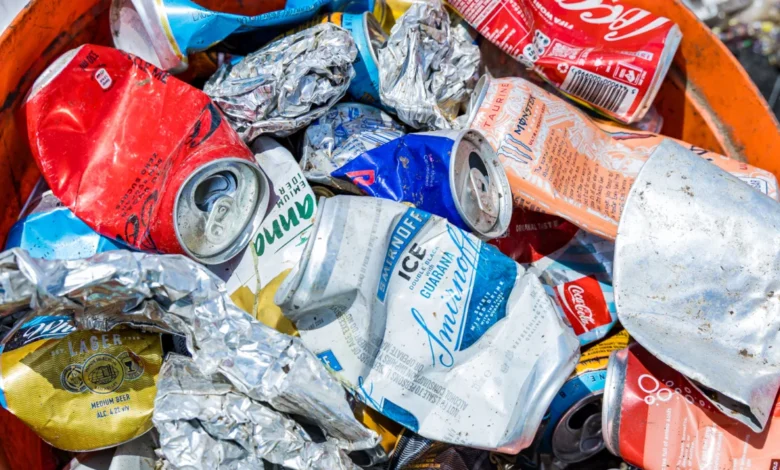
While technology offers a path forward, experts argue that the fundamental challenge remains behavioral. According to the Aluminum Association, the United States has seen a decline in beverage can recycling rates, a trend largely attributed to a lack of cohesive national policy. In 2023 alone, Americans discarded approximately 61 billion beverage containers—an estimated $1.2 billion worth of aluminum—directly into the waste stream.
The "bottle bill" model, which provides a financial incentive for consumers to return containers, has proven effective in the ten states where it exists. However, these programs are suffering from legislative inertia. Many deposit fees were established decades ago and have not been adjusted for inflation. A nickel, which provided a meaningful incentive in the 1980s, has lost much of its persuasive power in today’s economy.
The consequences of this stagnation are visible at facilities like Sure We Can in Brooklyn. As collection becomes less profitable for the public, the number of redemption centers is dwindling. Furthermore, the lack of a standardized national policy has created "arbitrage" issues. When Connecticut increased its deposit fee to 10 cents, it successfully spurred a massive spike in local recycling. However, it also inadvertently encouraged the influx of out-of-state containers, placing an undue financial burden on local distributors. This regional inconsistency highlights the need for a harmonized federal approach, or at least a regional compact, to prevent market distortion.
Economic and Strategic Implications
The push to modernize aluminum recycling is not merely an environmental endeavor; it is a matter of national security. As the U.S. military and aerospace sectors demand higher purity aluminum for defense applications, the reliance on foreign markets or energy-heavy primary smelting poses a strategic risk.
Benjamin Carlson, director of the Center for Strategic Industrial Materials, emphasizes that every ton of aluminum reclaimed through advanced sorting is a ton that does not need to be imported or energy-intensively produced. By creating a robust secondary market, the U.S. can stabilize prices, reduce the carbon footprint of its manufacturing sector, and ensure that critical materials remain within domestic borders.
However, industry experts acknowledge that a "silver bullet" does not exist. Legislation, such as the proposals championed by Senator Jeff Merkley, aims to create a federal framework for container deposits. Such a move would likely face stiff opposition from stakeholders concerned with implementation costs and the logistical complexity of managing a nationwide program. Nevertheless, the argument for such a policy is gaining traction, particularly as the climate impact of waste and the energy costs of primary metal production become impossible to ignore.
The Path Forward
The path to a resilient aluminum supply chain requires a three-pronged strategy:
- Investment in Infrastructure: Providing federal grants and tax incentives for the adoption of AI-driven, sensor-based sorting technologies at existing municipal recycling facilities.
- Policy Reform: Modernizing state bottle bills to reflect current economic realities, including indexed deposit fees that prevent the loss of consumer incentive due to inflation.
- Cross-Sector Collaboration: Encouraging partnerships between the beverage industry, which generates the scrap, and the technology/manufacturing sectors, which require the refined material.
The transition to a circular economy for aluminum is technically feasible and economically rational. As the U.S. continues to navigate the complexities of a volatile global market, the aluminum currently residing in landfills and kitchen bins represents a strategic reserve. Converting that waste into a reliable domestic resource is no longer just a recycling goal; it is an industrial necessity for a nation looking to secure its manufacturing future. The technology to capture this "treasure in the trash" already exists; the challenge now lies in the political will to standardize the process and the public engagement to ensure the metal makes it back into the production loop.