Google Steps In to Fund Georgia Nuclear Upgrades in Landmark Clean Energy Deal


The Georgia Public Service Commission has officially approved a groundbreaking partnership between state utility giant Georgia Power and technology titan Google, setting a new precedent for how the explosive energy demands of the digital age are met. Under the newly authorized agreement, Google will help finance critical capacity upgrades for aging nuclear reactors in the state, starting in 2028. The deal represents a significant shift in corporate clean energy procurement, injecting nearly a billion dollars in projected customer benefits into the local grid while helping the tech enterprise meet its aggressive decarbonization targets.
The unanimous regulatory approval underscores a growing trend of major technology companies directly subsidizing grid infrastructure. As data centers multiply across the United States to power artificial intelligence and cloud computing, utilities are scrambling to keep pace with soaring electricity loads. By turning to existing nuclear assets rather than relying solely on fossil fuels or greenfield projects, Google and Georgia Power have crafted a blueprint that regulators and industry experts are already watching closely.
Background Context: The Nuclear Renaissance and Corporate Power Demands
To understand the weight of the Georgia agreement, one must look at the broader energy landscape confronting the American utility sector. For decades, electricity demand remained largely flat, growing in tandem with population shifts and modest economic expansion. However, the advent of hyperscale data centers—massive facilities operated by firms like Google, Amazon, Microsoft, and Meta—has utterly transformed load forecasts.
These facilities require continuous, uninterrupted power 22 to 24 hours a day. Unlike residential or commercial buildings that experience predictable peaks and valleys in electricity consumption, data centers draw a constant, heavy load. While wind and solar power have expanded rapidly across the American South and Midwest, their inherent intermittency presents severe reliability challenges for grid operators. Battery storage technology is advancing, but long-duration storage capable of buffering multi-day deficits remains costly and scarce.
Consequently, utilities have often turned to natural gas turbines or extended the operational lifespans of coal-fired power plants to meet this new demand. Yet, this approach runs counter to the corporate sustainability commitments made by technology firms, many of which have pledged to operate entirely on carbon-free energy by 2030. Nuclear power—which produces zero greenhouse gas emissions during operation and can run continuously regardless of weather conditions—has thus re-emerged as the holy grail for corporate buyers seeking reliable, clean baseload power.
Chronology of the Agreement and Regulatory Approval
The path to the recent commission vote began with strategic discussions between Georgia Power and state regulators regarding the long-term reliability of the utility’s generation fleet. Georgia Power previously secured regulatory approval to pursue power-boosting upgrades at Plant Vogtle, home to the nation’s newest nuclear reactors. However, the precise financial mechanisms required to fund those capital-intensive updates remained unresolved.
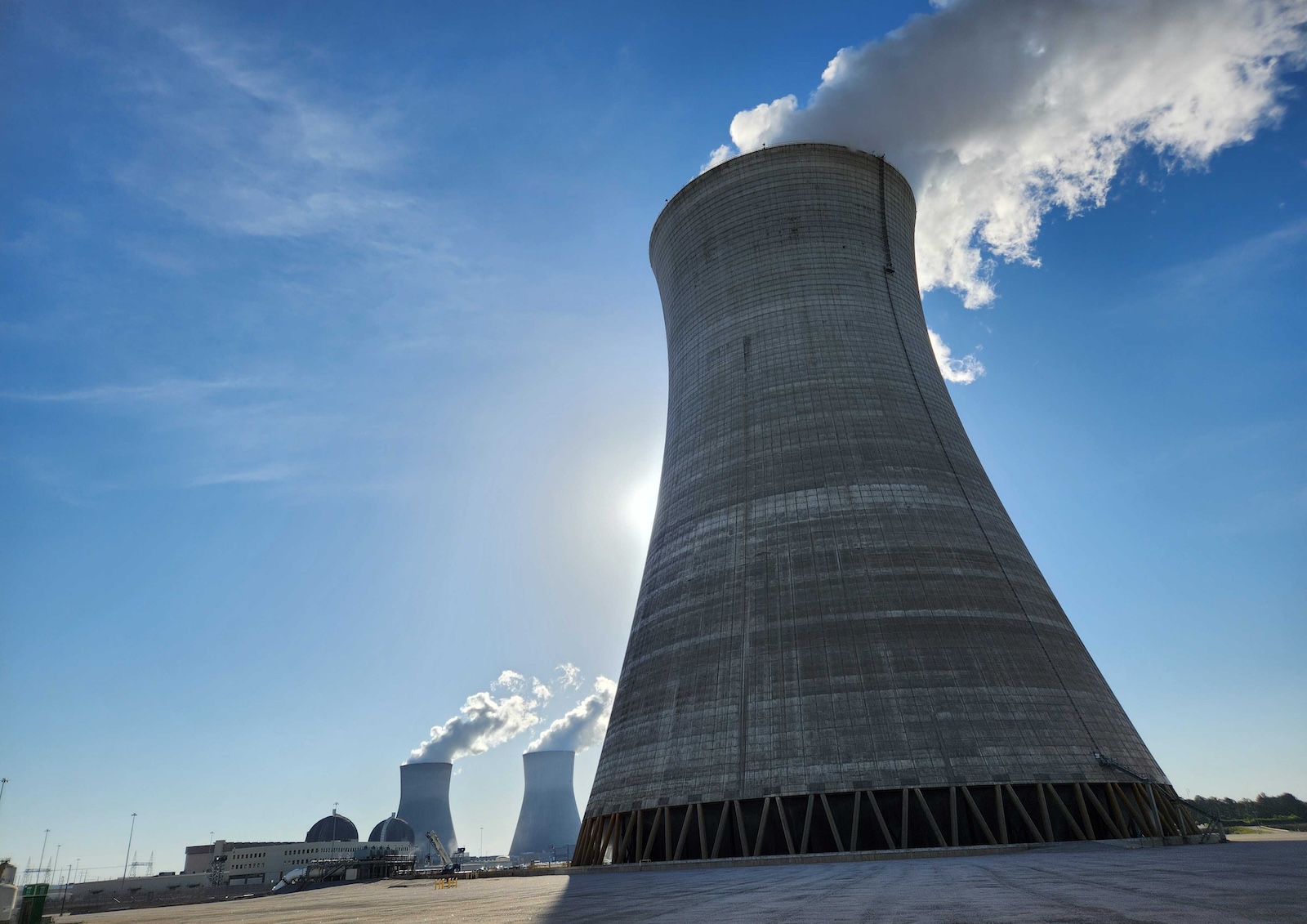
The scope of the initiative expanded when Georgia Power proposed modernizing four of its older nuclear units, encompassing both Plant Vogtle and Plant Hatch. By enhancing the thermal efficiency and equipment output of these existing reactors, the utility can squeeze additional megawatts out of licensed facilities without undertaking the multidecade ordeal of building entirely new nuclear plants from scratch.
Recognizing the immense capital requirements and the unique demands of large-scale corporate customers, Georgia Power designed a bespoke subscription program. This framework allows hyper-scale energy users to pay a dedicated subscription fee layered on top of standard electricity tariffs. These funds are earmarked directly for the nuclear upgrades.
Last week, the Georgia Public Service Commission formally endorsed the program, clearing the hurdles for Plant Hatch updates and cementing the subscription model. PSC Commissioner Stan Wise praised the arrangement during deliberations, highlighting the financial advantage for ratepayers.
"So, around 100 megawatts of carbon-free energy, paid for by somebody else," Commissioner Wise remarked to staffers just prior to the vote. "Why don’t you bring us some more of those deals?"
Financial Scope and Projected Customer Benefits
While the precise proprietary terms of the contract between Google and Georgia Power remain confidential due to competitive and commercial sensitivities, utility officials have released topline figures illustrating the deal’s economic scale.
The initiative is projected to inject approximately 96 megawatts of additional carbon-free nuclear capacity directly into the Georgia grid. More importantly for local ratepayers, Georgia Power estimates that the subscription arrangement will yield roughly $900 million in cumulative benefits over the operational lifespan of the upgraded units. By sharing the capital expenditure burden with a deep-pocketed corporate partner, the utility can modernize its infrastructure downwardly pressuring residential electricity rate hikes that might otherwise be required to fund grid modernization.
Under the subscription model, Google will pay a premium over its standard utility bill. In exchange, the technology company receives valid carbon-free energy credits that count toward its corporate sustainability mandate of achieving 24/7 carbon-free energy by the end of the decade.
Aaron Mitchell, senior vice president of strategic growth for Georgia Power, emphasized the collaborative nature of the arrangement in an official statement following the vote.
"We appreciate Google’s continued leadership in this space and partnership in developing this program, which we see as the latest example of how large-load growth can benefit all electric customers," Mitchell said.
A National Wave of Nuclear-Tech Partnerships
The Georgia agreement does not exist in a vacuum. It forms part of a broader, nationwide wave of strategic alignments between big tech and nuclear energy providers seeking to bypass fossil-fuel reliance.
Just days before the Georgia PSC vote, Google announced a separate, major partnership with Constellation Energy. That agreement aims to fund similar nuclear capacity upgrades across reactors located in Illinois, New Jersey, and Pennsylvania, injecting a massive 890 megawatts of clean energy into the PJM Interconnection grid—the largest grid operator in the United States. Concurrently, e-commerce giant Amazon has struck a similar deal to secure power directly from a Constellation nuclear facility in Maryland.
These concurrent announcements signal that nuclear power has transitioned from a legacy industry facing economic headwinds into a favored asset class for technology companies racing to secure proprietary, clean energy supplies.
Lucia Tian, director of advanced energy technologies for Google, underscored the local and systemic importance of these transactions.
"This collaboration with Georgia Power ensures that digital infrastructure growth goes hand-in-hand with positive local impact, helping to deliver hundreds of millions of dollars in direct customer benefits and supporting a more affordable, clean, and reliable energy system for all Georgia residents," Tian stated.
Industry Analysis: Alternatives and Supply Chain Realities
The pivot toward nuclear uprates offers strategic advantages that extend far beyond public relations and carbon accounting. According to analysts at the Corporate Energy Buyers Association (CEBA), which advocates for non-fossil procurement solutions on behalf of major corporate entities, the urgency of data center deployment requires creative financing and operational agility.
Priya Barua of CEBA noted that corporate energy buyers are increasingly evaluating every available mechanism to guarantee grid reliability without violating their institutional carbon reduction pledges.
"A number of large energy customers are looking kind of across the board at what are all of the tools in the toolkit in order to actually support a reliable, affordable grid," Barua explained. "I do think we’re going to see a lot more of those types of innovations and thinking across the board."
Among those tools are advanced energy efficiency programs, high-voltage transmission line upgrades, and demand-response initiatives designed to curb electricity consumption during periods of peak stress on the grid. However, when it comes to sheer generation capacity, upgrading existing nuclear infrastructure offers a decisive speed advantage.
Building a brand-new nuclear power plant is notoriously time-consuming, frequently plagued by regulatory hurdles, budget overruns, and construction delays spanning decades. Conversely, performing modernization and uprates on operational reactors can typically be accomplished within a five-year window.
This timeline is especially critical given current market conditions. Utilities nationwide are experiencing severe supply-chain bottlenecks and delivery delays for natural gas turbines and other essential hardware required for the fossil-fuel generation projects traditionally deployed to handle data center spikes.
Katie Southworth, also of CEBA, used a sports analogy to describe the strategic value of the Google-Georgia Power model in alleviating these logistical jams.
"It can mitigate delays in projects coming online," Southworth said. "You’ve got a relay race, and who is going to get to the commercial operation date first. In order to have the resources to sort of run a competitive relay race, you have to have a lane for them to go into."
Implications for the Future of American Grids
The Georgia Power and Google partnership highlights a profound structural evolution in how American electricity is financed, generated, and consumed. For decades, the social contract of regulated utilities was straightforward: utilities built generation plants based on projected consumer demand, spread the capital costs across all ratepayers through approved tariffs, and maintained a centralized grid.
The meteoric rise of the digital economy has disrupted this traditional equilibrium. Data centers represent an unprecedented concentration of electrical load that threatens to outstrip regional generation capacity and drive up costs for everyday consumers. By stepping in to co-finance vital infrastructure upgrades—such as the upcoming modernizations at Plant Vogtle and Plant Hatch—hyperscale technology companies are effectively rewriting the rules of utility finance.
If replicated across other state jurisdictions, the subscription-based nuclear upgrade model could provide a viable middle path. It allows utilities to modernize aging, carbon-free generation assets without overburdening residential ratepayers, provides tech giants with the reliable baseload power necessary to honor strict climate pledges, and injects much-needed capital into the grid well ahead of traditional regulatory timelines. As the digital transformation accelerates, the success of the Georgia experiment will undoubtedly serve as a critical benchmark for energy planners nationwide.