OpenAI Expands ChatGPT Advertising Ecosystem With Visual Display Ads and Advanced Measurement Tools

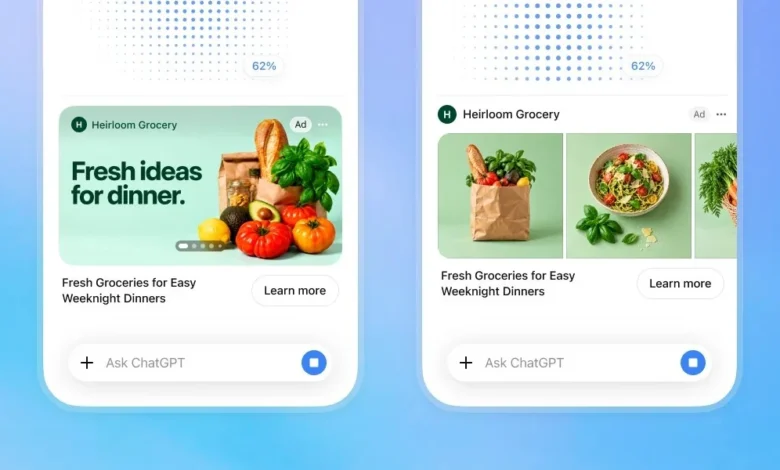
The commercial evolution of generative artificial intelligence has taken another significant step forward as OpenAI rolls out visual display advertising within ChatGPT. This expansion broadens the company’s monetization strategy for its free and low-cost user tiers. Initially launched earlier this year to support non-paying accounts, OpenAI’s advertising framework is now evolving beyond text-based placements to include imagery that appears directly alongside user-generated visual content.
Set to debut later this month as an exclusive pilot for U.S. users, the new visual ad product introduces commercial messaging from a carefully curated test group of initial advertisers. As the platform scales toward its global user base of 1.2 billion weekly active users, these advertising options are poised to become a major revenue driver for the artificial intelligence giant. However, the integration of ads into a productivity and creativity tool also raises questions about user experience, platform neutrality, and the competitive pressures reshaping the generative AI landscape.
The Evolution of OpenAI’s Monetization Strategy
For years, OpenAI positioned ChatGPT as a subscription-and-API-driven enterprise, relying heavily on premium tiers like ChatGPT Plus, Team, and Enterprise to fund its massive computational overhead. However, maintaining free access for hundreds of millions of users worldwide presented a distinct financial challenge. The high cost of running large language models—requiring vast clusters of specialized hardware and continuous power consumption—forced the company to rethink its business model.
Earlier this year, OpenAI officially introduced advertising to support its free and lower-cost subscription tiers, marking a departure from its original ad-free ethos. The rollout gained international traction in August when ads expanded to regions such as India. Initially restricted to subtle, text-based recommendations or sponsored prompts, the strategy is now maturing into a multi-format digital advertising ecosystem.
By introducing visual display ads, OpenAI is actively targeting brand marketers who rely on imagery to convey product narratives. According to industry insiders, the company aims to capture digital advertising budgets currently spent on traditional search engines and social media platforms. By allowing brands to place visual ads adjacent to AI-generated images, OpenAI is capitalizing on the high engagement rates characteristic of creative tasks.
Competitive Pressures and Market Dynamics
The timing of OpenAI’s visual ad expansion coincides with intensifying competition in the consumer AI sector. Meta’s recent launch of Muse, a free, agentic AI application available to all users, has accelerated the race for market share among leading conversational agents. As rivals offer advanced capabilities without charging subscription fees, companies like OpenAI face mounting pressure to monetize their free user bases effectively.
Industry analysts note that introducing advertising serves a dual purpose. Beyond generating direct ad revenue, the presence of ads on the free tier creates a natural economic incentive for casual or power users to upgrade to paid subscription models, such as ChatGPT Plus. By trading convenience and an ad-free environment for a monthly fee, users can bypass commercial interruptions, establishing a predictable dual-revenue stream for OpenAI akin to streaming services like Hulu or Spotify.
Implementation, Transparency, and User Experience
As visual display ads make their debut, OpenAI has emphasized that user trust and platform integrity remain primary considerations. Company representatives have noted that the new advertisements will be clearly labeled to distinguish them from organic AI outputs. Furthermore, OpenAI has maintained that the inclusion of ads will not influence, bias, or alter the factual accuracy and reasoning of the answers generated by ChatGPT.
The initial rollout will be restricted to the United States and will feature products and services from a strictly limited test group of launch advertisers. This controlled environment allows OpenAI to monitor user engagement, technical performance, and ad delivery mechanics before scaling the product globally.
Nevertheless, the integration of commercial messaging into an AI chat interface carries inherent risks. User experience researchers suggest that unexpected visual or contextual interruptions could disrupt creative workflows, potentially alienating users who view ChatGPT as a neutral assistant rather than a commercial medium.
Expanding the Partner Ecosystem and Measurement Tools
To convince major brands and media agencies to shift budgets into the ChatGPT ecosystem, OpenAI is simultaneously rolling out a robust suite of measurement tools and strategic partnerships. Robust attribution has historically been a challenge for emerging digital channels, and OpenAI is addressing this gap by onboarding a comprehensive network of attribution and analytics partners.
The newly announced ecosystem includes click attribution solutions from major platforms such as AppsFlyer, Triple Whale, Adjust, DV Rockerbox, Northbeam, Branch, Singular, Kochava, Airbridge, and Tenjin. Additionally, OpenAI has integrated full-funnel, advanced measurement partners including Fospha, Measured, and INCRMNTAL to provide advertisers with granular data regarding campaign performance, conversion tracking, and return on ad spend.
To help brands optimize their regional campaigns, OpenAI has established partnerships with Haus, Measured, and WorkMagic. These collaborations are designed to facilitate "geo-based" experiments, allowing advertisers to test how location-specific ad placements resonate with different demographics within the ChatGPT user base.
Brand Safety and Suitability Initiatives
In digital advertising, brand safety is a paramount concern. Advertisers require strict guarantees that their products will not appear alongside controversial, harmful, or inappropriate content. To establish trust in this novel AI advertising environment, OpenAI is collaborating with industry leaders DoubleVerify (DV) and Integral Ad Science (IAS).
Through this collaboration, OpenAI is developing brand suitability evaluation pilots. These initiatives will provide independent verification and measurement, helping advertisers better understand the ChatGPT ads environment and ensuring that their visual displays align with corporate safety standards. By partnering with established verification firms, OpenAI is signaling to Fortune 500 brands that its ad inventory meets the rigorous compliance standards expected of modern digital media platforms.
Implications for the Future of Digital Advertising
The maturation of ChatGPT into an ad-supported platform marks a pivotal milestone in the intersection of artificial intelligence and digital marketing. As generative AI becomes the primary interface through which millions of people seek information, write code, and create art, it naturally transforms into a prime channel for commercial discovery.
While the immediate impact will be felt by U.S. advertisers participating in the initial pilot, the long-term implications are global. Once these visual display tools and measurement frameworks are deployed across OpenAI’s entire user base of 1.2 billion weekly active users, the company will solidify its position as a major digital advertising powerhouse.
However, the success of this venture will depend on a delicate balance. OpenAI must successfully monetize its massive free audience without compromising the utility, speed, and perceived neutrality of its core AI technology. If the company can maintain user trust while providing measurable value to brands, ChatGPT could redefine how consumers discover products and services in the digital age. Conversely, an overly aggressive commercial strategy risks driving users toward competing, ad-free platforms. As the pilot unfolds later this month, both the technology and advertising industries will be watching closely to see how consumers and brands adapt to the reality of AI-generated conversations accompanied by commercial displays.