The legacy of the 2018 Australian ball-tampering scandal faces renewed scrutiny following explosive revelations in Usman Khawaja’s autobiography

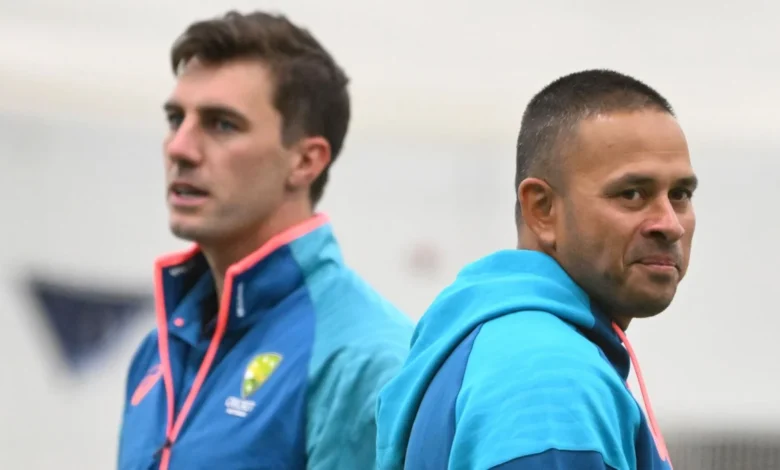
The integrity of Australian cricket has once again been thrust into the center of a national and international firestorm following the publication of Usman Khawaja’s autobiography, Sabr. The memoir has reopened the most painful chapter in modern Australian sporting history: the 2018 "Sandpapergate" incident in Cape Town. While the narrative surrounding the Newlands Test had long been framed as the transgression of three rogue individuals—captain Steve Smith, vice-captain David Warner, and opener Cameron Bancroft—Khawaja’s account suggests a far more systemic awareness within the dressing room than Cricket Australia ever acknowledged.
This development has prompted sharp criticism from veteran analysts and former players, including Nasser Hussain and Michael Atherton, who argue that the governing body’s handling of the crisis left deep, unresolved fissures that continue to undermine the culture of the national team.
The Newlands Incident: A Timeline of Disgrace
The scandal unfolded on March 24, 2018, during the third day of the third Test match against South Africa at Newlands, Cape Town. Television cameras captured Cameron Bancroft attempting to alter the condition of the ball using a piece of yellow adhesive tape coated with grit, which was later identified as sandpaper.
The immediate fallout was unprecedented in the professional era:
- March 24, 2018: Bancroft is caught on camera; in the subsequent post-play press conference, he and captain Steve Smith admit to a premeditated plan to tamper with the ball.
- March 26, 2018: Cricket Australia launches an internal investigation. Smith, Warner, and Bancroft are stood down from their roles for the remainder of the Test.
- March 28, 2018: Following an investigation, Cricket Australia imposes severe sanctions. Steve Smith and David Warner are banned from all international and domestic cricket for 12 months, while Bancroft receives a nine-month suspension.
- March 29, 2018: Darren Lehmann, the then-head coach, announces his resignation, citing the toxic atmosphere surrounding the team.
The Scope of Knowledge: Khawaja’s Claims
In Sabr, Khawaja challenges the official narrative that only three players were complicit. He asserts that the knowledge of the plan to use foreign objects to assist with reverse swing was not confined to the leadership group. According to Khawaja, the culture within the team had drifted toward a "win-at-all-costs" mentality that effectively silenced dissent.
Crucially, Khawaja reveals that he was never interviewed by Cricket Australia investigators in the immediate aftermath of the scandal, despite his proximity to the players involved. He further claims that he urged the team to take collective responsibility and be transparent about the extent of the involvement, only to be dissuaded by Steve Smith. These assertions have been bolstered by David Warner, who recently utilized social media to support the claim that knowledge of the scheme was more widespread than the 2018 inquiry suggested.
Industry Reaction: A "Complete Mess"
Nasser Hussain, the former England captain and respected Sky Sports analyst, described the current discourse as a "complete mess." Hussain’s critique centers on the hypocrisy of the game’s history versus the specific, clumsy nature of the Australian operation. He noted that while various methods of ball-tampering—such as using mints or dirt—have historically been a dark undercurrent in cricket, the decision to use physical tools like sandpaper in an era of high-definition broadcast technology was an inexplicable lapse in judgment.
"How a side thought it was okay to take sandpaper out, and how no one in a meeting went, ‘I don’t think this is okay,’ is beyond me," Hussain stated. He emphasized that the failure of Cricket Australia to conduct a comprehensive, transparent investigation—one that included every player present in the dressing room—created a vacuum of accountability that has now been filled by speculation and resentment.
Michael Atherton, another former England captain, framed the 2018 sanctions as the "worst of both worlds." By handing down "unbelievably heavy" bans to three individuals while leaving the broader structural issues unaddressed, Cricket Australia provided a temporary salve that failed to heal the wound. Atherton argued that the incident was merely the climax of a team culture that had become "out of control" and increasingly unlikable to the global cricket public.
The Cultural and Strategic Impact
The fallout of Sandpapergate has never fully dissipated. It transformed the identity of the Australian team, leading to a massive overhaul of the team’s code of conduct and the appointment of new leadership figures. However, as the team prepares for a demanding international schedule—including an upcoming ODI series against England and a high-stakes away Ashes campaign—the resurfacing of these claims threatens to destabilize the squad.
From a strategic perspective, the current Australian side is already navigating a difficult transition. The decision to rotate key players like Pat Cummins, Mitchell Starc, and Josh Hazlewood—all of whom were involved in the 2018 series and have consistently denied prior knowledge of the tampering—means that the leadership group remains inherently tied to the controversy.
The public perception of the team is also under strain. For many fans, the "Baggy Green" represents an ideal of integrity and fair play. The revelation that the team may have been complicit in a systemic cover-up damages the sanctity of that symbol. As Atherton noted, the current disquiet is not merely about the act of ball-tampering itself, but the lack of "mateship" and transparency shown by the organization toward its own players and the public.
Data and Historical Context
To understand the severity of the 2018 scandal, one must look at the statistical impact on the team’s performance. In the immediate wake of the bans, the Australian Test team suffered a significant dip in ranking. The team’s win percentage dropped, and their home-soil dominance was challenged in ways not seen in the previous decade.
| Period | Series Played | Win % |
|---|---|---|
| 2015–2017 | 22 | 68% |
| 2018–2019 | 12 | 33% |
| 2020–2023 | 24 | 58% |
The data indicates that the "win-at-all-costs" mentality mentioned by Khawaja and Atherton was correlated with a high-pressure environment that prioritized immediate results over sustainable conduct. The financial implications for Cricket Australia were also profound, with major sponsorship deals coming under review and a significant decline in the team’s "brand value" during the 2018-2019 season.
Future Implications for Cricket Australia
As the governing body faces calls for a new, independent review into the events of 2018, the challenge is twofold: restoring public trust and ensuring the current team is not paralyzed by the ghosts of the past.
Cricket Australia faces a difficult path. A new investigation could drag the organization through years of litigation and public scrutiny, potentially alienating the current playing group. Conversely, maintaining silence or dismissing the claims as historical irrelevance risks cementing the perception that the organization is more interested in reputation management than the truth.
The scheduling of the upcoming 150th Anniversary Test in Melbourne and the subsequent Ashes tour in England will now be played against a backdrop of renewed skepticism. Journalists and fans alike will be watching closely to see how the team addresses these allegations during media appearances. With Mitchell Marsh, the only remaining player from the 2018 Test in the current squad, set to address the media, the pressure to provide a definitive answer regarding the culture of that era has never been higher.
Ultimately, the Sandpapergate scandal was never just about a piece of sandpaper. It was a failure of institutional governance, a breakdown of team ethics, and a moment where the "spirit of cricket" was traded for the desire for victory. As long as those involved remain in the spotlight, the questions raised by Usman Khawaja will continue to haunt the Australian cricketing establishment, serving as a reminder that in the eyes of the public, the final chapter of this saga has yet to be written.