ITV Faces Financial Headwinds as Regulatory Scrutiny Intensifies Over Landmark Sky Deal

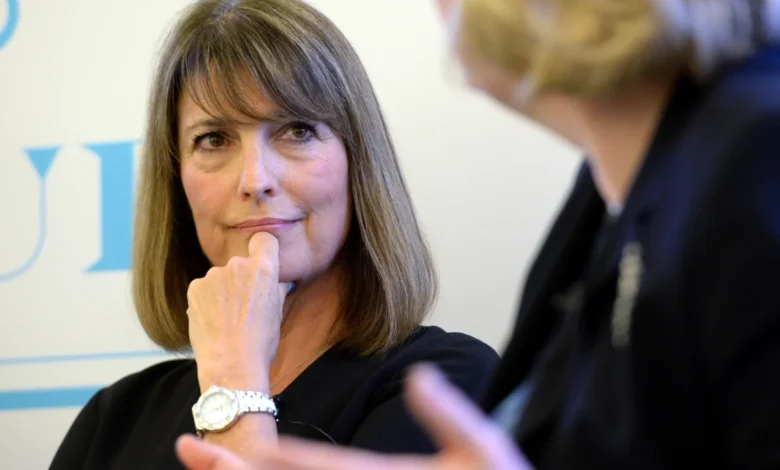
The British broadcasting landscape is currently undergoing a period of profound structural transformation, underscored by a sobering financial report from ITV this Wednesday. Led by CEO Carolyn McCall, the U.K. media giant revealed a challenging third quarter characterized by a contraction in advertising expenditure and a modest dip in revenue for its production powerhouse, ITV Studios. These results arrive at a critical juncture for the company as it navigates the complex regulatory pathway toward the divestiture of its Media & Entertainment (M&E) arm to Comcast-owned Sky, a deal valued at $2.13 billion that promises to redefine the firm as a pure-play global content producer.
The Financial Landscape: A Quarter of Contraction
ITV’s financial disclosures for the third quarter of 2026 paint a picture of an advertising market in flux. Total advertising revenue for the quarter plummeted by 8 percent compared to the same period in 2025. This performance has weighed heavily on the year-to-date figures, pushing nine-month ad revenue down by 1 percent. The broader group revenue trajectory mirrored this decline, falling 1 percent over the first nine months of the year, with external revenue sliding by 2 percent.
The immediate outlook for the advertising sector remains subdued, prompting management to adopt a defensive posture. CEO Carolyn McCall indicated that the company anticipates a further decline in total advertising revenue of between 5 and 10 percent for the fourth quarter. Consequently, the full-year projection for 2026 suggests a contraction of 2 to 3 percent relative to the 2025 fiscal year.
To mitigate the impact of this downturn, ITV has initiated a significant cost-reduction program within its M&E segment. The company has identified £30 million in temporary savings to be realized during the final quarter of the year. This fiscal discipline will be achieved through £25 million in content-related savings—likely reflecting a tightening of production budgets and licensing acquisitions—and an additional £5 million in discretionary, non-content operational expenses. McCall emphasized that these "self-help" measures are essential to align the company’s cost structure with the cooling demand from advertisers, while maintaining the integrity of its core strategic objectives.
ITV Studios: A Path Toward Independence
While the M&E segment grapples with cyclical advertising volatility, ITV Studios remains the primary engine of the company’s future strategy. Once the sale to Sky is finalized, ITV Studios will emerge as a standalone entity, repositioned as a pure-play, global content powerhouse. For the first nine months of 2026, the studio division reported a revenue decline of 1 percent, a figure management characterized as consistent with internal expectations.
McCall noted that the studio’s financial profile is heavily back-weighted, with a significant volume of production deliveries and licensing agreements slated for the fourth quarter. Despite the slight year-to-date dip, the company maintains that a greater proportion of its total annual studio revenue has been secured at this stage compared to the same point in 2025, providing a degree of confidence in meeting end-of-year targets.
Chronology of the Sky Acquisition
The proposed acquisition of ITV’s M&E business by Sky, led by CEO Dana Strong, represents one of the most significant consolidations in U.K. media history. The timeline of this deal has been both rapid and, more recently, subject to heightened scrutiny:
- July 2026: ITV and Sky officially announce an agreement for Sky to acquire ITV’s M&E division—including its terrestrial channels and the ITVX streaming platform—for $2.13 billion.
- Late October 2026: As the deal enters the formal regulatory review phase, market observers monitor the potential for government intervention.
- November 4, 2026: The U.K. Secretary of State issues a Public Interest Intervention Notice (PIIN). This procedural milestone mandates that the transaction be reviewed by the Competition and Markets Authority (CMA) and the broadcasting regulator, Ofcom.
- Current Status: The deal is progressing through the regulatory review process, with all parties aiming for a completion date in the second half of 2027.
Regulatory Hurdles and the Public Interest
The involvement of the U.K. government signals the gravity of the merger. Last week, Culture Secretary Lisa Nandy formally requested that the CMA investigate the transaction from a competition perspective, while Ofcom has been tasked with assessing the public interest implications of the merger.
The core concern for regulators is whether the concentration of such extensive media assets under the Sky banner—which already operates significant pay-TV, streaming, and broadband services in the U.K., Ireland, and Italy—would stifle market competition or compromise the plurality of news and content delivery in Britain. Sky, which also operates the production arm Sky Studios under Cécile Frot-Coutaz, has been aggressively expanding its footprint in original content. The merger would effectively unite two of the most potent content-creation engines in the country, a prospect that regulators are examining with extreme rigor.
Strategic Implications for the Market
The strategic rationale for the sale is rooted in the "pure-play" transformation. By offloading the capital-intensive and cyclical M&E business, ITV intends to focus entirely on content creation, where it can leverage its library and production capabilities to serve global streaming platforms and broadcasters. For Sky, the acquisition of ITV’s channels and the ITVX platform would provide a massive influx of domestic audience share and a robust advertising infrastructure, allowing the Comcast subsidiary to better compete against global giants such as Netflix, Amazon, and Disney.
However, the "muted" outlook for the advertising market suggests that the buyer and seller are navigating a period of economic caution. As brands trim their marketing budgets in response to broader macroeconomic uncertainty, the value of traditional terrestrial ad inventory is being re-evaluated. ITV’s decision to implement £30 million in cost-cutting measures underscores the reality that even dominant media players are not immune to the cooling of the consumer economy.
Analyst Perspective and Future Outlook
Industry analysts suggest that while the regulatory road will be arduous, the structural logic of the deal remains compelling for both sides. ITV is effectively trading a volatile, declining advertising-dependent business for a streamlined global production entity. Conversely, Sky is consolidating its position as the dominant player in the U.K. media market, albeit at the cost of intense scrutiny from the CMA.
The success of this transition hinges on two factors: the ability of ITV Studios to maintain its momentum as a standalone firm, and the willingness of regulators to approve a deal that fundamentally alters the competitive landscape of British television. As the 2027 completion target approaches, the industry remains focused on how the two companies will balance their short-term fiscal challenges against the long-term goal of total corporate restructuring.
For shareholders, the next few quarters will be defined by the tension between the immediate cost-cutting measures in the M&E segment and the long-term growth prospects of a liberated ITV Studios. The company’s ability to navigate these financial headwinds while simultaneously satisfying the demands of the Secretary of State and the CMA will ultimately dictate the success of this monumental corporate shift. As the media sector continues to converge, ITV’s journey serves as a microcosm of the challenges facing legacy broadcasters in an increasingly digital, globalized, and regulated landscape.