Waymo Robotaxi Service Briefly Halts in San Francisco Amidst Major Power Outage, Reigniting Regulatory Debates.

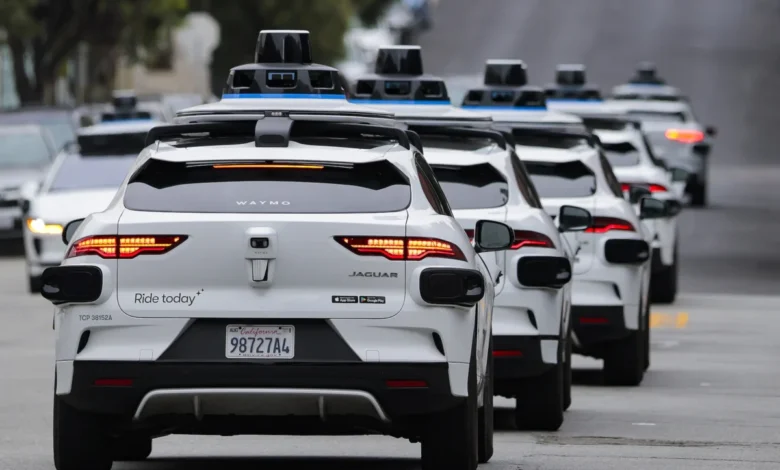
San Francisco’s nascent but rapidly expanding autonomous vehicle landscape experienced another notable disruption on July 18, 2026, when Waymo, the self-driving technology company owned by Alphabet, temporarily suspended its robotaxi service across parts of the city. The operational pause, which Waymo described as "temporary adjustments," was a direct response to a widespread power outage that impacted approximately 7,000 PG&E customers in San Francisco, once again casting a spotlight on the resilience and regulatory oversight of autonomous transportation in urban environments during infrastructure failures.
Chronology of Disruption and Restoration
The incident unfolded on a Friday afternoon, beginning shortly after 12:30 PM PDT, when a significant power disruption left thousands of San Francisco residents and businesses without electricity. The precise cause of the outage was not immediately detailed by Pacific Gas and Electric Company (PG&E), but its effects were swiftly felt across various sectors, including public services and emerging technologies like Waymo’s robotaxi operations.
As reports of the power outage began to surface, Waymo initiated its safety protocols. According to a screenshot widely circulated on social media, Waymo promptly informed its San Francisco customers via its app that service was "temporarily paused" and, critically, that "freeway routes are unavailable." This immediate communication highlighted the company’s efforts to manage customer expectations and ensure rider safety during an unfolding situation.
When initially contacted for comment, a Waymo spokesperson confirmed the service adjustments, stating, "We are making temporary adjustments to our service while we monitor local conditions. We know riders depend on us, and we will return to normal operations as soon as possible." This statement underscored the company’s cautious approach, prioritizing the assessment of real-time conditions before committing to a full resumption of service.
Following the initial period of uncertainty, Waymo provided further clarification, revealing that the service pause lasted for approximately one hour. The decision to halt operations was made "to assess the scale of the power outage affecting a large portion of San Francisco and coordinate with local officials." This proactive measure suggests a refined incident response strategy, likely influenced by previous experiences with city-wide disruptions. By roughly 1:30 PM PDT, Waymo announced that its robotaxi service had resumed, indicating that the company’s internal assessment and coordination efforts had concluded, and conditions were deemed safe for autonomous operations. PG&E simultaneously reported progress in restoring power to affected areas, with many customers seeing their electricity return within a few hours.
Historical Context and Previous Incidents
This latest incident is not an isolated event but rather another data point in a series of challenges Waymo and other autonomous vehicle (AV) operators have faced in San Francisco. The city, known for its complex urban topography, dense traffic, and dynamic infrastructure, serves as a crucial testing ground for self-driving technology. However, it also presents unique hurdles, particularly when critical infrastructure, such as the electrical grid, falters.
One significant precursor occurred in December of the previous year, when a widespread blackout led to a number of Waymo vehicles stalling on city streets. This incident caused considerable disruption, with autonomous vehicles unexpectedly ceasing movement, sometimes in traffic lanes, and requiring human intervention to be cleared. Such occurrences raise significant public safety concerns, particularly regarding potential obstruction of emergency vehicles.
Another notable event transpired during a Fourth of July fireworks show. While not directly linked to a power outage, the massive influx of traffic and the general chaos associated with a large public event reportedly paralyzed traffic, with autonomous vehicles struggling to navigate the unprecedented conditions. These instances collectively illustrate the intricate challenges of deploying Level 4 autonomous systems—vehicles capable of operating without human intervention under specific conditions—in unpredictable real-world scenarios. The core issue often revolves around how these systems are programmed to react to anomalous, non-standard events that fall outside their meticulously mapped and predicted operational domains.
Official Reactions and Regulatory Scrutiny
The recurring nature of these incidents has not gone unnoticed by local authorities. San Francisco Mayor Daniel Lurie has emerged as a vocal proponent for stricter oversight, explicitly calling for tougher state regulations. Following the December blackout and the Fourth of July traffic fiasco, Mayor Lurie’s office issued strong statements urging regulatory bodies to "adequately address how autonomous vehicles operate during major incidents, planned or not."
Mayor Lurie’s concerns reflect a broader sentiment among city officials and first responders regarding the integration of AVs into urban infrastructure. Emergency services, in particular, have highlighted instances where stalled autonomous vehicles have impeded access for police, fire, and ambulance crews, potentially delaying critical response times. For example, during a medical emergency, every minute counts, and an autonomous vehicle blocking a street, even temporarily, could have severe consequences. This has led to calls for more robust communication protocols between AV operators and city emergency management centers, as well as clearer guidelines for AV behavior during crises.

The California Public Utilities Commission (CPUC) and the Department of Motor Vehicles (DMV) are the primary state agencies responsible for regulating autonomous vehicle deployment and testing in California. The CPUC specifically oversees robotaxi services, granting permits for commercial operation. Mayor Lurie’s push for tougher rules is aimed at influencing these state bodies to impose more stringent requirements on AV companies, potentially including mandatory fail-safe mechanisms that ensure vehicles can clear roadways safely and autonomously, even in the event of complete power loss or communication failure. There are also discussions around requiring AVs to have the capability to be remotely taken over by human operators more readily, or to be easily moved by emergency personnel without specialized equipment.
Technical Resilience and Operational Protocols
Autonomous vehicles like Waymo’s rely on an array of sophisticated sensors—Lidar, radar, cameras—and powerful onboard computing to perceive their environment and make driving decisions. They also depend heavily on high-definition maps and real-time connectivity for routing and remote assistance. A power outage, while not directly affecting a vehicle’s internal battery, can disrupt critical external infrastructure like traffic lights, cellular networks, and GPS signals, all of which contribute to an AV’s operational context.
Waymo’s decision to pause service during the recent outage exemplifies a safety-first approach. When faced with degraded environmental data or potential loss of external communication, the system is programmed to enter a minimal risk condition (MRC). This typically involves pulling over to a safe location, if possible, and awaiting further instructions or human intervention. The "freeway routes unavailable" message suggests that higher-speed environments, where a sudden loss of operational capacity could be more dangerous, were prioritized for shutdown.
However, the efficacy of these protocols in widespread, unpredictable scenarios remains a point of contention. The challenge for AV developers is to engineer systems that are not only robust in normal operating conditions but also capable of gracefully handling "edge cases" – rare or unforeseen circumstances. This includes developing redundant systems for power, communication, and localization, as well as refining algorithms to interpret and react to ambiguous or incomplete sensor data during chaotic events. The coordination with local officials, as highlighted by Waymo, is also crucial, ensuring that AV operators are integrated into city-wide emergency response plans.
Broader Implications for the Autonomous Vehicle Industry
This latest disruption in San Francisco carries significant implications not just for Waymo but for the broader autonomous vehicle industry.
Public Trust and Acceptance: Each incident, regardless of its severity, has the potential to erode public trust in autonomous technology. For AVs to achieve widespread adoption, consumers and city stakeholders must feel confident in their safety and reliability, especially during emergencies. Repeated disruptions can foster skepticism and resistance to further deployment.
Regulatory Landscape: The calls for tougher regulations from Mayor Lurie and other city leaders are likely to gain momentum. This could lead to more stringent permitting requirements, increased reporting obligations for incidents, and potentially even new operational restrictions for AVs in complex urban environments or during specific events. The CPUC and DMV will be under increasing pressure to balance innovation with public safety.
Technological Development: These real-world incidents provide invaluable data for AV developers. They highlight areas where current systems may be vulnerable or where protocols need refinement. Expect to see continued investment in robust fail-safe mechanisms, improved incident response capabilities, and more sophisticated environmental perception systems that can better interpret and adapt to degraded infrastructure. This could include advancements in vehicle-to-infrastructure (V2I) communication to receive real-time updates on power outages or traffic light statuses, even if general cellular networks are down.
Operational Resilience: AV companies will need to demonstrate greater operational resilience. This might involve developing strategies for rapid human deployment to clear stalled vehicles, establishing dedicated communication channels with emergency services, and perhaps even integrating backup power sources or longer-range wireless communication systems into their fleet. The ability to quickly and safely recover from disruptions will be a key differentiator.
Urban Planning and Infrastructure: The integration of AVs also poses questions for urban planners and infrastructure developers. How can cities design infrastructure that is more resilient to power outages and simultaneously supportive of autonomous operations? This could involve smart traffic lights with independent power backups or dedicated AV lanes with enhanced sensor coverage. The conversation extends beyond just the vehicles themselves to the entire ecosystem in which they operate.
In conclusion, the brief halt of Waymo’s robotaxi service in San Francisco due to a power outage serves as a potent reminder of the complex interplay between advanced technology and urban infrastructure. While Waymo’s quick response and resumption of service demonstrated a degree of operational maturity, the incident reignites critical discussions about public safety, regulatory frameworks, and the ongoing challenge of integrating autonomous vehicles seamlessly and safely into the dynamic fabric of modern cities. The path forward for robotaxis will undoubtedly involve continuous technical refinement, transparent communication, and proactive collaboration between AV developers, regulatory bodies, and local municipalities to build an ecosystem that prioritizes both innovation and community well-being.
Related posts: