The flydubai copilot who attacked his captain with an axe reportedly intended to crash the plane into the terminal at Tel Aviv’s Ben Gurion Airport.

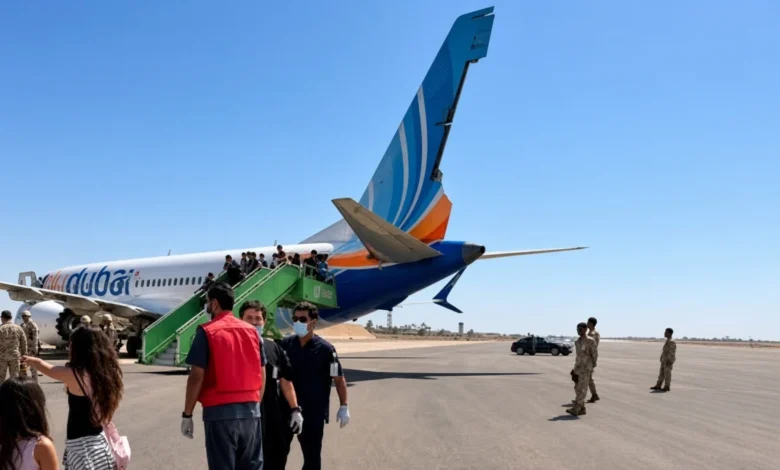
The attempted mid-air catastrophe on September 30, 2026, involving flydubai Flight FZ1073, has sent shockwaves through the global aviation community, prompting an urgent reassessment of cockpit security protocols and international pilot vetting procedures. Investigators have now confirmed that the 29-year-old Omani copilot, identified as Hamam al-Hammami, had meticulously planned the assault with the specific intent of steering the Boeing 737 into the terminal building at Ben Gurion Airport, effectively utilizing the aircraft as a kinetic weapon.
The Anatomy of the Attack
The sequence of events on September 30 began in the routine, high-altitude calm of a commercial flight from Dubai to Tel Aviv. According to the captain’s harrowing testimony, the incident commenced when al-Hammami requested a brief moment of solitude to engage in prayer. In accordance with standard cockpit courtesy, the captain turned his attention forward, allowing the copilot privacy. Moments later, the captain was struck from behind with an axe, an implement that investigators believe was smuggled onto the flight as part of a premeditated plan.
Despite suffering severe head trauma and vision impairment caused by blood loss, the captain maintained enough consciousness to recognize the impending danger. As the aircraft began an unauthorized and rapid descent—an indication that the assailant had begun manipulating the flight controls to initiate a crash sequence—a struggle ensued. The captain fought to reach the reinforced cockpit door, which had been locked by the attacker to prevent intervention from the cabin crew. Through sheer force of will, the captain managed to disengage the locking mechanism, providing an opening for the flight attendants and passengers to breach the cockpit and subdue the assailant. The captain later credited his survival and his ability to react under pressure to the situational awareness he gained from years of watching Air Crash Investigation documentaries.
Chronology of Premeditation
Deep-dive investigations into al-Hammami’s digital footprint and travel history have revealed a chilling timeline of radicalization and planning. Records indicate that the assailant had researched airlines serving the Israeli market long before his employment at flydubai. In June 2026, he conducted a reconnaissance visit to Ben Gurion Airport, likely to familiarize himself with the terminal layout and approach vectors.
Crucially, this was not his first attempt. Intelligence reports suggest that al-Hammami had considered a 9/11-style mission earlier in the summer but abandoned the plan at the last moment because a friend of his was scheduled to be on the flight crew. This detail underscores the calculated, predatory nature of his actions: he was not a spontaneous actor but a deliberate operative who prioritized the successful completion of his mission over all other considerations, barring personal acquaintances.

His digital history, which surfaced in the hours following the attack, painted a portrait of a man steeped in extremist ideology. His LinkedIn profile contained unsettling imagery, including cockpit footage of Israeli aircraft and propaganda material linked to former al-Qaeda leader Ayman al-Zawahiri. Furthermore, posts published shortly after the incident—some of which appeared to be scheduled—referenced a desire to inflict violence on "Jews" and boasted of his "endeavor," despite its ultimate failure. These findings have led authorities to investigate whether al-Hammami was part of a larger, coordinated cell or if he was a "lone wolf" actor influenced by extremist propaganda.
Regulatory Lapses and Security Gaps
The fact that al-Hammami was permitted to operate flights into Israel highlights a critical failure in both airline hiring practices and international security cooperation. Israel maintains strict prohibitions against pilots from nations that do not share formal diplomatic relations with the Jewish state from operating flights into its territory. Oman, while a member of the Gulf Cooperation Council, does not have formal diplomatic relations with Israel.
However, investigations have revealed that dozens of Omani pilots had been flying routes to Tel Aviv in violation of these security directives. The breach appears to have been an open secret among some security circles, raising questions about why this pattern was not identified and halted sooner. Following the FZ1073 incident, flydubai has suspended all operations to Tel Aviv, and the Israeli government is conducting a comprehensive audit of all foreign aircrews entering its airspace.
The incident has also cast a harsh light on the vetting process for pilots in the region. It has emerged that al-Hammami had previously been flagged by Oman Air, which had removed him from active flying duties prior to his hiring by flydubai. That such an individual was able to secure a position with another major carrier is a significant point of failure that global aviation regulators are now investigating.
Global Reactions and Policy Implications
The international response has been swift. While the United Arab Emirates initially objected to the characterization of the event as a "terrorist attack" before the conclusion of a formal investigation, they have since conceded that the evidence warrants a terrorism designation. The United States, through various government channels, has expressed concern regarding potential foreign sponsorship, with some officials floating the possibility of an Iranian connection, though public evidence remains inconclusive at this stage.
The aviation industry is now grappling with the implications of the "cockpit door" dilemma. While the post-9/11 mandate for reinforced, locked cockpit doors has successfully prevented intruders from entering the flight deck, the FZ1073 incident demonstrates that the greatest threat can sometimes originate from within. The challenge for aviation security experts is to design a system that prevents unauthorized entry while ensuring that the cabin crew can regain control if a pilot becomes incapacitated or hostile.
Public Discourse and the "Altercation" Narrative
The incident also sparked a massive cultural debate regarding the media’s role in reporting on terrorism. Initial reports from several major Western news outlets described the event as an "altercation" or a "disagreement" between two pilots, a framing that was widely mocked on social media. Critics pointed to this as a failure of journalistic integrity, suggesting that outlets were hesitant to label the event as terrorism because it did not fit a pre-established narrative.
The disconnect between the severity of the act and the initial muted reporting led to a surge of satire and critical commentary online. Comedians and social media users highlighted the absurdity of describing an axe-wielding pilot attempting to crash a plane as a mere "dispute." This public backlash has served as a catalyst for broader conversations about how mainstream media outlets handle reports involving geopolitical tension and extremist violence.
Conclusion: A Turning Point for Aviation
As the investigation into Flight FZ1073 continues, the implications for the future of commercial aviation are profound. The incident is not merely a story of a single rogue pilot; it is a case study in the failure of institutional oversight and the persistence of extremist threats in the modern era.
The aviation industry now faces a dual challenge: the necessity of tightening regional and international pilot vetting protocols to ensure that individuals with extremist backgrounds are identified and excluded, and the technical requirement to develop safer cockpit management systems. As Israel and the UAE coordinate their investigations, the global aviation community remains on high alert. The "one last fight" of the FZ1073 captain saved hundreds of lives, but the event serves as a grim reminder that in an era of global travel, the cockpit remains one of the most vulnerable and critical fronts in the ongoing struggle against terrorism. The path forward will require a fundamental shift in how airlines and intelligence services share information, ensuring that the cockpit door—meant to be a shield—does not become a wall behind which danger can fester undetected.