Air Canada faces scrutiny after using inaccurate maintenance records to deny passenger compensation for a canceled flight.

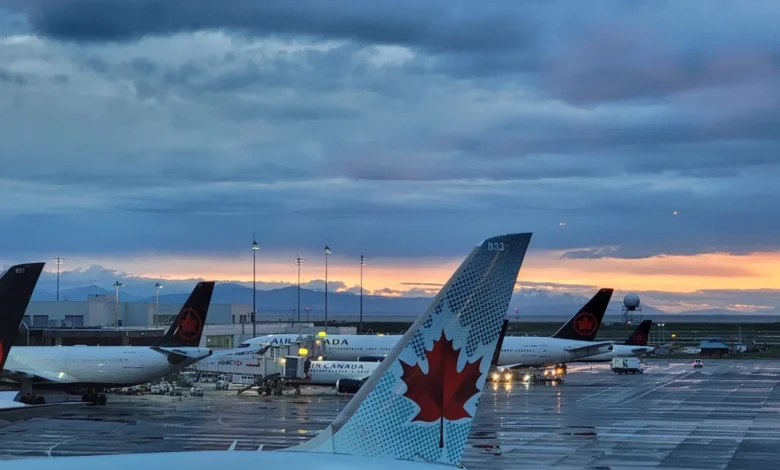
The airline industry has long grappled with the tension between operational flexibility and passenger rights, but a recent case involving Air Canada has highlighted a significant transparency gap. In a ruling that underscores the importance of rigorous regulatory oversight, a passenger who saw his Montreal-to-Bogota flight canceled in September 2022 was ultimately awarded C$1,000 in compensation after discovering that the carrier had used the maintenance records of an entirely different aircraft to justify the disruption.
The resolution of this case, finalized in January 2026, serves as a landmark example of how travelers, often lacking the tools to verify airline claims, can be misled by technical justifications for cancellations. While Canadian federal law provides a clear framework for compensation, the burden of proof often rests on passengers to challenge the narrative presented by the airline.
A Chronology of the Dispute
The disruption occurred in September 2022, when the passenger was informed that his flight from Montreal to Bogota was canceled due to safety-related maintenance requirements. Under the Canadian Air Passenger Protection Regulations (APPR), airlines are generally required to pay between C$400 and C$1,000 for flight disruptions that are within their control. However, a critical "safety exemption" exists: if a cancellation is deemed necessary for safety purposes, the airline is exempt from paying compensation.
Following the cancellation, the passenger filed a claim for the statutory compensation. Air Canada denied the request, citing the aforementioned maintenance issues and providing documentation to support the claim. Skeptical of the explanation, the passenger conducted an independent investigation into the aircraft’s historical flight logs and maintenance records.
His investigation revealed a discrepancies that proved fatal to Air Canada’s defense: the maintenance logs provided by the airline to justify the cancellation were tied to a different aircraft registration number than the one originally scheduled for his flight. By cross-referencing the operational history, the passenger successfully challenged the airline’s narrative, leading to a ruling in his favor in early 2026. The subsequent payment of C$1,000 confirmed that the safety-related justification provided at the time of the incident was factually inconsistent with the reality of the aircraft’s status.
The "Safety Loophole" and Operational Reassignment
The core of the issue lies in how airlines manage their fleets. When a flight is canceled or significantly delayed, airlines frequently engage in "aircraft swapping," where a plane is reassigned to a different route to maximize efficiency or protect high-value long-haul connections.
For instance, if a flight to a major hub like Sydney or London faces a mechanical issue, an airline might pull an aircraft from a shorter, more easily rebookable route to ensure the long-haul flight departs. While this is an operationally sound business decision, it creates a regulatory conflict. If the passengers on the "sacrificed" flight are informed their cancellation was for "safety," the airline avoids the obligation to pay compensation.
This tactic has been the subject of intense criticism from passenger advocacy groups. Michael Bociurkiw, another passenger caught in a similar scenario, reported being told his flight was canceled for maintenance, only to later discover the aircraft was redirected to serve passengers bound for Australia.
Regulatory Framework and Legal Precedent
Under Canadian law, the Canadian Transportation Agency (CTA) mandates that airlines must prove a delay or cancellation is "directly attributable to an earlier safety disruption" and that the carrier took "all reasonable measures" to mitigate the impact.
Legal precedent established in November 2022 by the CTA in a case involving WestJet solidified the stance that aircraft swaps do not necessarily grant airlines a pass on compensation. In that instance, WestJet utilized an aircraft from a Honolulu-to-Vancouver flight to replace one grounded by a fuel tank issue elsewhere. While the CTA acknowledged the swap was an "operationally reasonable" move to assist the maximum number of passengers, it nonetheless ordered WestJet to pay C$1,000 to each passenger whose flight was sacrificed. The ruling established that operational necessity does not supersede the rights of passengers whose travel was disrupted as a result of that necessity.
The Challenge of Transparency
The case highlights a broader systemic issue: the information asymmetry between airlines and passengers. In the United States, similar patterns have emerged where passengers are provided with a "maintenance" explanation during a delay but receive a "weather" justification when formally requesting compensation, as weather-related delays are also exempt from compensation requirements.
Because passengers rarely have access to internal flight operational records, they are often forced to accept the airline’s explanation at face value. When an airline provides documentation that is inaccurate—or, in the case of the Montreal-Bogota flight, entirely unrelated to the aircraft in question—the passenger is effectively barred from exercising their legal rights.
Social media discourse, including reactions from individuals such as Sonduren Fanarredha, reflects a growing frustration among the traveling public. Fanarredha, commenting on the incident, described the practice as "false, misleading, and fraudulent," calling for more robust government protection for passenger rights.
Implications for the Airline Industry
For Air Canada, and the industry at large, the 2026 ruling is a stern reminder that digital tracking and the increased accessibility of flight data are making it harder for carriers to rely on questionable maintenance claims. With platforms now allowing users to track aircraft tails and maintenance history, the "maintenance loophole" is under unprecedented scrutiny.
The implications are twofold:
- Financial Risk: Airlines that continue to use broad or inaccurate safety claims to deny compensation face an increasing risk of being held liable for administrative costs, legal fees, and mandatory payouts, particularly as regulatory bodies become more adept at auditing these claims.
- Reputational Damage: As evidenced by the public outcry surrounding this incident, the use of deceptive explanations to avoid financial obligations significantly erodes consumer trust. In an industry where loyalty is built on reliability, the perception of bad-faith handling of disruptions can have long-term impacts on passenger volume and brand equity.
Conclusion
The Canadian government has been under pressure to strengthen the APPR to prevent airlines from using "safety" as a catch-all justification for cancellations that are, in fact, commercial decisions. While the industry maintains that aircraft assignment is a fluid, necessary process to manage complex logistics, the consensus from regulators is becoming increasingly clear: operational efficiency cannot come at the expense of established passenger rights.
As the industry looks toward the future, the integration of clearer communication protocols and more transparent reporting of cancellation causes will be essential. Until then, passengers who find themselves in similar situations may find that persistent, evidence-based challenges to airline narratives are the most effective way to ensure they are treated fairly under the law. The resolution of the Montreal-Bogota case serves as a template for other travelers: the documentation provided by an airline is not the final word, and the truth of an aircraft’s status is often only a few data points away.
Related posts: