South African Airways faces renewed insolvency crisis as salary delays trigger fresh concerns over the national carrier’s viability

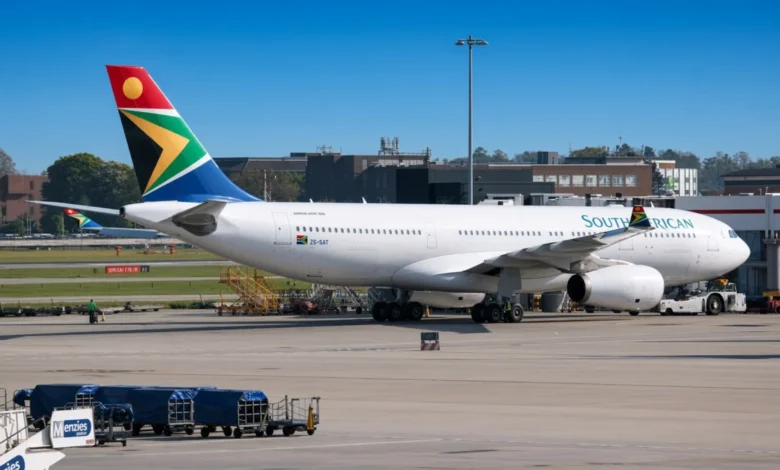
South African Airways (SAA) has once again plunged into a liquidity crisis, marked by the delayed payment of salaries for pilots, senior management, and executives for the second consecutive month. While the airline has maintained that ground staff and flight attendants received their compensation on time, the selective nature of these delays has reignited intense scrutiny regarding the state-owned enterprise’s (SOE) ability to remain a going concern. This latest development follows a pattern of financial instability that has plagued the 92-year-old flag carrier for decades, raising questions about whether further government intervention is either sustainable or imminent.
The carrier, a long-standing member of the Star Alliance, has acknowledged that the business is not cash-generative. Despite a recent financial report that ostensibly claimed profitability, the reality beneath the surface remains grim. The reported "profit" for the fiscal year ending March 31, 2025, was largely bolstered by the sale of lucrative takeoff and landing slots at London Heathrow Airport. When stripping away these non-recurring asset disposals, the airline’s core operations posted a pre-tax loss of approximately R996 million. This persistent inability to generate organic revenue has placed SAA in a precarious position, leaving it reliant on a R1 billion government guarantee approved on August 5, 2025, which carries stringent conditions, including a mandate to identify further assets for liquidation by November.
A Chronology of Institutional Decay
The current financial turbulence is not an isolated incident but rather the latest chapter in a multi-decade saga of mismanagement and systemic failure. SAA, which traces its roots back to 1934, has evolved from a proud symbol of South African aviation into a recurring liability for the national treasury.
- 2019-2021: The airline entered formal business rescue proceedings in December 2019 after years of mounting debt and declining service levels. Operations were entirely suspended for 18 months, finally resuming in September 2021 with a significantly reduced fleet and workforce.
- 2022-2024: Hopes for privatization emerged when the government entered negotiations with the Takatso Consortium to sell a 51% stake in the airline. However, these negotiations collapsed in March 2024, leaving the state as the sole owner once again.
- 2025: The airline failed to meet its September 2026 reporting deadline for the 2025/26 financial year. By October 2026, the airline was forced to admit that it could not meet its payroll obligations for all staff tiers, signaling a severe cash crunch.
The Zondo Commission of Inquiry into State Capture provided a harrowing account of how the airline was hollowed out over the years. Procurement irregularities, political interference in board appointments, and the deliberate obstruction of strategic partnerships—most notably the interference with proposed agreements involving Emirates and Airbus—left the airline’s governance in tatters. The life-long ban of former board chair Dudu Myeni from serving as a company director serves as a stark reminder of the "director gone rogue" culture that once permeated the organization’s leadership.
Supporting Data and Financial Performance
The financial health of SAA is characterized by a reliance on taxpayer support that is increasingly difficult to justify in the current economic climate. Since its inception, the airline has received estimated subsidies totaling nearly $3 billion. When factoring in the broader impact of debt write-offs, creditor losses during the business rescue phase, and historical bailouts, estimates suggest the total cost to the South African taxpayer exceeds $8 billion.

The most recent Auditor General’s report paints a bleak picture of internal oversight. For the seventh consecutive year, the Auditor General issued a "disclaimed" audit opinion, meaning the airline’s financial records were too chaotic or incomplete to verify. The report specifically identified R500 million in irregular expenditure, highlighting a lack of accountability in how public funds are deployed.
The airline’s operational scale has also contracted significantly. Currently operating a fleet of approximately 19 aircraft, the carrier is a shadow of its former self. Executives have attributed the recent liquidity squeeze to volatile fuel prices and a challenging macroeconomic environment. However, analysts point out that the business model’s failure predates current geopolitical tensions, noting that the carrier has struggled with efficiency and market relevance for over a decade.
Official Responses and Internal Governance
The SAA leadership team has found itself in a state of flux. In April 2026, the incumbent CEO departed the organization, leading to the appointment of an acting head. By August 2026, that interim leader was placed on leave, leaving the Chief Legal Officer to manage the daily operations of a company in crisis.
In response to the salary delays, an airline spokesperson stated that roughly 30% to 40% of the workforce was impacted. The carrier defended the decision as a necessary measure to prioritize critical operating expenses, such as fuel and maintenance, to ensure that flight schedules remained uninterrupted. The National Treasury has remained firm, placing the burden of survival on the airline’s management, demanding that they find a private-sector buyer by February 2027 as a prerequisite for the current government guarantee.
Despite reports circulating in the media that the board was considering a return to business rescue or liquidation, the airline has publicly denied these claims, asserting that it is exploring all avenues to improve its financial standing.
Broader Implications for the African Aviation Market
The potential collapse of SAA holds significant implications for the global Star Alliance network. When SAA joined the alliance in 2006, it was the primary gateway to Southern Africa. Today, that dependency has waned. Competitors such as Ethiopian Airlines and Egyptair have established robust regional hubs that bypass the need for a central South African anchor.

Furthermore, private operators like Airlink have stepped in to fill the void. Airlink has successfully secured codeshare and loyalty partnerships with global heavyweights like United Airlines and Lufthansa. The recent acquisition of a 25% stake in Airlink by Qatar Airways further underscores the market’s shift away from state-backed carriers toward more agile, privately-managed entities. If SAA were to cease operations, the impact on regional connectivity would likely be mitigated by these existing private-sector alternatives, though the loss of the national flag carrier would carry significant symbolic weight for the South African government.
Future Outlook and Analytical Perspective
As the February deadline for securing a buyer approaches, the outlook for South African Airways remains grim. The reliance on government guarantees is a short-term palliative measure that does not address the fundamental lack of a sustainable business model. The airline faces a "double-bind": it requires significant capital investment to modernize its fleet and compete with regional rivals, yet the government is under immense pressure to reduce public spending and minimize the fiscal deficit.
Economic analysts argue that the airline is currently operating in a "zombie" state, where it survives only through the continuous injection of state funds to prevent the political fallout of a total collapse. Whether the government will choose to provide further liquidity or finally permit a formal restructuring remains the central question.
For now, the airline continues to fly, but the cracks in its foundation are visible. With the auditor general unable to verify its books, a management team in transition, and a history of failed privatization attempts, SAA stands at a definitive crossroads. The path forward will require more than just financial bailouts; it will require a complete overhaul of the governance structures that have, for years, prevented the carrier from operating as a viable commercial entity in an increasingly competitive global market. Whether the political will exists to undergo such a transformation remains to be seen.