Information Chaos and Conspiracy Theories are Hindering Disaster Relief and Endangering Lives

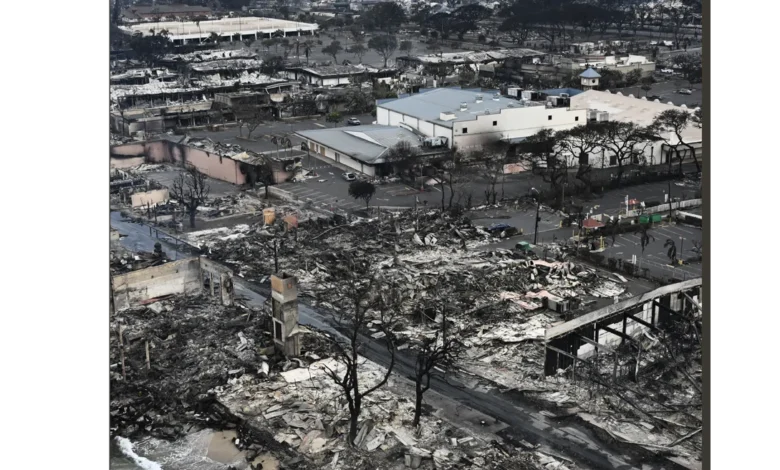
The modern landscape of emergency management is facing an unprecedented crisis, driven not just by the escalating fury of climate-fueled extreme weather, but by a tidal wave of digital misinformation. When disasters strike, rumors and elaborate conspiracy theories now spread across social media platforms faster than emergency managers can track, let alone debunk them. This information chaos is actively slowing disaster relief operations, straining public resources, and putting vulnerable lives at high risk.
The consequences of this phenomenon are severe. From devastating wildfires in Maui to major hurricanes in the American Southeast, the erosion of public trust and the weaponization of social media have turned emergency response into a form of trench warfare. While emergency personnel battle rising waters and roaring flames, they are simultaneously forced to fight a shadow war against fabricated narratives that undermine authority and confuse victims when they need reliable facts the most.
The Anatomy of a Modern Climate Conspiracy
To understand how rapidly and absurdly disaster misinformation can mutate, one need only look at the aftermath of the catastrophic August 2023 wildfires in Maui, Hawaiʻi. The fires, which claimed the lives of more than 100 people, destroyed nearly 2,000 homes, and virtually erased the historic community of Lahaina, began when a broken power pole owned by a local electric utility sparked against dry vegetation during high winds.
However, almost immediately, digital spaces were flooded with alternative narratives. Thousands of users across Instagram, TikTok, and X (formerly Twitter) alleged that the fires were intentional acts orchestrated by nefarious actors. They posited that the government had deployed a "direct energy weapon"—a laser originating from space or the skies—to clear the land for a high-tech "smart city" or a high-speed rail line.
A meticulous tracing of this specific conspiracy reveals a dizzying trail of unrelated, repurposed media:
- January 2018 (Canton, Ohio): A local resident captures a blurry photo of a routine industrial flare at the Marathon Petroleum Refinery, featuring an upward-pointing lens flare, and posts it to Facebook.
- May 2018 (Santa Barbara County, California): SpaceX publishes an Instagram photograph of a Falcon 9 rocket launching from the Vandenberg Space Force Base.
- May 2023 (Santiago, Chile): A windstorm causes an electrical transformer to explode, captured on video by a resident who records a bright flash accompanied by optical lens flares.
- August 2023 (Maui, Hawaiʻi): The deadly brush fire devastates Lahaina, resulting in over $5.5 billion in damages.
- Post-Disaster (Global Platforms): Within hours of the Maui tragedy, social media accounts resurfaced the 2018 refinery flare, the SpaceX launch, and the Chilean transformer explosion, falsely labeling them as visual evidence of energy weapons targeting Hawaiʻi.
Although some local accounts that initially shared the false imagery later posted retractions and apologies, the corrections were entirely swallowed by the algorithmic momentum. Influential accounts with hundreds of thousands of followers amplified the screenshots, generating millions of views that far outpaced any fact-checking efforts. By the time the images reached mainstream audiences, they had been stripped of all geographic and chronological context, morphing into a resilient urban legend that fueled profound anger and distrust.
The Perfect Storm: Why Disasters Breed Misinformation
Extreme weather events have always been chaotic environments prone to speculation, but experts note that contemporary society provides a uniquely fertile breeding ground for digital falsehoods. The convergence of several distinct trends has created a systemic vulnerability in public communications:
First, the physical impacts of climate change are intensifying rapidly, producing supercharged hurricanes, severe droughts, and sudden flash floods that plunge communities into sudden disarray. Second, the information ecosystem is profoundly fragmented. Major social media corporations have largely abandoned robust content moderation and fact-checking protocols. Third, the rise of generative artificial intelligence has introduced a new frontier for content creation and manipulation, while public agencies tasked with disaster response are often understaffed and stretched thin.
According to Amber Silver, a professor of emergency management at the University at Albany and an expert in disaster communications, disasters naturally generate a high degree of urgency and uncertainty. "Victims of extreme weather events have an urgent need for facts," Silver explained, "but almost no way to get reliable data about their situation. So now we have essentially all of the perfect conditions for the spread of misinformation."
Furthermore, younger generations are increasingly exposed to these narratives. A recent report by the News Literacy Project found that a vast majority of teenagers encounter social media conspiracy theories, and a concerning proportion of those who encounter them are inclined to believe them.
Institutional Mistrust and the Federal Emergency Management Agency
At the center of most disaster response efforts in the United States is the Federal Emergency Management Agency (FEMA), which also serves as the primary target for malicious rumors and conspiracy theories. Historically, FEMA has battled fringe narratives alleging that the agency plans to establish authoritarian detention camps. However, in recent years, these rumors have become more targeted and dangerous.
During the catastrophic aftermath of Hurricane Helene in 2024, misinformation reached hazardous levels. Right-wing accounts and bad actors falsely claimed that the federal government was withholding aid from North Carolina. Other completely fabricated reports alleged that FEMA was seizing property or barring private relief pilots from entering the disaster zone—claims heavily amplified by high-profile figures like Elon Musk, whose retractions consistently garnered a fraction of the views of his initial, unfounded accusations.
The human toll of this information warfare is tangible. Deanne Criswell, who led FEMA during the Biden administration, revealed that false rumors regarding armed threats forced the agency to temporarily shut down field operations in North Carolina. Additionally, top federal emergency officials experienced "swatting" incidents, where anonymous trolls placed false emergency calls that resulted in the deployment of SWAT teams to their private homes.
This environment of hostility and suspicion directly impacts survivors. A growing body of research highlights the real-world consequences of disaster misinformation:
- Resource Misallocation: False rumors divert emergency services and volunteers away from genuine operational needs, overwhelming hotlines with spurious reports.
- Impeded Evacuations: Inaccurate mapping and flawed instructions shared during emergencies have previously caused unnecessary mass evacuations, clogging escape routes for those in actual peril, as documented by Department of Homeland Security studies following California floods.
- Erosion of Civic Trust: Studies following major seismic events, such as the 2017 Mexico City earthquake, reveal measurable drops in public trust toward governing authorities when communications break down.
- Avoidance of Vital Aid: In Maui, emergency managers expressed deep concern that pervasive rumors regarding government land grabs discouraged vulnerable Indigenous and local families from applying for critical emergency financial assistance.
The Emerging Frontier of Generative AI
As emergency managers struggle to outpace social media velocity, the rapid proliferation of generative artificial intelligence adds another layer of complexity. With roughly a quarter of U.S. adults utilizing AI chatbots daily—frequently for information searches—artificial intelligence models act as both a shield and a potential vulnerability.
When queried about established conspiracies, prominent large language models typically rely on verified journalistic and institutional sources to debunk claims, explicitly stating that no credible evidence supports theories like directed energy weapons in Maui. However, experts warn that relying on AI during rapidly evolving crises presents unique risks. If a chatbot scrapes outdated news reports or unverified local updates, it could inadvertently feed users inaccurate evacuation zones, storm trajectories, or benefit eligibility criteria.
Organizations like the American Red Cross and academic institutions have begun developing specialized crisis-management chatbots—such as the Red Cross’s "Clara" or MIT’s "Crisischat"—to assist the public during emergencies. Yet, researchers like Anita Atwell Seate, a communication professor at the University of Maryland, emphasize that objective accuracy is only half the battle. "You need to learn if the information’s accurate," Atwell Seate noted, "but then you also need to know: Do people trust it, regardless of the objective veracity? If people trust it, they’re going to act on it whether it’s accurate or not."
Building Resilience in the Information Environment
Experts agree that there is no simple technological fix or legislative policy capable of completely eliminating misinformation in a hyper-connected society. Fact-checking efforts will inherently remain slower and less viral than emotionally charged falsehoods. Consequently, emergency management agencies are shifting their strategic focus toward proactive community engagement.
Rather than relying solely on centralized government announcements—which suffer from record-low public trust levels, with fewer than 20 percent of Americans saying they trust the government to do the right thing most of the time—agencies are increasingly partnering with trusted local messengers.
In the wake of the Maui fires, FEMA successfully collaborated with local Native Hawaiian employees and community health workers to establish direct lines of communication, assuring residents that federal aid programs were secure and non-punitive. Similar grassroots partnerships have been tested with caregivers and local civil defense leaders who possess organic, pre-existing credibility within their neighborhoods.
Ultimately, combating misinformation during extreme weather events requires a long-term commitment to community trust-building before disasters strike. As Justin Knighten, a former risk communication consultant for FEMA, observed, "When trust is low, you have a lot of work to not only build up that trust, but to also get ahead of those upcoming threats, so you’re really working at a deficit." In an era defined by intensifying climate impacts, narrowing this information deficit is no longer just a communications challenge—it is an absolute prerequisite for public safety.