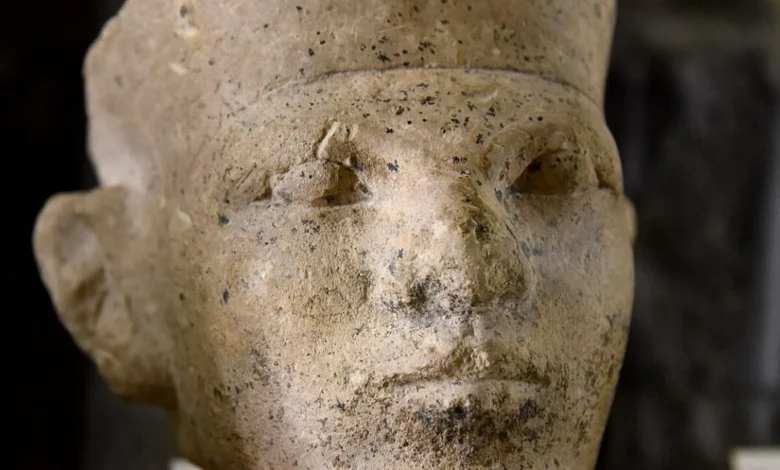
A meticulous re-examination of 46 ancient crania, originally excavated by the pioneering archaeologist Sir William Matthew Flinders Petrie, has unveiled disturbing evidence of widespread violence that went unnoticed for over a century. By applying modern forensic techniques to these centuries-old remains, bioarchaeologist Dr. Amber Campbell has identified significant patterns of trauma that challenge long-standing assumptions about the health and final moments of this historical population. The findings suggest that a substantial portion of these individuals did not perish from natural causes, but were instead victims of deliberate, lethal force.
A Century of Reinterpretation
When Flinders Petrie first unearthed these remains in the late 19th and early 20th centuries, the field of osteology—the study of bones—was in its infancy. Petrie, a titan of Egyptian archaeology, documented the physical state of the skeletons with the rigor expected of his era. However, he notably failed to record any evidence of fatal trauma on the skulls.
Dr. Campbell, who has spent years analyzing these specific crania, argues that this oversight was not a failure of observational skill, but a limitation of the scientific knowledge available at the time. "I don’t think he missed them because he was a pretty careful observer," Campbell noted. "He just didn’t know what he was looking at."
The crux of the misunderstanding lies in the way bone reacts to force over time. Modern forensic science has developed a sophisticated understanding of how "dry" bone, ancient bone, and fresh bone respond to various stresses. Without the ability to differentiate between post-mortem damage—caused by the weight of earth or the tools used during excavation—and perimortem trauma, which occurs at or near the time of death, earlier researchers often dismissed fractures as incidental damage incurred long after the individuals had been buried.
Forensic Evidence of Systematic Violence
The re-examination revealed that 18 of the 46 skulls, or approximately 39 percent, bear distinct linear fractures. According to Campbell, these specific types of injuries are highly indicative of blunt force trauma. Such impacts would have been sufficient to render victims unconscious almost instantly, leading to severe internal cranial bleeding and eventual death.
The scope of the violence appears to have been varied. In addition to the blunt force trauma, some skulls exhibited signs of sharp-force injuries, including specific trauma to the orbital area, suggesting deliberate hacking or chopping motions. While the exact cause of death for the remaining individuals remains indeterminate, the presence of such high-velocity or high-impact injuries on nearly 40 percent of the population provides a grim snapshot of a society characterized by significant interpersonal conflict. Other potential causes of death for the non-fractured group, which scholars continue to investigate, include asphyxiation, strangulation, or even poisoning, suggesting a multifaceted environment of danger.
The Weaponry Conundrum
One of the most intriguing aspects of the study is the identification of the weapons likely responsible for the blunt force fractures. While ancient Egyptian iconography frequently depicts rulers smiting their enemies with heavy maces, the physical evidence on these skulls does not align with such weaponry.
A mace typically leaves a "depressed fracture," a circular or crater-like indentation caused by a concentrated, heavy impact. The linear fractures identified by Campbell, however, imply the use of a different instrument. "It’s really hard to say specifically," Campbell explained. "It could be as simple as a board. Petrie thought it could have been a sandbag. Honestly, sandbags are very heavy, and I think the force required to swing a large sandbag might have caused more damage, but you could easily fashion some kind of wooden club."
The use of makeshift weapons suggests that these acts of violence were perhaps not the result of formal military engagements involving standardized equipment, but rather spontaneous acts of violence or localized civil unrest. The lack of standardized damage implies that these individuals may have been victims of sudden, possibly disorganized, lethal encounters.
Challenges in Bioarchaeological Identification
While the findings regarding trauma are groundbreaking, determining the biological sex of the individuals remains a persistent challenge. Dr. Campbell’s findings are consistent with Petrie’s original assessments, but she remains cautious about drawing definitive conclusions based solely on cranial morphology.
In forensic anthropology, the pelvis is the gold standard for sex determination, offering significantly more accuracy than the skull. Because the pelvic remains associated with these 46 crania were not kept together or are currently unavailable, Campbell notes that confirming the sex of these individuals is difficult. Even if the resources were available to re-excavate the site, the passage of time and the potential for site disturbance mean that successfully matching specific pelvic bones to the corresponding crania would be an immense, if not impossible, task.
Historical Context and Broader Implications
The re-examination of these remains serves as a reminder that archaeological collections are never truly "closed." As analytical techniques improve, collections sitting in museum archives become fresh data sets, capable of rewriting historical narratives.
This specific group of remains provides a rare, albeit brutal, glimpse into the social dynamics of the period. The high incidence of trauma suggests that violence was a pervasive threat, influencing the lives of the inhabitants. This raises critical questions for historians: Was this a period of civil war? Were these remains part of a targeted purge or an execution site? Or does the data reflect a broader, endemic level of violence within this community?
The timeline of these discoveries spans over a century, beginning with Petrie’s initial field notes in the late 1800s. The shift from Petrie’s "careful observation" to Campbell’s "forensic reconstruction" highlights the trajectory of archaeology itself—moving from a descriptive science to an interpretive one that borrows heavily from medical and forensic fields.
Scientific Advancements in Bone Analysis
The ability to distinguish between "dry" and "fresh" bone is perhaps the most significant advancement in this study. When a bone is fresh, it contains organic collagen, which gives it a degree of elasticity. When a force is applied to fresh bone, it fractures in a specific, predictable way. When bone is thousands of years old, it becomes brittle and porous, and the fracture patterns change significantly.
Because earlier excavators were often unaware of these distinctions, they frequently misattributed fractures to the excavation process itself. By proving that these fractures occurred at or near the time of death, Campbell has effectively shifted the narrative from one of accidental post-mortem damage to one of intentional, historical violence.
Future Directions
The work of Dr. Campbell is likely to trigger a wave of re-examinations across other museum collections. If 39 percent of a sample can show signs of fatal trauma that were overlooked for a century, it is highly probable that other collections hold similar, yet-to-be-discovered stories.
As bioarchaeology continues to integrate technologies such as 3D scanning, micro-CT imaging, and advanced chemical analysis, the ability to reconstruct the lives—and deaths—of ancient people will only become more precise. The study of these 46 crania stands as a testament to the fact that history is not static; it is constantly being re-evaluated through the lens of modern science. While the names and specific stories of these individuals remain lost to time, their bones continue to speak, providing a sobering account of a past that was likely far more violent than the historical record previously suggested.