Hospitality Executives at Skift Global Forum Align on AI as an Employee Empowerment Tool While Debating Workforce Displacement

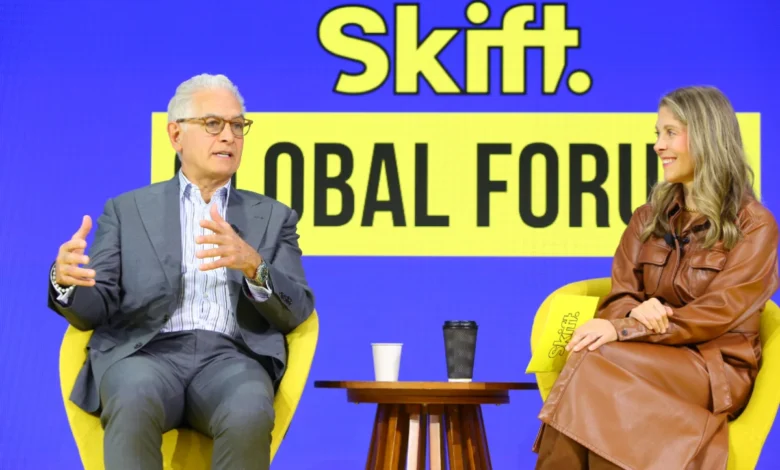
The intersection of artificial intelligence and the global hospitality industry took center stage last week at the annual Skift Global Forum in New York City, where top executives from five of the world’s leading hotel companies gathered to discuss the technological future of travel. While the panel featured distinct leaders with varying business models and geographic footprints, a striking consensus emerged across their keynote presentations: artificial intelligence, in its current and near-future iterations, must primarily serve as an empowering mechanism for hotel staff rather than a wholesale replacement for human hospitality.
Despite this shared philosophical foundation regarding employee enablement, the chief executive officers split sharply on critical operational issues. Discussions highlighted divergent views on the long-term displacement of hotel labor, the precise organizational frameworks required to guide rapid technological adoption, and the commercial necessity of integrating hotel inventory into every nascent artificial intelligence platform where modern travelers plan and book their journeys.
The high-profile gathering brought together industry heavyweights, including Hilton Chief Executive Officer Chris Nassetta and Hyatt Hotels Corporation CEO Mark Hoplamazian, alongside other prominent sector leaders. Throughout the multi-day conference held in mid-September 2026, the dialogue reflected an industry navigating a delicate transition period. Hoteliers are eager to capture the efficiency gains promised by generative AI and machine learning, yet they remain intensely protective of the human-centric ethos that underpins guest satisfaction and brand loyalty.
Background Context of the Event and Industry Landscape
The Skift Global Forum has established itself as one of the premier thought-leadership conferences in the travel and tourism sector, drawing executives, technologists, and investors from around the world. The 2026 edition arrived at a pivotal juncture for the hospitality industry. Having largely recovered from the operational and financial shocks of the global pandemic, hotel operators are now facing macroeconomic headwinds, rising labor costs, and shifting consumer expectations driven by hyper-personalization.
In this environment, artificial intelligence has transitioned from a theoretical buzzword into an urgent strategic priority. Over the past 24 to 36 months, hotel chains have experimented with AI across multiple operational pillars, ranging from dynamic pricing algorithms and predictive maintenance to automated customer service chatbots and voice-activated room controls. However, the deployment of customer-facing and back-of-house AI has raised profound questions about the future of employment in an industry that historically relies on vast, human-powered networks.
The debate at the forum underscored the unique challenges facing hospitality compared to other consumer sectors like retail or banking. While e-commerce platforms can easily transition entirely to automated customer service interfaces, the physical, experiential nature of staying in a hotel creates an inherent barrier to full automation. Guests paying premium rates expect empathy, nuance, and localized problem-solving—qualities that algorithms can support but rarely replicate entirely.
Divergent Perspectives on Workforce Displacement and Labor
Perhaps the most contentious debate among the panel of hospitality leaders centered on the future of employment at the property level. While every executive on stage expressed a commitment to preserving jobs, their forecasts regarding the velocity and scale of workforce evolution varied significantly.
Hilton CEO Chris Nassetta offered one of the most definitive stances on the matter, arguing that the foundational role of property-level staff—even within limited-service brands like Hampton by Hilton—remains secure. Nassetta emphasized that the hospitality business is fundamentally built on interpersonal connections.
"You’re never taking all the people out," Nassetta told the audience during his keynote session. "In the end, we’re a business of people serving people."
Elaborating on the practical application of artificial intelligence within hotel operations, Nassetta projected that future property staff will be equipped with deep, real-time data insights that will enable them to resolve guest grievances with unprecedented speed. Rather than replacing workers, AI tools will synthesize mountains of operational data to give front-line employees an immediate, holistic view of guest preferences and potential pain points.
"They can know so much about a problem the customer’s having without the customer even having to explain it," Nassetta noted, illustrating how predictive issue-resolution can elevate the standard of service at scale.
Conversely, other industry leaders on the panel expressed more cautious outlooks regarding how technological efficiencies might ultimately alter headcount requirements over the next decade. While automation may not trigger mass layoffs in the near term, the changing scope of operational duties could lead to a structural shift in hiring practices. Administrative roles, routine booking inquiries, and standard concierge tasks are increasingly migrating to digital platforms, forcing hotel operators to retrain existing staff for higher-value experiential roles.
Strategic Integration and the Omnipresent AI Dilemma
Beyond labor discussions, the panel grappled with a complex commercial dilemma: how hotel brands should position their inventory within the expanding ecosystem of third-party artificial intelligence applications. As consumers increasingly turn to conversational AI agents, travel planning assistants, and generative search engines to organize their trips, hotel executives must decide whether to build proprietary booking ecosystems or ensure their properties are omnipresent wherever travelers interact with algorithms.
Mark Hoplamazian, speaking from his perspective leading Hyatt Hotels Corporation, addressed the strategic imperative of meeting modern consumers in their preferred digital spaces. Hoplamazian highlighted the necessity of data interoperability and seamless distribution models that allow boutique and luxury properties alike to maintain visibility as search habits shift away from traditional online travel agencies (OTAs) toward AI-driven conversational discovery tools.
Throughout the session, industry observers noted a subtle tension between major hotel brands seeking to protect their direct-booking loyalty channels and the commercial necessity of embracing open-architecture AI distribution networks. If a traveler asks an artificial intelligence assistant to book a sustainable boutique hotel in a specific downtown district, hotel chains must ensure their properties are indexed, accurately represented, and bookable directly through that AI interface.
Supporting Data and Technological Adoption Trends
Recent industry data underscores the urgency behind the strategic debates witnessed at the forum. According to market research from leading travel technology analysts, global hospitality spending on artificial intelligence and machine learning solutions is projected to grow at a compound annual growth rate exceeding 20% through the end of the decade.
Key areas of capital expenditure for major hotel groups include:
- Predictive Analytics: Utilizing historical booking data, local event calendars, and weather patterns to optimize room rates and staffing levels dynamically.
- Generative AI Concierges: Deploying multilingual, conversational virtual assistants accessible via mobile apps and in-room hardware to handle routine guest requests 24/7.
- Operational Automation: Implementing IoT (Internet of Things) sensors integrated with AI algorithms to monitor energy consumption, predict HVAC failures, and automate housekeeping dispatch routines.
Despite these investments, industry surveys reveal a persistent employee apprehension regarding automation. A notable percentage of hospitality workers express concern that increased reliance on digital tools could diminish the personal warmth that defines the guest experience. This psychological barrier makes the executive consensus voiced at the Skift Global Forum—that AI must serve as an employee empowerment tool rather than a substitute—all the more critical for internal change management.
Official Responses and Broader Industry Reactions
The remarks made by Nassetta, Hoplamazian, and their fellow panelists have sparked widespread discussion across the global travel trade community. Labor unions, hospitality educators, and technology vendors have weighed in on the implications of the executives’ shared vision.
Representatives from hospitality worker advocacy groups noted cautious optimism regarding the executives’ commitment to human-centric operations, yet they stressed the need for formalized upskilling programs. As artificial intelligence systems take over administrative scheduling, inventory tracking, and initial guest communications, workers must be provided with transparent pathways to acquire digital literacy skills that ensure their long-term employability.
Meanwhile, technology partners and software developers working within the hospitality sector interpreted the panel’s alignment as a validation of software design principles centered on human-in-the-loop (HITL) workflows. Rather than pursuing fully autonomous, lights-out hotel operations, leading hospitality tech firms are increasingly focusing their product development on augmented intelligence—building tools that make front desk agents, revenue managers, and general managers smarter, faster, and more effective.
Broader Impact and Future Implications for Travelers
For the everyday traveler, the strategic evolution highlighted at the Skift Global Forum signals a forthcoming transformation in how they interact with hotels, both digitally and on-property.
In the near term, consumers can expect more intuitive, personalized digital interactions when planning and booking stays. Conversational AI planning tools will likely become more integrated into hotel brand websites and mobile applications, offering hyper-tailored recommendations based on past stay history, dietary preferences, and personal travel habits.
Once on-property, the guest experience is poised to become more frictionless. With property staff empowered by AI-driven insights, check-in bottlenecks could dissolve, maintenance issues can be preemptively resolved before a guest notices a disruption, and personalized recommendations for local dining and entertainment will be delivered with greater precision.
However, the ultimate success of this technological pivot will hinge on execution. As the leaders at the Skift Global Forum made clear, artificial intelligence is no longer an optional frontier for the hospitality industry. The defining challenge for hotel executives in the years ahead will not be deciding whether to adopt AI, but ensuring that the relentless pursuit of technological efficiency never compromises the fundamental human warmth that remains the bedrock of great hospitality.