2026 Midterm Election Day Coverage: Voter Turnout, Technical Challenges and High-Stakes Senate Races

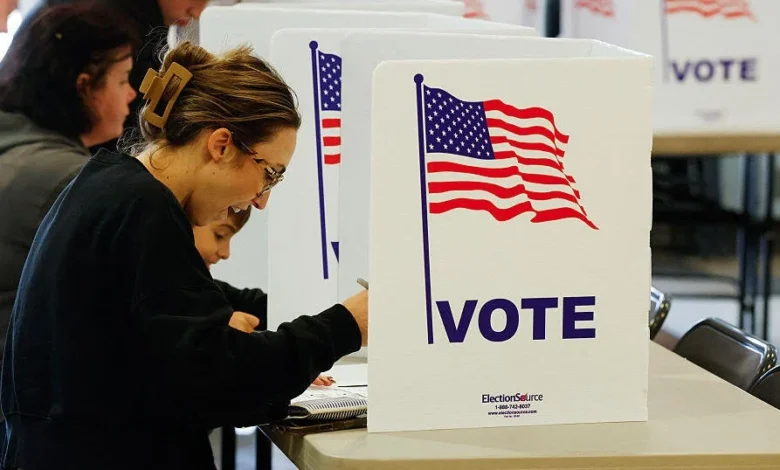
Election Day 2026 has arrived with a complex tapestry of record-breaking turnout, localized technical disruptions, and a flurry of legal and security maneuvers that underscore the high stakes of this cycle. Across the United States, voters are heading to the polls to decide the control of both chambers of Congress, with the battle for the House of Representatives currently centering on 47 critical battleground districts and the Senate’s future hinging on 11 highly competitive races. While officials emphasize the integrity of the process, the day has already seen significant challenges, ranging from infrastructure failures to federal interventions.
Technical Disruptions and Administrative Hurdles
The most prominent administrative challenge of the morning emerged in New York’s Westchester County, where a programming error rendered ballot scanners inoperable at most polling locations. According to the New York State Board of Elections, the issue originated from a late-stage programming change for a specific municipal race that was not properly pushed to the machines serving the rest of the county.
"Election Day machines elsewhere in the county continued to use the original programming and therefore could not recognize and accept the ballots being used for Election Day," the board stated. To mitigate the issue, officials implemented established emergency ballot procedures, allowing voters to cast paper ballots into secure containers for later tabulation. The board has explicitly stated that affected scanners rejected unrecognized ballots rather than tabulating them incorrectly, asserting that every valid vote will be accounted for during the post-election canvass and audit process.
Simultaneously, in Georgia’s Fulton County, officials reported two distinct failures affecting approximately 1,000 early-voting ballots. One polling site experienced persistent paper jams, while another suffered from a power-related technical issue that raised concerns regarding data integrity. To rectify the situation, the county election board is moving to rescan affected ballots in public view, a transparent measure intended to bolster confidence in the final tallies. Georgia Secretary of State Brad Raffensperger has publicly stated that these localized issues are not expected to result in significant delays for the overall state results.
In Florida, the electoral process is contending with environmental factors as a "1,000-year" rainfall event caused severe flooding along the southwestern coast. In St. Lucie County, election officials were forced to relocate several precincts on short notice to ensure voter safety and accessibility. The National Weather Service noted the rarity of this event, which has added a layer of logistical difficulty to an already high-turnout election day.
Record Turnout and the Federal Response
While technical issues have dominated headlines in certain regions, the overarching story of the 2026 midterms is one of high civic engagement. Minnesota, in particular, has shattered its midterm early-voting record, with over 886,000 ballots cast by Monday morning. This figure significantly exceeds the 2022 midterm total of 687,062, signaling sustained enthusiasm among the electorate. Similarly, Michigan reported that 32.9% of its active registered voters had already cast ballots by 7:00 a.m. on Election Day, a statistic that includes both early in-person voting and processed absentee ballots.
The federal government has responded to the heightened visibility of the election with an unprecedented monitoring effort. The Department of Justice announced that it would deploy approximately 1,000 election monitors and observers to all 50 states. This marks the most expansive monitoring operation in the history of the Justice Department, aimed at ensuring compliance with the Voting Rights Act, the National Voter Registration Act, and other federal statutes. Assistant District Attorney Harmeet Dhillon of the Civil Rights Division characterized the effort as a commitment to transparency and non-discriminatory electoral practices.
Security Concerns and Legal Battles
The climate of the 2026 midterms has been marred by security threats, most notably the federal charges brought against an Oklahoma man, Robin Patrick Martin. According to unsealed charging documents, Martin allegedly mailed more than 700 letters containing non-toxic white powder to public officials and media outlets leading up to the 2024 and 2026 elections. The FBI affidavit indicates that Martin’s actions were motivated by grievances regarding the 2020 election and unsubstantiated fears regarding the 2026 cycle. Martin faces counts of conveying false information and mailing threatening communications.
Furthermore, the legal landscape remains volatile. The Supreme Court recently denied a request from the Trump administration to force California to separate mail-in ballots from individuals the administration claims are "likely" non-citizens. The court’s one-line, unsigned order provided no dissents, effectively maintaining current procedures for the processing of those ballots.
Key Senate Contests and Political Messaging
The political discourse surrounding these elections remains deeply polarized. In Michigan, the Senate race between Democratic candidate Abdul El-Sayed and Republican Mike Rogers has been transformed by a surprise cross-party endorsement. Rep. Haley Stevens, a Democrat who lost to El-Sayed in the primary, recently endorsed Rogers, citing a "decision of conscience" and labeling El-Sayed "not fit to serve." Democratic Rep. Debbie Dingell has argued that this move has backfired, claiming it is "galvanizing" various communities to support El-Sayed. Meanwhile, President Trump has ramped up rhetoric against El-Sayed, while simultaneously encouraging voters to support the GOP ticket, stating, "We’re going to shock the world."
In Texas, the Senate race between Republican Ken Paxton and Democrat James Talarico has been framed as a battle for the state’s identity. Paxton, focusing on Talarico’s progressive platform, has warned that the state is "close to slipping away." Talarico, conversely, has leaned into his "come-from-behind" narrative, focusing on economic issues and labeling his opponent as the representative of a "corrupt system."
In Iowa, Democratic candidate Josh Turek is vying for the seat vacated by Senator Joni Ernst, running against Republican Rep. Ashley Hinson. Turek’s campaign has focused on the contrast between his background and Hinson’s, alleging financial improprieties that Hinson has consistently denied. PolitiFact investigations have previously noted that Hinson’s wealth stems from her husband’s private-equity-backed business dealings, rather than illicit stock trading as some opponents have claimed.
In Kansas, Democratic pastor Adam Hamilton is attempting a historic bid for the Senate against Republican Sen. Roger Marshall. Acknowledging the Republican lean of the state, Hamilton is campaigning on a platform of bipartisanship, promising to act as a bridge between the parties. "I want to model from Kansas for the rest of our country: This is what it looks like when a Republican and Democrat work together," Hamilton stated.
Implications and Election Night Expectations
As the nation waits for the results, election experts warn that the final determination of control for the House and Senate may not be available on election night. David Becker, founder of the Center for Election Innovation & Research, noted that given the closeness of many races, prolonged counting periods are likely. "If we know the outcome on election night, then there’s a very big wave going on," Becker said.
The House of Representatives currently stands on a knife-edge. Republicans hold a razor-thin majority with 218 seats (plus one independent), while Democrats hold 214, with two vacancies. CBS News’ Battleground Tracker estimates that Democrats are currently positioned to potentially reclaim the House, though the margin remains well within the range of error. The Senate is currently held by Republicans, 53 to 47, but with 11 key seats in play—including races in Alaska, Maine, and Ohio—the outcome remains fluid.
For the American public, the 2026 midterms represent more than a legislative contest; they are a test of the electoral infrastructure itself. From the "1,000-year" floods in Florida to the programming errors in New York and the unprecedented federal monitoring, the events of this Election Day highlight the complexities of modern American democracy. As polls begin to close, the focus will shift from the mechanics of voting to the tabulation of results, with the country preparing for a potentially lengthy period of verification and reporting. Media outlets, including CBS News, are preparing for extensive live coverage, underscoring the gravity with which the public and the political establishment are treating these results. Regardless of the final numbers, the 2026 midterms will be remembered for the sheer intensity of the contest and the continued resilience of the voting process under significant pressure.