The United States Department of Justice has launched a high-stakes criminal investigation into allegations that Democratic operatives orchestrated a scheme to influence the outcome of the Alaska Senate race by recruiting a third-party candidate with the same name as Republican incumbent Senator Dan Sullivan. Among those currently in the crosshairs of federal investigators is prominent Democratic attorney Marc Elias, a figure long known for his aggressive litigation tactics and vocal opposition to the Trump administration. According to law enforcement officials and sources familiar with the inquiry, Elias and several other individuals associated with Democratic campaign efforts have received target letters, preservation notices, or grand jury subpoenas. The investigation, spearheaded by the U.S. Attorney’s Office in Alaska in coordination with the Civil Rights Division’s criminal section, marks a significant and contentious escalation in the federal government’s oversight of electoral tactics.
The Genesis of the Alaska Candidate Dispute
The controversy centers on the appearance of "Daniel J. Sullivan" on the Alaska ballot, a candidate whose presence was widely viewed by election analysts as an attempt to dilute the vote share of the Republican incumbent, Senator Dan Sullivan. This tactic, often referred to as "candidate spoofing" or ballot-stacking, involves the strategic recruitment of individuals with identical or near-identical names to those of established politicians to induce voter confusion. While such maneuvers have occurred throughout American political history, they are rarely the subject of federal criminal probes.
The investigation gained public prominence following reporting by The New York Times, which linked lawyers from the campaign of Democratic Senate candidate Mary Peltola and senior staffers at the Democratic Senatorial Campaign Committee (DSCC) to the recruitment effort. Shortly thereafter, U.S. Attorney for Alaska Michael Heyman held a rare joint press conference with FBI officials to confirm that a criminal investigation was underway. Heyman stated that his office had surged resources to the region, noting that federal law enforcement was actively pursuing investigative leads in multiple jurisdictions.
Chronology of the Federal Inquiry
The timeline of this investigation has drawn intense scrutiny, particularly due to its proximity to the midterm elections. While federal agencies are generally bound by internal guidelines—often referred to as the "60-day rule"—that discourage taking overtly investigative steps that could influence election outcomes, the Justice Department has defended its actions as a response to emerging evidence.
- Mid-October 2026: Initial reports emerge regarding the potential involvement of Democratic operatives in the recruitment of Daniel J. Sullivan to the Alaska ballot.
- Late October 2026: The Justice Department accelerates its inquiry, with the Civil Rights Division’s criminal section joining the Alaska U.S. Attorney’s Office.
- November 2026: A wave of target letters and grand jury subpoenas are issued to various political operatives, including Marc Elias and representatives of the DSCC.
- November 3, 2026: As Election Day commences, news of the subpoenas and target letters becomes public, sparking immediate accusations of political weaponization.
The timing has been a flashpoint for critics who argue that the investigation constitutes an election-season interference. Brandon Wrobleski, acting chief of the criminal section at the DOJ’s Civil Rights Division, has reportedly encountered internal resistance, with some assistant U.S. attorneys in Alaska expressing discomfort with the optics and procedural timing of the probe.
Legal and Political Tensions
Marc Elias, head of the Elias Law Group, has forcefully rejected the legitimacy of the investigation. In a statement provided to the press, Elias characterized the probe as a "sham" and an explicit act of political retaliation by the Trump administration. "No one should be surprised that President Trump’s Department is targeting me and my law firm on Election Day," Elias stated. "This administration has repeatedly weaponized the DOJ against the President’s political enemies despite zero evidence of wrongdoing, and we are the latest targets." Elias emphasized that his firm remains committed to representing progressive groups and Democratic campaigns, framing the investigation as an attempt to intimidate legal professionals who challenge the executive branch.
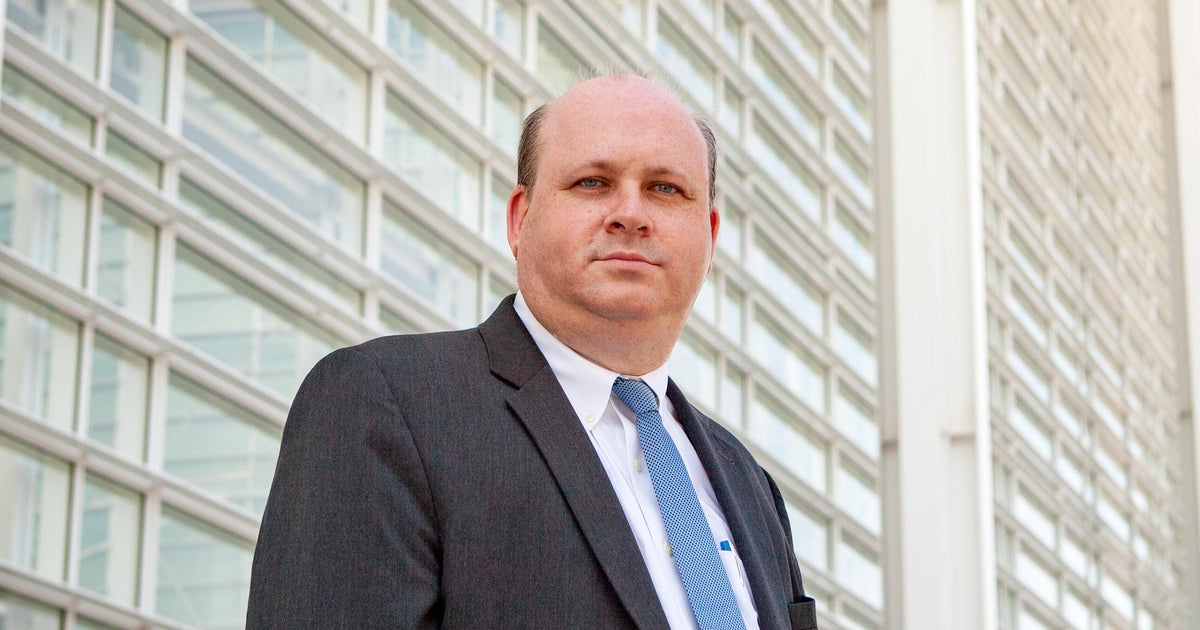
President Trump has amplified these tensions through public social media posts, explicitly calling for the prosecution of Elias and Senate Majority Leader Chuck Schumer. The President has characterized the Alaska ballot situation as a "Democrat con job," framing it as a direct threat to the integrity of the democratic process.
The Potential Scope of 18 U.S.C. 241
While federal prosecutors have remained tight-lipped regarding the specific statutes under which they are investigating, White House officials, including Deputy Chief of Staff Stephen Miller, have publicly pointed to 18 U.S.C. 241. This federal statute prohibits conspiracy to "injure, oppress, threaten, or intimidate any person in any State, Territory, Commonwealth, Possession, or District in the free exercise or enjoyment of any right or privilege secured to him by the Constitution or laws of the United States."
Legal experts remain divided on whether the recruitment of a candidate with a similar name qualifies as a violation of civil rights under this statute. Historically, ballot access issues have been handled as matters of state election law, typically adjudicated by local boards of elections or state courts. The elevation of this matter to a federal criminal conspiracy investigation represents a significant departure from standard electoral oversight.
Broader Context and Pattern of Investigations
The scrutiny on Elias occurs against a backdrop of several high-profile federal investigations targeting political adversaries of the current administration. In recent months, federal agents executed a search warrant at the home of Representative Ilhan Omar in connection with an immigration fraud inquiry. Similarly, the Justice Department has sought to build cases against former FBI officials regarding their roles in the Hunter Biden investigation and attempted to secure indictments against former White House aide Cassidy Hutchinson.
In several of these instances, federal judges have intervened. For example, a magistrate judge dismissed the complaint against the former FBI officials, citing a lack of probable cause and suggesting that the timing of the prosecution appeared politically motivated. Furthermore, a U.S. district judge recently dismissed a separate DOJ lawsuit that sought to block the certification of Alaska’s election results, ruling that the government lacked the necessary standing to intervene.
Implications for Election Integrity and Judicial Independence
The convergence of federal criminal investigations and electoral litigation raises profound questions about the role of the Department of Justice in the American political system. Proponents of the current investigation argue that the government has a mandate to ensure that voters are not intentionally misled by fraudulent ballot-stacking schemes, which they contend undermines the foundational integrity of the election. Conversely, critics argue that the use of federal criminal law to penalize political campaign tactics—particularly on the eve of an election—creates a chilling effect that risks eroding public confidence in the neutrality of the DOJ.
The outcome of the Alaska investigation will likely serve as a precedent for how future administrations approach the intersection of campaign strategy and federal criminal law. As the legal battle unfolds, the focus remains on whether the Department of Justice can provide sufficient evidence to support its claims of criminal conspiracy or whether these actions will be viewed by the courts as an overreach of executive power. For now, the investigation into Marc Elias and his associates continues to highlight the increasingly fraught landscape of American election law, where the boundary between aggressive partisan advocacy and criminal conduct has become a primary theater of national conflict.