The Collapse of the Navatek Investigation: Inside the Failed Federal Probe into Senator Susan Collins and a Defense Contractor Bribery Scheme

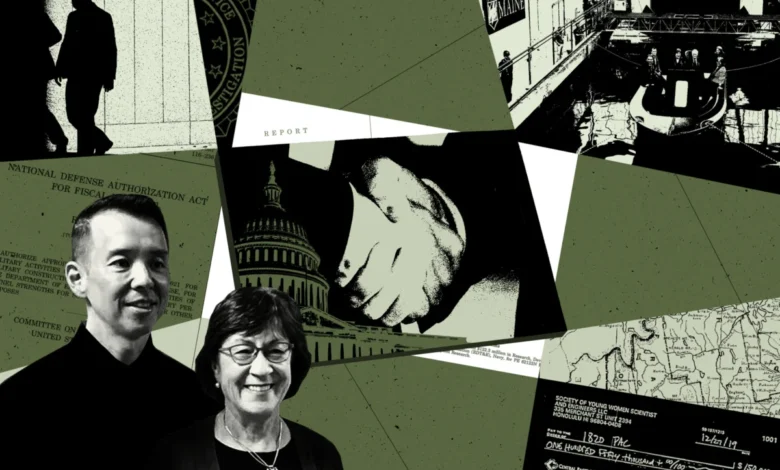
In late 2024, federal investigators had compiled a substantial body of evidence suggesting a sophisticated bribery scheme involving high-ranking members of Congress and a major defense contractor. At the heart of this inquiry was Senator Susan Collins of Maine and her alleged interactions with Martin Kao, the former CEO of Navatek, a Hawaii-based defense firm. The investigation, which centered on the intersection of campaign finance law and federal contract procurement, threatened to expose a pay-to-play culture in Washington before it was abruptly halted following shifts in the political landscape.
The Anatomy of the Alleged Scheme
The core of the federal inquiry revolved around a 2019 arrangement in which Navatek sought to secure significant government contracts through political influence. Federal law explicitly prohibits government contractors from making direct contributions to federal candidates or their super PACs. The prohibition is designed to prevent a transactional relationship where federal funds are steered toward companies in exchange for campaign support.
According to testimony provided by Martin Kao to the FBI, the scheme was initiated after a meeting between the leadership of a pro-Collins super PAC and Navatek executives. Kao alleged that the PAC head solicited a $500,000 contribution. Navatek, eager to secure federal naval contracts, reportedly sought a way to bypass the federal ban. Kao utilized a shell company to funnel $150,000 into the super PAC, an act he claimed was vetted by legal counsel. Records viewed by investigators indicate that when the PAC head was informed of the source of the funds, he responded via email, “Very smart.”
Shortly after this financial infusion, Kao informed his subordinates that Senator Collins had committed to securing $32 million in naval contracts for the firm. This purported link—a massive infusion of cash followed by a direct legislative outcome—formed the basis of the FBI’s suspicion that a criminal bribery arrangement had been established.
A Chronology of the Navatek Affair
The trajectory of the investigation reveals a complex timeline of corporate ambition and federal oversight:
- 2019: Navatek executives meet with pro-Collins super PAC leadership. A $150,000 donation is funneled through a shell company to evade federal campaign finance laws.
- Late 2019–2020: Navatek expands its footprint, eventually operating in six states with over $40 million in annual federal funding.
- 2022: A federal grand jury indicts Martin Kao on multiple counts, including illegal campaign contributions. During subsequent plea negotiations, Kao begins cooperating with the FBI, offering a detailed account of the bribery scheme.
- Late 2024: The FBI consolidates evidence into a sweeping probe. The investigation reaches a critical juncture, with investigators preparing to pursue potential criminal charges involving high-level political figures.
- Post-2024 Election: Following the inauguration of a new administration, the Department of Justice and FBI units responsible for public corruption cases undergo significant internal changes. The investigation into the Collins-Navatek connection is effectively shuttered.
Supporting Data and the Influence of Defense Spending
Navatek’s rise as a defense contractor was meteoric. By leveraging nearly $900,000 in political donations across dozens of congressional offices, the firm established a presence in key states, including Maine, Rhode Island, and Hawaii. This strategy of "influence-buying" allowed the company to secure federal grants and contracts that far exceeded the cost of their political investments.
Data from the Federal Election Commission and government contracting databases show that Navatek’s federal contract obligations increased significantly between 2017 and 2020. During this period, the company became a fixture in the appropriations process, often benefiting from earmarks or targeted legislative language championed by their political patrons. Senator Collins, serving as a senior member of the Senate Appropriations Committee, held substantial influence over the very committees that controlled the flow of funds to naval research and development—the primary sector of Navatek’s business.
Official Responses and Conflicting Narratives
The fallout from the public disclosure of this investigation has been marked by a stark clash of narratives. Senator Collins’ office has consistently and vehemently rejected the allegations. In a statement provided to the press, her deputy chief of staff asserted that the office “vigorously denies” any involvement in pay-for-play activities. The statement further emphasized that the senator’s office had fully cooperated with the FBI during the duration of the probe.
Following the initial reporting on the matter, Senator Collins characterized the investigation as a "disgraceful smear job." She questioned the credibility of the primary source, noting that the FBI’s interest was predicated on the testimony of a "twice-convicted felon."
Conversely, the FBI has remained largely silent regarding the specific reasons for the termination of the investigation. A spokesperson for the agency stated that the FBI "ultimately found nothing implicating Senator Collins," but declined to comment on the internal deliberations or the specific evidence provided by Kao that had prompted the expansion of the probe. Steven Loui, the founder of Navatek, distanced himself from the scandal, labeling Kao’s methods as "unethical and illegal" and affirming that the company’s broader operations remained in compliance with the law.
Implications for Public Corruption Oversight
The collapse of the Navatek investigation raises broader questions about the resilience of anti-corruption efforts within the U.S. government. The transition of power in Washington often brings personnel changes within the Department of Justice, and critics argue that such shifts can lead to the "evisceration" of specialized units tasked with investigating political elites.
When a high-level informant provides a "road map" to corruption—including documentation, communications, and details of shell company operations—the decision to stop following that lead suggests a significant change in institutional priority. If a case of this magnitude can be dismantled before reaching a court of law, it signals potential vulnerabilities in how the U.S. monitors the nexus between defense contracting and campaign finance.
Furthermore, the case underscores the difficulty of prosecuting "pay-to-play" schemes under current Supreme Court standards. The McDonnell v. United States decision and subsequent rulings have set a very high bar for proving an "official act" in exchange for a bribe. Proving that a politician took a specific, documented action solely because of a contribution, rather than through the normal course of legislative duty, is a notoriously difficult evidentiary hurdle.
Analysis of the Public Trust
The public release of this information, largely driven by independent investigative reporting, serves as a vital check on institutional power. By reviewing thousands of pages of legal records and corroborating the informant’s account, the investigation has shed light on how private interests can weaponize the campaign finance system to access public funds.
The lasting impact of the Navatek saga may not be a criminal conviction, but rather a deeper public understanding of the "revolving door" between government contractors and elected officials. Whether or not legal boundaries were crossed in a manner that constitutes a federal crime, the ethical questions regarding the influence of $900,000 in donations on the allocation of taxpayer-funded defense contracts remain a central issue for transparency advocates.
As the political dust settles, the Navatek case stands as a stark example of how, in the absence of a vigorous and sustained federal mandate to police corruption, the lines between legitimate lobbying and criminal bribery can become dangerously blurred. The case remains a focal point for those concerned with the integrity of the appropriations process and the influence of defense capital on the legislative agenda. While the formal investigation may be closed, the evidentiary trail provided by those familiar with the firm’s operations continues to prompt calls for greater oversight and stricter enforcement of existing campaign finance prohibitions.