Shadows Over San Diego: The Unresolved Legacy of the FBI’s Handling of 9/11 Saudi Connections

In the immediate aftermath of the September 11, 2001, terrorist attacks that claimed the lives of nearly 3,000 people, the American intelligence community faced the monumental task of deconstructing a global conspiracy. Within days, federal investigators identified a critical, albeit enigmatic, figure: Omar al-Bayoumi, a middle-aged Saudi national and graduate student living in San Diego. Bayoumi’s documented interactions with two of the 19 hijackers—Nawaf al-Hazmi and Khalid al-Mihdhar—provided a potential missing link between the attackers and the Saudi establishment. However, as the world marks the 25th anniversary of the tragedy, the case of Omar al-Bayoumi remains a lightning rod for controversy, characterized by accusations of bureaucratic obstruction, withheld evidence, and a persistent, unanswered question: Why did the FBI effectively close the door on the Saudi connection?
A Chronology of Suspicion
The narrative of the 9/11 plot often centers on the training camps of Afghanistan, but for investigators, the story began in Southern California. On January 15, 2000, Hazmi and Mihdhar arrived in Los Angeles via Bangkok. While the CIA was aware of their ties to al-Qaida, the agency failed to notify the FBI of their entry into the United States until August 2001—over 18 months later.
By the time the two hijackers settled in San Diego in early 2000, they were functionally isolated, speaking little English and lacking local infrastructure. Enter Omar al-Bayoumi. By his own account, his meeting with the men at a Los Angeles halal café on February 1, 2000, was a serendipitous encounter. Within days, Bayoumi had not only facilitated their move to San Diego but had co-signed their apartment lease, established their bank accounts, and introduced them to a sprawling network of local associates.

When British authorities arrested Bayoumi in Birmingham, England, shortly after 9/11 at the FBI’s request, investigators expected a breakthrough. Instead, they were met with a puzzling lack of urgency from Washington. Despite discovering a trove of materials—including computer disks, photographs, and, most notably, a diagram depicting an airplane’s flight trajectory—Bayoumi was released. The FBI’s official stance for years was that he was merely a "genial, pro-American" student who had been duped by the hijackers.
The Missing Evidence and the "Penttbom" Failure
The FBI’s handling of the evidence seized from Bayoumi has become a centerpiece for families of 9/11 victims currently engaged in a federal lawsuit against the Kingdom of Saudi Arabia. Internal documents reveal that while the Birmingham search yielded significant intelligence, it was frequently siloed or ignored.
A May 2002 FBI memo from the San Diego field office indicated that agents were tasked with reviewing only five of the over 80 VHS tapes seized from Bayoumi. Investigators reported that the tapes contained footage of a paintball fight and a trip to SeaWorld, concluding that the cache held "nothing of significant investigative value." This dismissal occurred while other agents, specifically those involved in the later-formed Operation Encore, were desperately requesting access to the full evidentiary record.
The structural failure was exacerbated by the "Penttbom" investigation—the FBI’s massive, centralized inquiry into the attacks. By concentrating decision-making power at headquarters, the agency arguably stifled the initiative of field agents who were uncovering evidence of a broader support network. Former agents, including Daniel Gonzalez, have alleged that their work was repeatedly undermined by leadership that seemed determined to maintain a narrative of "random encounters" rather than state-sponsored or organized support.

The Saudi Intelligence Nexus
The most significant shift in the public understanding of Bayoumi’s role came years after the initial investigations had concluded. Declassified documents, including memoranda released under a 2021 executive order by President Joe Biden, confirmed that during his time in the United States, Bayoumi was a paid "co-optee" of Saudi intelligence.
This revelation fundamentally contradicts the earlier, sanitized profile of Bayoumi as a disinterested student. Furthermore, the presence of other figures—such as Fahad al-Thumairy, the imam of the King Fahd Mosque, and the clerics Adel al-Sadhan and Mutaeb al-Sudairy—suggests a coordinated effort to assist the hijackers. These individuals, all linked to the Saudi Ministry of Islamic Affairs, maintained contact with the hijackers throughout their stay in California.
The implications are profound. If the hijackers were provided with logistical support, funding, and ideological guidance by agents of a foreign government, the 9/11 plot was not merely an isolated act of terrorism, but an operation with deep, structural roots. The Saudi government has consistently denied any involvement, relying on the FBI’s past assertions that the Kingdom was a victim and enemy of al-Qaida.
Official Responses and the Quest for Transparency
The Justice Department has remained largely silent on the specific reasons for the suppression of the Bayoumi files, often citing the departure of key personnel from the early post-9/11 era. A White House spokesperson recently stated that the administration is "working diligently on identifying records" for the families. However, for those who lost loved ones, these platitudes are insufficient.

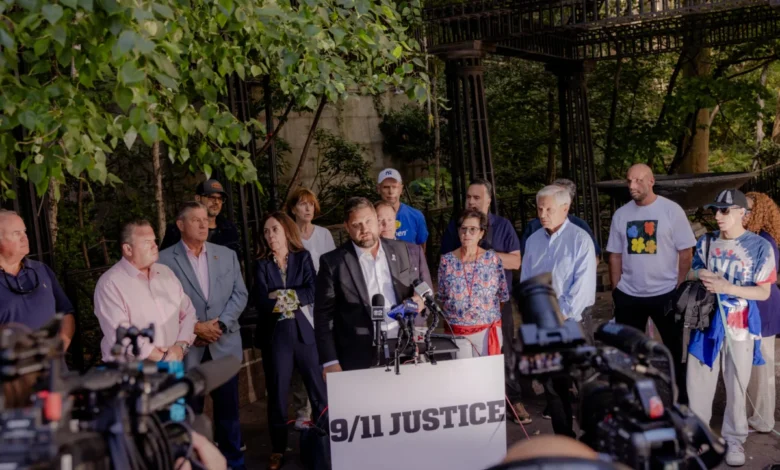
"We are fighting our own government to get the truth," said Kathleen Zapata, whose father, Joseph Coppo, perished at the World Trade Center. This sentiment is shared by many in the 9/11 Justice organization, who argue that the classification of documents as "state secrets" served to protect diplomatic relations with Riyadh at the expense of national security and justice.
Fact-Based Analysis: The Broader Implications
The persistence of the Saudi question has broader implications for how the U.S. government handles intelligence regarding its allies. The case of Bayoumi highlights a recurring tension between national security interests—in this case, maintaining the U.S.-Saudi strategic alliance—and the public’s right to accountability for the greatest terrorist attack in American history.
The failure to aggressively pursue the Bayoumi link in 2001 and 2002 prevented the full picture of the plot from coming to light. Had the FBI pursued the connections between the hijackers, the King Fahd Mosque, and the Saudi intelligence apparatus in real-time, it is possible that the structural support networks for future terrorist cells could have been dismantled.
Furthermore, the dissolution of Operation Encore in 2016 marked a low point in the FBI’s pursuit of the 9/11 truth. By disbanding the team that had successfully connected the dots between Bayoumi and his intelligence handlers, the agency effectively signaled that the chapter was closed, regardless of the contradictions in the official record.

Conclusion: A Legacy of Unanswered Questions
As the nation reflects on the 25th anniversary of September 11, the story of Omar al-Bayoumi serves as a stark reminder that the full history of that day has yet to be written. The release of previously withheld memos has only deepened the resolve of the victims’ families. The question remains: Was the failure to investigate Bayoumi a result of incompetence, or was it a calculated decision to avoid an uncomfortable diplomatic confrontation? Until the government provides a full, transparent accounting of the seized evidence and the extent of the Saudi network’s involvement, the shadows over the 9/11 investigation will continue to persist. For the families, for the intelligence community, and for the public, the path toward a complete understanding of the most significant event of the 21st century remains, unfortunately, unfinished.