Federal Appeals Court Strikes Down Trump Administration Emergency Order Keeping Aging Michigan Coal Plant Open

The intersection of national energy policy, environmental regulation, and executive overreach faced a decisive legal test on Friday when a federal appeals court ruled against the Department of Energy’s directive to keep an aging coal-fired power plant in Michigan operational past its scheduled retirement date. The decision by the U.S. Court of Appeals for the D.C. Circuit represents a significant setback for the White House’s broader strategy to leverage emergency powers to sustain fossil fuel infrastructure amid a rapidly evolving American energy landscape.
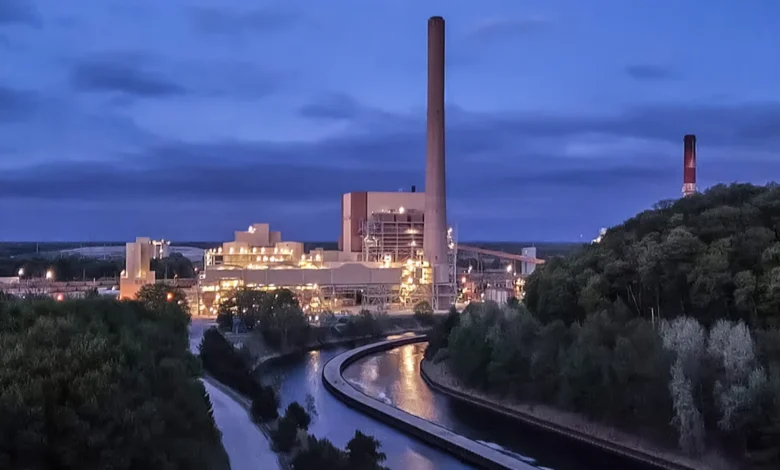
At the center of the legal battle is the J.H. Campbell generating plant, a 64-year-old facility situated in West Olive, Michigan. Operating as one of seven fossil fuel plants nationwide forced to remain online under executive mandates, the Campbell plant has become a flashpoint for debates concerning grid reliability, environmental justice, and the limits of presidential authority under the Federal Power Act.
The three-judge panel unanimously rejected the administration’s rationale that surging electricity demands from expanding data centers and potential regional blackouts constituted a statutory emergency sufficient to bypass normal regulatory channels. Writing for the court, Appeals Court Judge Cornelia Pillard characterized the emergency provision of the Federal Power Act as a narrow, last-resort backstop rather than a blank check for executive intervention in wholesale electricity markets.
The Legal Framework of the Energy Emergency
The dispute traces its origins to January 2025, when President Donald Trump signed an executive action declaring a national energy emergency on his first day in office. The directive instructed federal departments and regulatory bodies to deploy all available emergency authorities to boost domestic energy production, placing a particular emphasis on fossil fuel generation and arresting the transition away from coal and gas.
Invoking short-term emergency powers under Section 202(c) of the Federal Power Act, the Department of Energy intervened just before the J.H. Campbell plant was slated for permanent retirement in May of last year. The statute allows the energy secretary to order temporary connections and generation during grid emergencies to prevent widespread outages. However, environmental organizations, local communities, and clean energy advocates quickly mobilized in opposition, arguing that the administration was misusing a crisis management tool to enact long-term industrial policy aimed at propping up the coal sector.
Legal analysts note that Friday’s ruling is the first major judicial check on the administration’s nationwide deployment of emergency energy directives. While the decision does not formally invalidate the president’s declaration of a national energy emergency, it draws a sharp boundary around what the executive branch can legally accomplish under the guise of emergency management.
Chronology of the J.H. Campbell Controversy
To understand the gravity of the D.C. Circuit Court’s ruling, it is necessary to examine the timeline of events that transformed a routine utility retirement into a constitutional showdown:
- May of the previous year: Consumers Energy Company, the utility operating the J.H. Campbell plant, prepared to decommission the aging facility as part of its long-term transition toward cleaner energy sources and lower carbon emissions.
- Just prior to closure: The Department of Energy intervened at the eleventh hour, issuing an emergency order compelling the utility to keep the plant online, citing grid reliability concerns and the electricity demands of emerging data centers.
- Summer of the previous year through mid-2026: The plant continued operations, burning coal and emitting significant quantities of air pollutants while legal challenges from environmental groups wound their way through the federal court system.
- Mid-August 2026: Concurrently, reports highlighted that the administration had committed approximately $4 billion in financial payouts to terminate offshore wind energy developments along the East Coast, projects capable of powering more than 15 million homes.
- September 25, 2026: The U.S. Court of Appeals for the D.C. Circuit issued its landmark ruling, finding that the Department of Energy overstepped its statutory authority by invoking emergency powers for a non-transient, systemic energy demand.
Environmental Toll and Economic Costs
Beyond the constitutional and statutory questions, the forced extension of the J.H. Campbell plant has imposed heavy tangible costs on both public health and consumer finances. According to data analyzed by the Environmental Defense Fund (EDF), the Michigan facility has been the most polluting among the seven coal plants kept open nationwide by executive order.
Between its scheduled retirement date and the end of June, the plant discharged substantial volumes of hazardous air pollutants into the atmosphere, including approximately 1,000 tons of nitrogen oxides, 2,000 tons of sulfur dioxide, and 140 tons of particulate matter. Medical modeling cited by environmental advocates indicates that this localized pollution surge could contribute to roughly 100 new cases of asthma among the approximately 3,000 residents living in close proximity to the facility in West Olive.
Financially, keeping the outdated facility running has carried a staggering price tag. The extended operations have incurred $259 million in expenses. Consumers Energy Company has sought to recover these operational and maintenance costs from its customer base, which spans Michigan and ten neighboring states, prompting outrage from consumer protection advocates and local ratepayers who are being billed to keep a dying asset online.
Contradictions in National Energy Policy
The legal challenge also brought into sharp relief what critics describe as a fundamental contradiction in the administration’s energy strategy. While federal agencies have strained statutory definitions to keep coal-fired power plants running under the banner of grid security, the executive branch has simultaneously moved aggressively to dismantle renewable energy infrastructure that was primed to deliver clean, abundant electricity to the grid.
By mid-August, federal initiatives had resulted in billions of dollars in settlements and payouts designed to halt offshore wind projects across the Atlantic seaboard. Energy economists and policy experts have repeatedly questioned the logic of subsidizing the premature retirement of modern renewable installations while forcing utilities to spend hundreds of millions of dollars to maintain decades-old, high-emission coal infrastructure.
Gavin McCabe, senior litigating counsel at the Natural Resources Defense Council (NRDC), pointed to this policy disconnect during post-ruling press briefings. The underlying motivation, McCabe suggested, appears to be political rather than technical, serving as a mechanism to fulfill campaign commitments to the coal industry rather than addressing authentic, short-term grid emergencies.
Reactions and Industry Implications
Legal representatives for the plaintiffs expressed cautious optimism following the D.C. Circuit’s decision, though they acknowledged that the immediate operational fate of the J.H. Campbell plant remains uncertain.
Ted Kelly, director and lead counsel for U.S. Clean Energy at the EDF, emphasized that the ruling establishes a critical legal precedent. "You can say there’s an energy emergency as much as you want—even if you’re the president," Kelly remarked. "But what you can actually do depends on what the real facts on the ground are and what the law actually lets you do in different situations."
Several parallel lawsuits targeting emergency orders issued for other coal-fired power plants across the country had been placed on administrative hold pending the outcome of the D.C. Circuit case. With the court establishing that the Department of Energy cannot broadly interpret its statutory emergency powers to circumvent regular regulatory review, those frozen legal challenges are expected to resume with renewed momentum.
However, the administration retains several procedural avenues to contest the ruling. Legal experts note that the Department of Energy or affiliated industry intervenors could petition the full D.C. Circuit for an en banc rehearing or seek a writ of certiorari from the U.S. Supreme Court. Such maneuvers could significantly delay the physical shutdown of the plant, even if the legal foundation of the emergency orders has been severely undermined.
Path Forward for Grid Reliability and Regulation
As the dust settles on Friday’s judicial ruling, energy regulators, utilities, and environmental watchdogs are assessing the broader implications for American power grids. The decision reinforces the principle that executive agencies must ground emergency declarations in verifiable, immediate crises rather than long-term policy preferences or speculative supply shortfalls.
For the residents of West Olive and the broader customer base of Consumers Energy Company, the ruling offers a glimmer of hope that the financial burden of maintaining inefficient fossil fuel infrastructure will not be indefinitely shifted onto ratepayers. Yet, as the legal teams prepare for potential appeals and subsequent hearings in lower courts, the definitive closure date of the J.H. Campbell plant remains caught in the crosshairs of a larger national debate over the future of American energy production.
Related posts: