A Century-Old Ghost: Wrecked World War I Submarine Leaking Explosive Pollutants Into the North Sea

Beneath the cold, churning waters of the North Sea, a silent legacy of the First World War has been quietly poisoning the marine environment for decades. Recent scientific investigations into the German World War I submarine UC-30, which sank off the coast of Denmark in 1917, have revealed a disturbing reality: the vessel is actively leaking trinitrotoluene (TNT) and other toxic energetic compounds into the surrounding water column, seabed, and local marine life.
While the UC-30 is just one vessel resting on the European continental shelf, marine ecologists and geoscientists warn that it represents the tip of a massive ecological iceberg. With thousands of similar historical shipwrecks and unexploded ordnance dumps scattered across global waters, researchers are racing to understand the scale of the contamination and developing strategies to prevent further damage to fragile marine ecosystems before structural corrosion reaches a catastrophic tipping point.
Main Facts of the UC-30 Discovery
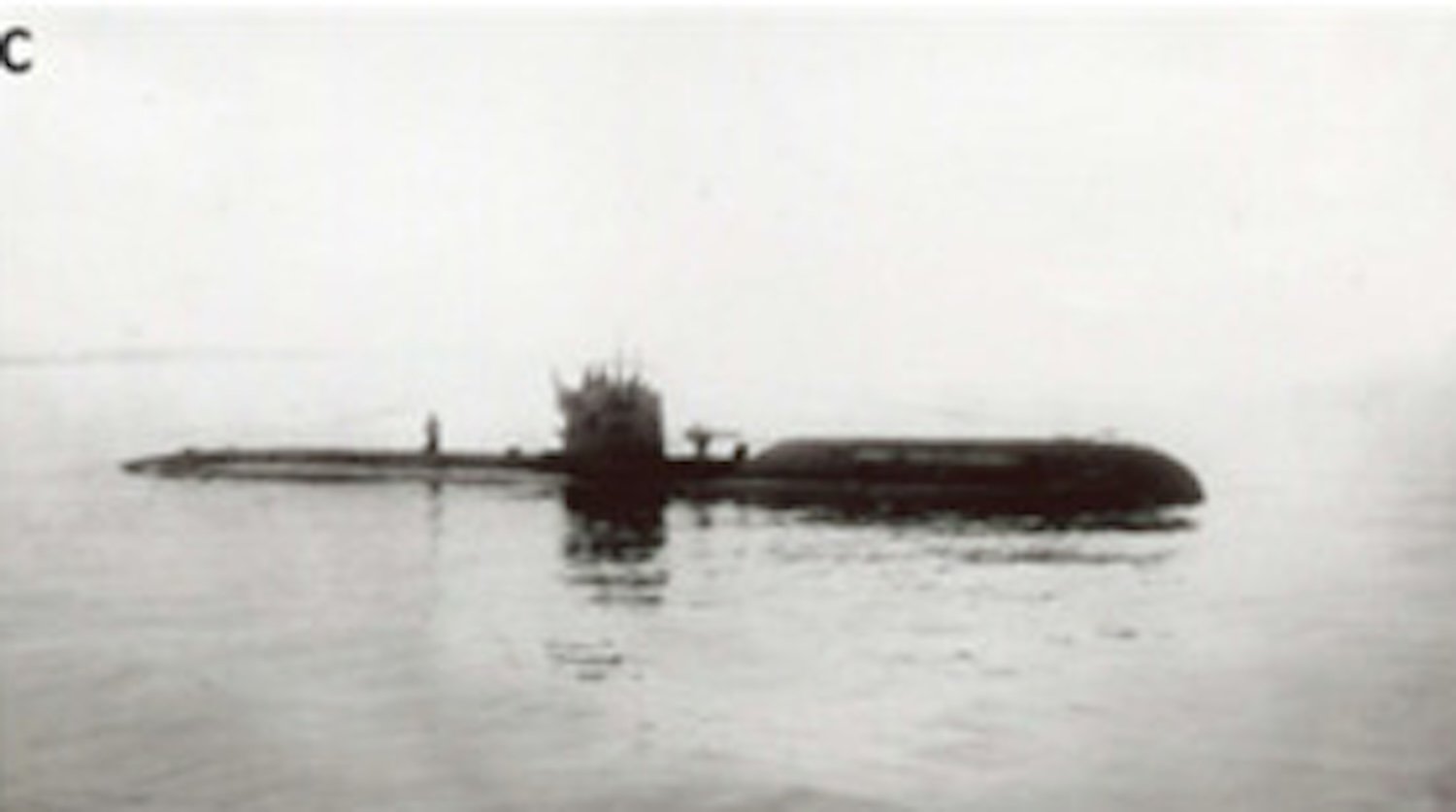
The UC-30 was a Type UC II minelaying submarine commissioned by the Imperial German Navy during the height of World War I. Measuring approximately 50 meters in length, these vessels were designed to deploy naval mines covertly in enemy shipping lanes. On April 19, 1917, the UC-30 was navigating the treacherous waters of the North Sea when it suffered mechanical difficulties. While attempting to limp back to a home port, the submarine struck a British naval mine near the Danish island of Rømø.
The resulting blast was catastrophic. All 27 members of the German crew perished instantly, and the vessel slipped beneath the waves, disappearing from historical records for nearly a century. It was not until 2016 that maritime researchers officially relocated the wreck during systematic seafloor mapping initiatives.
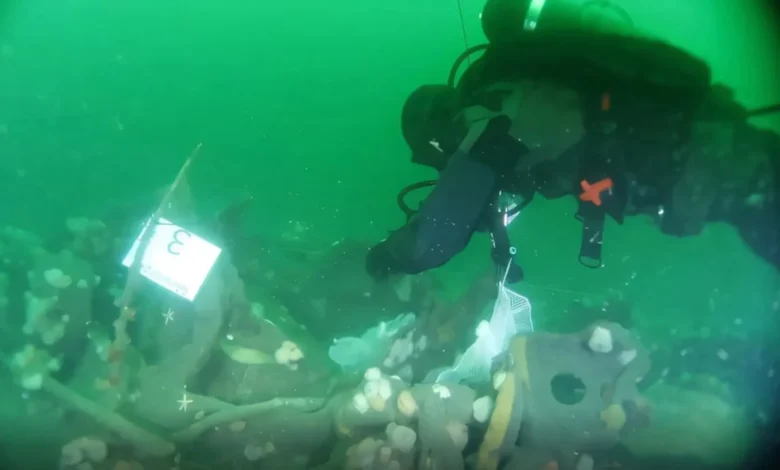
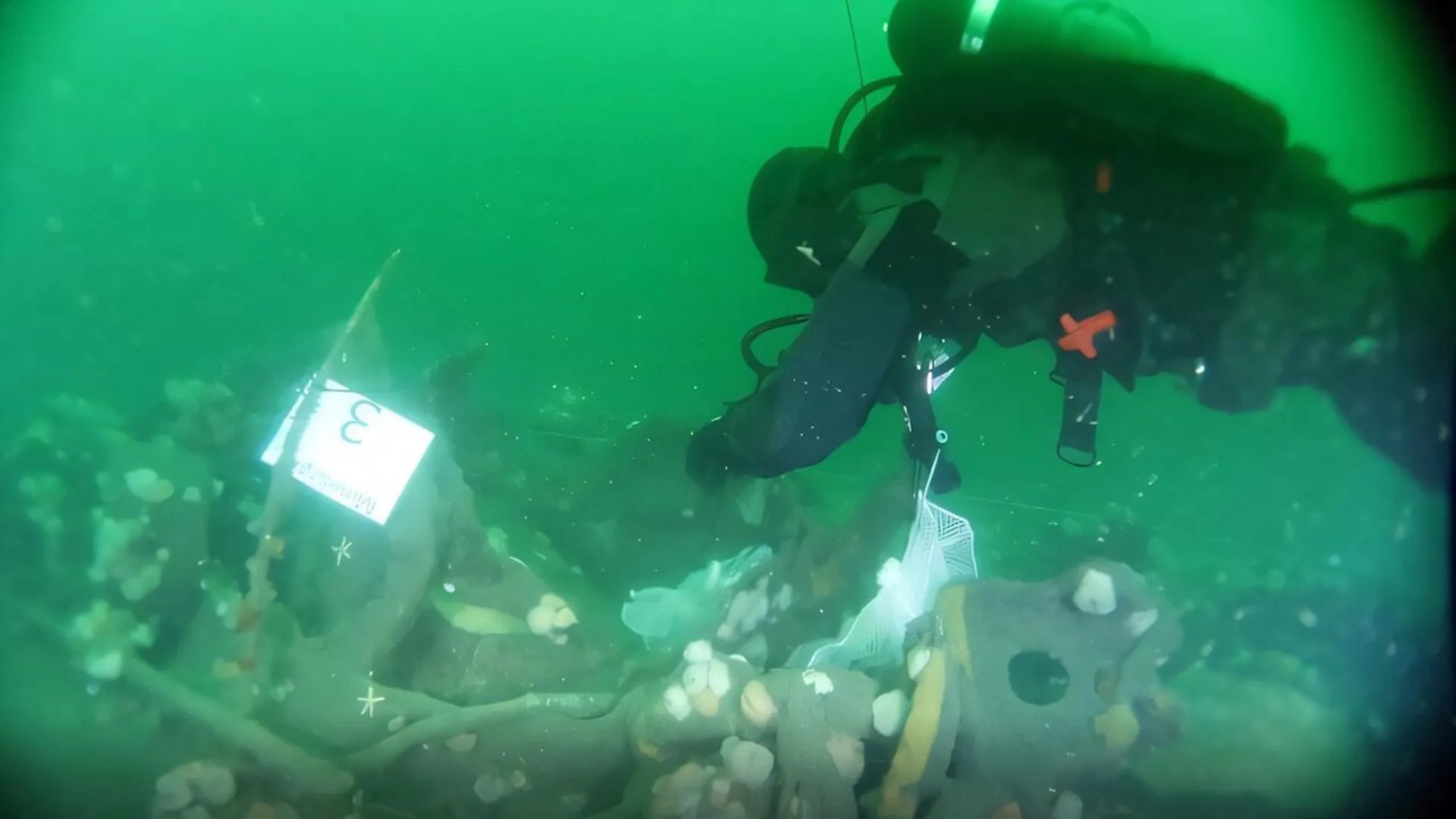
Recently, as part of the broader international research initiative known as the North Sea Wrecks (NSW) project, marine ecologists teamed up with specialized Danish naval divers to conduct a close-range inspection of the UC-30. By collecting samples of surrounding water, benthic sediment, mussels, and starfish living directly on and around the rusted hull, scientists gained unprecedented insight into the chemical interactions taking place at the site. Laboratory analyses confirmed that trace amounts of TNT originating from the submarine’s complement of six torpedoes and 18 naval mines are continuously filtering out into the marine habitat.
A Timeline of the Vessel and Its Investigation
To understand the current environmental hazard, researchers have pieced together a precise historical and investigative timeline outlining the submarine’s operational life and modern rediscovery:
- Spring 1917 (April 19): The UC-30 strikes a British sea mine near Rømø, Denmark, after suffering engine trouble. The vessel sinks rapidly, claiming the lives of all 27 crew members on board.
- 1917–2016: The submarine remains lost and largely forgotten on the floor of the North Sea, slowly succumbing to saltwater corrosion, shifting sands, and biological colonization.
- 2016: Marine researchers officially rediscover the wreck of the UC-30 during technological mapping surveys, drawing renewed historical and environmental interest to the site.
- 2024: Geoscientist Katrine Juul Andresen co-authors a comprehensive report for the Danish Environmental Protection Agency, quantifying the staggering number of historical shipwrecks lying within Danish territorial waters—totaling over 10,000 wrecks, roughly 15 percent of which date back to the World Wars.
- Recent Expeditions (2025–2026): Marine ecologists collaborate with Danish navy divers to sample the water, sediment, and marine organisms surrounding the UC-30. Subsequent laboratory tests definitively identify chronic TNT leakage originating from the decaying munitions.
Supporting Data and Scale of the Problem
The revelation that the UC-30 is leaking toxic explosive residues is concerning, but the statistical data compiled by maritime researchers elevates the issue from a localized curiosity to a major environmental crisis. According to studies led by geoscientist Katrine Juul Andresen of Aarhus University and published via the North Sea Wrecks project, Danish waters alone contain an estimated 10,127 shipwrecks.
Of that total, approximately 15 percent—roughly 1,500 vessels—date back to the First and Second World Wars. These vessels often carry fuel oil, lubricants, and substantial stores of unexploded ordnance (UXO), including depth charges, torpedoes, artillery shells, and sea mines.
When munitions were manufactured a century ago, their metal casings were designed to withstand the physical stresses of combat and storage, not decades of uninterrupted electrochemical corrosion in hyper-saline marine environments. Over the past 110 years, these steel hulls and brass or copper munition casings have thinned, cracked, and perforated. TNT, RDX, and other energetic compounds are known mutagens and carcinogens in marine species, capable of disrupting the reproductive, neurological, and cellular functions of fish, crustaceans, and benthic organisms.
Official Responses and Scientific Analysis
The scientific community, in partnership with European Union environmental agencies, is grappling with how to address the invisible plume of pollutants emanating from the UC-30 and its contemporary wrecks.
"We found traces of TNT in the wildlife, the seabed, and the water column," noted Katrine Juul Andresen in recent project briefings. "The question is how significant the effect is and how far from the wreck the pollution impacts the marine environment."
At present, data suggests that the contamination remains relatively localized, restricted to the immediate vicinity of the hull and the organisms living directly upon it. However, scientists emphasize that "localized" is a temporary status. As structural collapse accelerates due to severe North Sea storms and relentless metal fatigue, the rate of toxic discharge will inevitably increase.
Mitigating the threat is exceptionally complex. Standard salvage procedures—such as raising the wrecks or detonating unexploded ordnance in place—carry severe environmental and safety risks. Controlled underwater detonations release massive shockwaves that can devastate local marine mammal and fish populations while instantly dispersing heavy concentrations of toxic chemicals into the water column. Conversely, leaving the wrecks in place guarantees a slow-bleed scenario that could persist for generations.
Broader Impact and Implications for Marine Conservation
The predicament posed by the UC-30 highlights a broader blind spot in global marine conservation and maritime heritage management. For decades, shipwrecks have been viewed primarily through the lenses of archaeology, historical preservation, and war graves. Environmental oversight has traditionally focused on modern industrial pollution, agricultural runoff, and plastic waste, leaving military heritage underwater largely unmonitored.
As European policy makers and maritime researchers search for sustainable solutions, technological innovation is emerging as a primary path forward. Experts are currently exploring the use of advanced autonomous underwater vehicles (AUVs) and remotely operated vehicles (ROVs) equipped with high-resolution sonar and chemical sensors. These robotic systems can safely survey unstable deep-sea wrecks without endangering human divers.
In the future, similar robotic technologies may be adapted to carefully extract hazardous munitions or neutralize energetic pollutants in a controlled, environmentally sensitive manner. For now, researchers stress that there are no quick fixes or easy clean-up protocols available.
"We are trying to identify the most gentle solutions to the problem, as there is unfortunately no easy way to clean it up," Andresen concluded. As international teams continue to map the sunken armadas of the 20th century, the silent chemical legacy of past global conflicts serves as a stark reminder that the wars of the past continue to cast a long, toxic shadow over the oceans of the present.
Related posts: