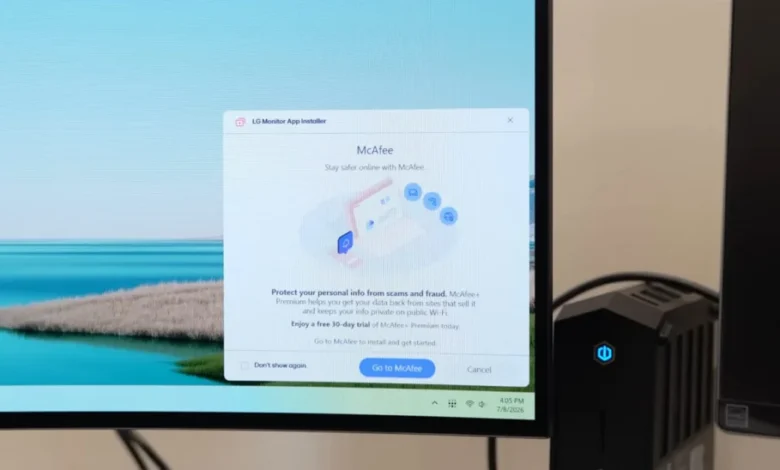
Users of LG monitors are reporting a significant and troubling issue: the unprompted installation of the "LG Monitor App Installer" and subsequent display of advertisements on their systems, all without explicit user consent or a clear opt-in mechanism. This practice, brought to light by tech media outlets like Ars Technica and the investigative efforts of Gamers Nexus, has ignited a fierce debate about consumer privacy, device ownership, and the responsibilities of hardware manufacturers in the modern digital landscape. The core of the concern lies not only in the unsolicited nature of the installation but also in the extensive data collection permissions the app reportedly acquires, encompassing a wide array of personal and system information.
The Unsolicited Software Epidemic
The presence of the LG Monitor App Installer on users’ systems is particularly alarming because it appears without any prompt or permission request from LG. This stealthy deployment bypasses typical user approval processes, leading to the unexpected appearance of both the application and subsequent advertisements. For consumers who invest substantial amounts, often upwards of $1,000, in premium LG computer monitors, this intrusion is viewed as fundamentally disruptive and a blatant disregard for privacy. As security researcher Burke highlighted, once installed, the application ostensibly gains "permission to use ‘all system resources’," a broad authorization that raises immediate red flags for cybersecurity experts and privacy advocates alike. The situation is exacerbated by the fact that this practice has been observed on monitors purchased years ago, indicating a long-standing, if recently expanding, operational strategy by LG.
The app’s description on the Microsoft Store vaguely states its purpose: to enable users to "easily install and use apps supported by your monitor through LG Monitor App Installer." Intriguingly, it explicitly lists McAfee, a well-known antivirus software, as one of the applications it facilitates. This suggests that the "installer" might primarily serve as a conduit for other software, potentially including bundled third-party applications or promotional content, further solidifying its "bloatware" classification in the eyes of many users. The absence of a clear, user-initiated choice in this installation process is a critical point of contention, undermining the expectation of control over one’s purchased hardware and software environment.
A Deep Dive into Privacy Violations
The most profound concern stemming from the LG Monitor App Installer relates to the scope of data it is authorized to collect. According to Burke’s analysis, the permissions granted to the app are alarmingly extensive. Beyond access to "all system resources," the app can reportedly "collect geolocation, device data, online activity, contacts, user credentials, transactions, and more." This vast data harvesting capability moves far beyond what might be considered necessary for a monitor’s companion application and delves deep into sensitive personal information.
Such broad data collection poses significant risks to user privacy and security. Geolocation data can track physical movements, device data offers insights into hardware configurations and usage patterns, while online activity, contacts, user credentials, and transaction information represent the bedrock of an individual’s digital identity and financial life. The potential for this data to be misused, shared with third parties without explicit consent, or exposed in a data breach is a serious threat. Even if LG claims to anonymize or aggregate this data, the sheer volume and sensitivity of the information collected raise fundamental questions about ethical data practices and compliance with evolving global privacy regulations such as the General Data Protection Regulation (GDPR) in Europe or the California Consumer Privacy Act (CCPA) in the United States. Users expect their expensive, high-performance monitors to enhance their computing experience, not to act as covert data collection instruments for a corporation. The implied trust between a consumer and a premium brand like LG is severely eroded when such practices come to light.
The Microsoft Ecosystem’s Role: UWP Device Apps and Automatic Installation
The mechanics behind how the LG Monitor App Installer makes its way onto users’ systems reveal a critical intersection with Microsoft’s operating system policies. The incident brings into focus Microsoft’s guidelines for Universal Windows Platform (UWP) device apps. According to a Microsoft support page for Windows developers, UWP device apps are permitted "to automatically install when the user connects their device to the PC" under specific conditions. These conditions include the user not having opted out of "Recommended Settings" during Windows installation and being connected to the Internet and signed into the Microsoft Store.
This policy, while designed to streamline the setup of peripherals and ensure users have necessary drivers and companion software, inadvertently creates a loophole for practices like LG’s. Microsoft’s own documentation acknowledges the potential for negative user experience, stating, "The automatic installation feature does not provide a notification to the user when the app is installed. Some users may find this experience confusing and frustrating and give your app a bad rating." This admission highlights a tension between convenience and user control. While many users might appreciate the seamless installation of essential drivers, the automatic deployment of an app that collects extensive personal data and pushes advertisements without explicit notification crosses a line for many. The "Recommended Settings" option, often presented during initial Windows setup, is frequently accepted by users without a full understanding of its implications, including the auto-installation of manufacturer-specific bloatware. This raises questions about the clarity of Microsoft’s disclosures and its responsibility to protect users from potentially intrusive practices by its hardware partners.
A Recurring Industry Problem: The History of Bloatware
The controversy surrounding LG is not an isolated incident but rather fits into a long-standing pattern within the hardware industry often referred to as "bloatware" or "crapware." For years, consumers have voiced frustration over new PCs and peripherals arriving pre-loaded with unwanted software, trialware, or applications that run in the background, consuming system resources and often serving little practical purpose for the user.
Other prominent hardware vendors have faced similar criticism for their devices automatically installing unwanted software when connected to a computer. Examples abound across various segments of the tech market:

- Razer: Known for its gaming peripherals, Razer has been criticized for its Synapse software automatically installing and requiring an account, often seen as intrusive for what should be a simple peripheral driver.
- Logitech: A giant in gaming and productivity peripherals, Logitech has also drawn user complaints about its G Hub software, which, while offering extensive customization, is sometimes perceived as heavy and automatically installed.
- Asus: A major motherboard and PC component manufacturer, Asus has faced scrutiny for its Armory Crate software, which can automatically install drivers and utilities, but has also been criticized for bundling unwanted features or being difficult to uninstall.
- Gigabyte: Another prominent motherboard vendor, Gigabyte has similarly drawn ire from users for its App Center and associated utilities that can install bloatware without clear user consent.
These precedents underscore that while LG’s situation is particularly egregious given the monitor’s high price point and the nature of the data collection, the underlying problem of manufacturers pushing unsolicited software onto user systems is deeply entrenched. The expectation that a simple peripheral like a monitor would necessitate a robust, data-hungry companion app, especially one that delivers ads, is seen as a significant overreach compared to the basic functionality most users require. This history suggests a systemic issue where hardware companies leverage their control over the device to expand their software footprint and, potentially, their data collection and monetization strategies, often at the expense of user privacy and system performance.
LG’s Silence and Consumer Trust
In response to the escalating concerns, Ars Technica reportedly reached out to LG for comment, seeking clarification on the purpose of the LG Monitor App Installer, the specific monitors affected, and the extensive privacy concerns raised by its data collection practices. While a company representative acknowledged receipt of the questions, LG had not provided a substantive response ahead of publication. This silence, or at least the delay in providing an official statement, does little to assuage the fears of concerned consumers and can further erode public trust.
In the absence of clear communication, users are left to speculate on LG’s intentions. Is this an oversight? A deliberate strategy to monetize its hardware users through data and advertising? Or a poorly implemented attempt at providing value-added services? Regardless of the underlying reason, the lack of transparency from a major global brand like LG concerning such a sensitive issue is problematic. For a company that markets premium, high-performance monitors, often catering to professionals, gamers, and content creators who demand reliability and privacy, the perceived indifference to these concerns can have lasting repercussions on its brand reputation and market standing. Trust is a valuable commodity in the tech industry, and regaining it after such a controversy requires clear communication, accountability, and demonstrable changes in practice.
The High Cost of Premium Displays: Value Proposition Under Threat
One of the most striking aspects of this controversy is the price point of the affected monitors. LG manufactures some of the most expensive computer monitors available on the market, with many models easily exceeding $1,000. Consumers investing in such high-end displays do so with an expectation of premium quality, performance, and a streamlined, advertisement-free experience. The forced installation of an app that delivers ads and extensively collects data fundamentally undermines this value proposition.
Paying a significant sum for a monitor only to find it acting as a platform for unsolicited advertising and a potential privacy risk creates a perception of being exploited. It blurs the line between a hardware purchase and a software subscription model, where the "cost" extends beyond the initial purchase price to include a forfeiture of privacy and an enduring exposure to marketing. This is particularly jarring for professional users who rely on their monitors for critical work and expect their devices to be tools, not conduits for commercial intrusion. The incident raises a broader question about consumer rights in the digital age: when does a physical product become a gateway for software-based monetization schemes that were not disclosed at the point of sale?
Identifying Affected Models and Broader Reach
While the original content did not explicitly list the monitors identified by Gamers Nexus, it states that the tech channel cited user complaints to identify specific models auto-installing the LG Monitor App Installer. The critical implication, however, is that "with Microsoft approving of the practice, there may be more monitors installing LG’s bloatware" than initially identified. This suggests the issue is not confined to a niche product line but could potentially affect a wide range of LG monitors, especially those compatible with the UWP device app framework and purchased by users who might have inadvertently agreed to "Recommended Settings" during Windows setup.
The lack of a definitive, comprehensive list from LG itself adds to user uncertainty. Consumers who own LG monitors are left wondering if their devices are also affected and if their data is being collected without their knowledge. This situation creates a climate of distrust and forces users to manually inspect their systems for unwanted software, a task that should not be necessary for a premium peripheral. The potential for a widespread impact across LG’s monitor lineup makes this a more significant issue than if it were limited to a few specific models.
Navigating the Digital Landscape: User Control and Future Outlook
The LG Monitor App Installer controversy serves as a stark reminder of the ongoing challenges in maintaining user control and privacy in an increasingly interconnected digital world. It highlights a critical need for greater transparency from hardware manufacturers regarding bundled software, data collection practices, and the mechanisms by which such software is installed. Consumers deserve clear, upfront disclosures and explicit consent before any non-essential software is installed on their systems, especially when that software comes with extensive data permissions.
For operating system developers like Microsoft, the incident calls for a reevaluation of policies that allow for silent, automatic installations of UWP device apps. While the intention might be user convenience, the current implementation appears to enable practices that can be intrusive and detrimental to user privacy. Stronger safeguards, clearer opt-out mechanisms, and more prominent notifications are necessary to ensure that "Recommended Settings" do not become a de facto consent for unwanted bloatware and data harvesting.
Ultimately, this situation underscores the evolving battle for digital rights and ownership. As devices become smarter and more integrated, the line between hardware and software blurs, and with it, the potential for manufacturers to extend their reach beyond the physical product into the user’s digital life. Consumers are increasingly demanding that their expensive purchases remain truly theirs, free from uninvited advertisements and covert data collection. The resolution of this controversy will set an important precedent for how hardware manufacturers approach user privacy and software distribution in the future, hopefully leading to more ethical practices and greater respect for consumer autonomy.