Balancing Data and Humanity: Accor CEO Sébastien Bazin on the Future of Global Hospitality

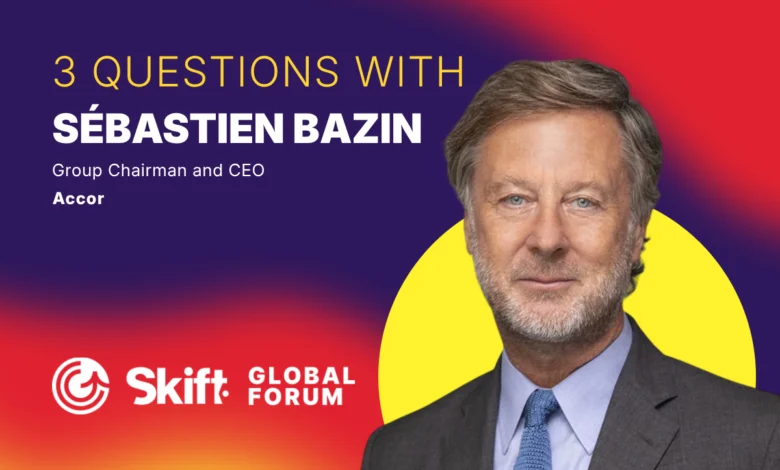
In an era defined by lightning-fast technological disruption, big data analytics, and the rapid integration of artificial intelligence, managing a global hospitality conglomerate requires a delicate equilibrium between numbers and empathy. Sébastien Bazin, who has served as the chief executive officer of Accor since 2013, has spent more than a decade steering one of the world’s largest lodging providers through sweeping industry evolutions. Overseeing a vast portfolio comprising more than 45 distinct brands, 5,800 hotels, and resorts spanning over 110 countries, Bazin has cultivated a distinct leadership philosophy: data serves to sharpen strategic decisions, but it must never replace human intuition.
As the global travel and tourism sector prepares for the upcoming Skift Global Forum—scheduled to take place from September 22 to 24, 2026, in New York—industry leaders are increasingly grappling with how to scale personalization through technology without eroding the foundational human element of hospitality. Bazin is slated to take the stage alongside other titans of the travel ecosystem, including Expedia Group CEO Ariane Gorin, Wyndham Hotels & Resorts President and CEO Geoff Ballotti, and Qatar Airways Group Chief Executive Officer Hamad Al-Khater. Together, these leaders will address a post-pandemic travel landscape that continues to grapple with shifting consumer expectations, labor dynamics, and digital transformation.
The Evolution of Leadership: Gut, Heart, and Brain
To understand how Bazin manages a sprawling enterprise that welcomes millions of guests annually, one must examine the internal framework he relies on when navigating high-stakes corporate decisions. In an industry where economic volatility, geopolitical shifts, and sudden technological breakthroughs can alter market dynamics overnight, the luxury of time is rarely available.
Reflecting on his decision-making process, Bazin outlines a sequential triad: instinct, empathy, and timing. According to the Accor CEO, the initial impulse comes from the gut, identifying what fundamentally feels correct for the brand’s trajectory. Next comes the heart, which evaluates the direct impact of the decision on people—both guests and employees. Finally, the brain engages to calculate the precise timing required for execution.
While critics and modern corporate playbooks often emphasize absolute reliance on predictive analytics and quantitative dashboards, Bazin warns against paralysis by analysis. In his view, data is an essential nutrient that must nourish instinct rather than overrule it. In a commercial environment moving at an unprecedented pace, waiting for comprehensive, flawless information often guarantees that an organization has already missed its window of opportunity. This philosophy has guided Accor through some of the most turbulent periods in modern tourism history, including the systemic shock of the COVID-19 pandemic, subsequent supply chain bottlenecks, and the structural shift toward remote work and bleisure travel.
Navigating the Fragmented Customer Journey Through AI
The modern traveler’s journey has evolved from a linear booking process into a complex, highly fragmented digital ecosystem. Consumers increasingly rely on metasearch engines, social media inspiration, online travel agencies, and hyper-personalized recommendations before ever setting foot in a lobby. This evolution has forced hotel operators to completely rethink how they curate and distribute their product offerings.
Artificial intelligence is widely projected to fundamentally transform nearly every touchpoint of the travel lifecycle, particularly discovery, planning, and hyper-personalization. Industry analysts forecast that within the next few years, travelers will demand experiences that feel intuitively tailored to their individual preferences in real time. For hospitality groups managing vast portfolios—ranging from economy and midscale brands like Ibis and Novotel to luxury and lifestyle flagships like Fairmont, Raffles, and SLS—the challenge lies in scaling these digital conveniences without alienating the consumer.
Bazin maintains that as algorithms and machine learning tools become more powerful and ubiquitous, the genuine human touch within a hotel environment becomes exponentially more valuable. Technology can efficiently handle transactional friction—such as mobile check-in, digital concierge services, and automated room preferences—freeing up staff to focus on meaningful engagement. Rather than viewing artificial intelligence as a complete replacement for human labor, Accor positions technology as a tool designed to empower employees to deliver more memorable, authentic interactions.
The Overlooked Human Element in Global Hospitality
Despite the relentless industry-wide focus on distribution channels, revenue management software, and artificial intelligence integration, Bazin argues that a critical pillar of the hospitality sector remains under-discussed: the workforce itself.
Hospitality is, at its core, an industry built entirely on human connection. Hotels serve as physical nexus points where diverse cultures intersect, local communities gather, and individuals build lifelong careers. Furthermore, the global hospitality sector holds a unique socioeconomic position as one of the few remaining industries capable of acting as a true social elevator. It provides tangible upward mobility and employment opportunities for individuals from remarkably diverse educational, social, and economic backgrounds, often serving as a first step into the formal economy for marginalized populations.
As corporate boards across the globe rush to adopt automated systems and artificial intelligence to optimize operational margins, labor advocates and industry leaders alike have raised concerns regarding workforce displacement. Bazin cautions that as the travel sector accelerates its digital transformation, it must resist the temptation to relegate the human role to secondary importance. Instead, the industry’s human infrastructure must remain central to its identity, ensuring that technological advancements serve to elevate, rather than diminish, the workforce.
Background Context and Chronology of the Skift Global Forum
The discussions led by Bazin and his peers at the upcoming Skift Global Forum build upon a multi-year narrative of resilience and reinvention within the travel economy. Following the catastrophic disruptions of 2020 and 2021, the global tourism industry experienced a robust, multi-phased recovery characterized by pent-up demand, surging average daily rates, and a structural shift toward experiential travel.
By 2024 and 2025, macroeconomic pressures—including persistent inflation, rising interest rates, and currency fluctuations—began to moderate the pace of post-pandemic growth, forcing hotel groups to pivot from pure revenue recovery to efficiency, operational excellence, and sustainability. During this same window, generative artificial intelligence transitioned from a speculative technological trend into an operational reality for booking platforms, customer service centers, and property management systems.
The September 2026 Skift Global Forum in New York arrives at a critical juncture where these technological and economic threads converge. Convening industry leaders such as Expedia Group’s Ariane Gorin, Wyndham’s Geoff Ballotti, and Qatar Airways’ Hamad Al-Khater alongside Bazin, the event is designed to dissect how large-scale travel organizations balance digital acceleration with labor realities, environmental commitments, and evolving consumer demands.
Strategic Implications for the Hotel Industry
The insights articulated by Accor’s leadership carry broad implications for the wider travel and hospitality sector. As hospitality brands invest billions of dollars into digital infrastructure, customer data platforms, and loyalty ecosystems, the risk of commoditizing the guest experience remains high.
Companies that successfully navigate the next decade will likely be those that adopt Bazin’s hybrid model: leveraging advanced data analytics and artificial intelligence to streamline back-end operations and anticipate consumer desires, while aggressively reinvesting in frontline staff training and empowerment. By treating technology as an enabler of human connection rather than its substitute, hotel operators can protect the emotional resonance that defines traditional hospitality.
As the industry prepares to gather in New York for the Skift Global Forum, the debate over the limits of automation will undoubtedly take center stage. For Sébastien Bazin and Accor, the path forward is clear: numbers may dictate the strategy, but people will always define the success.