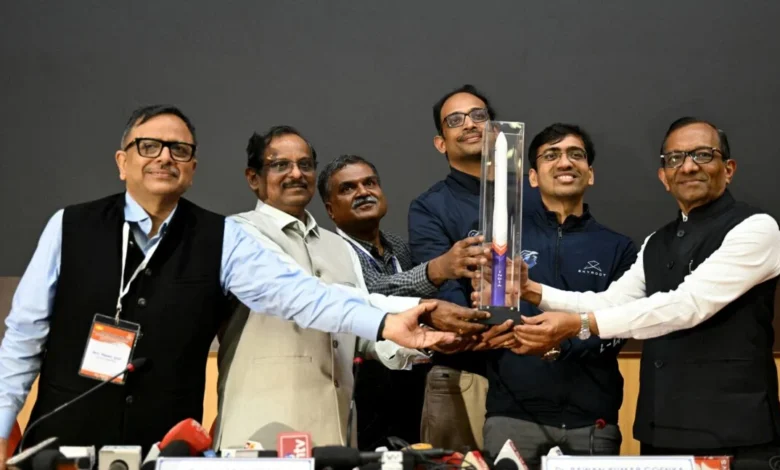
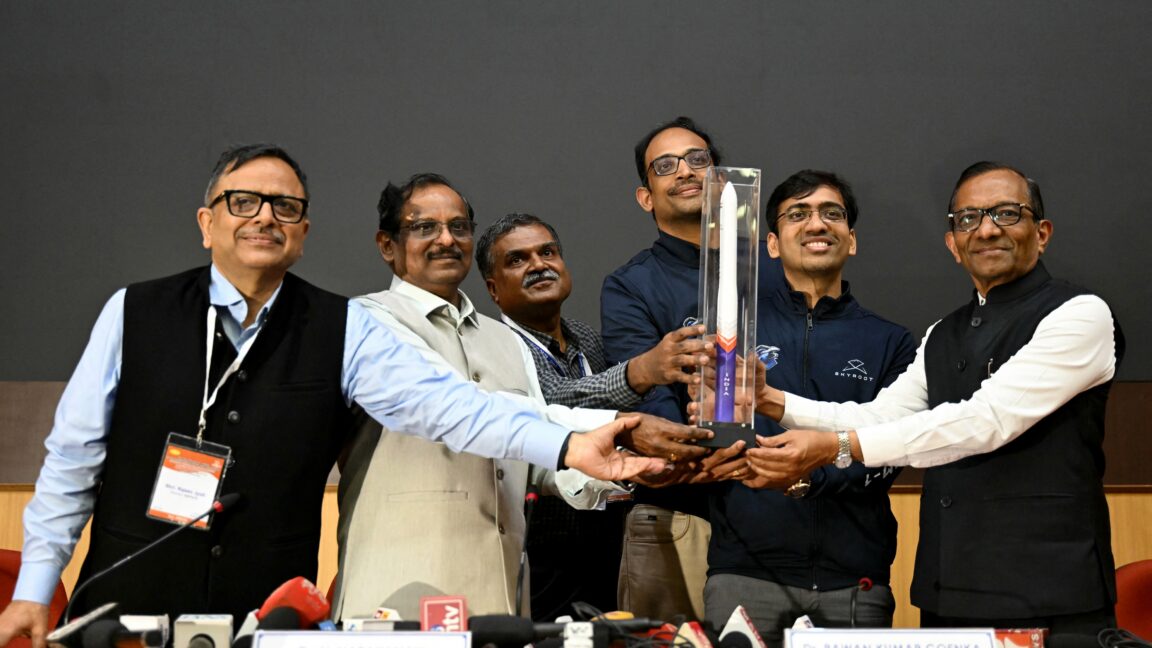
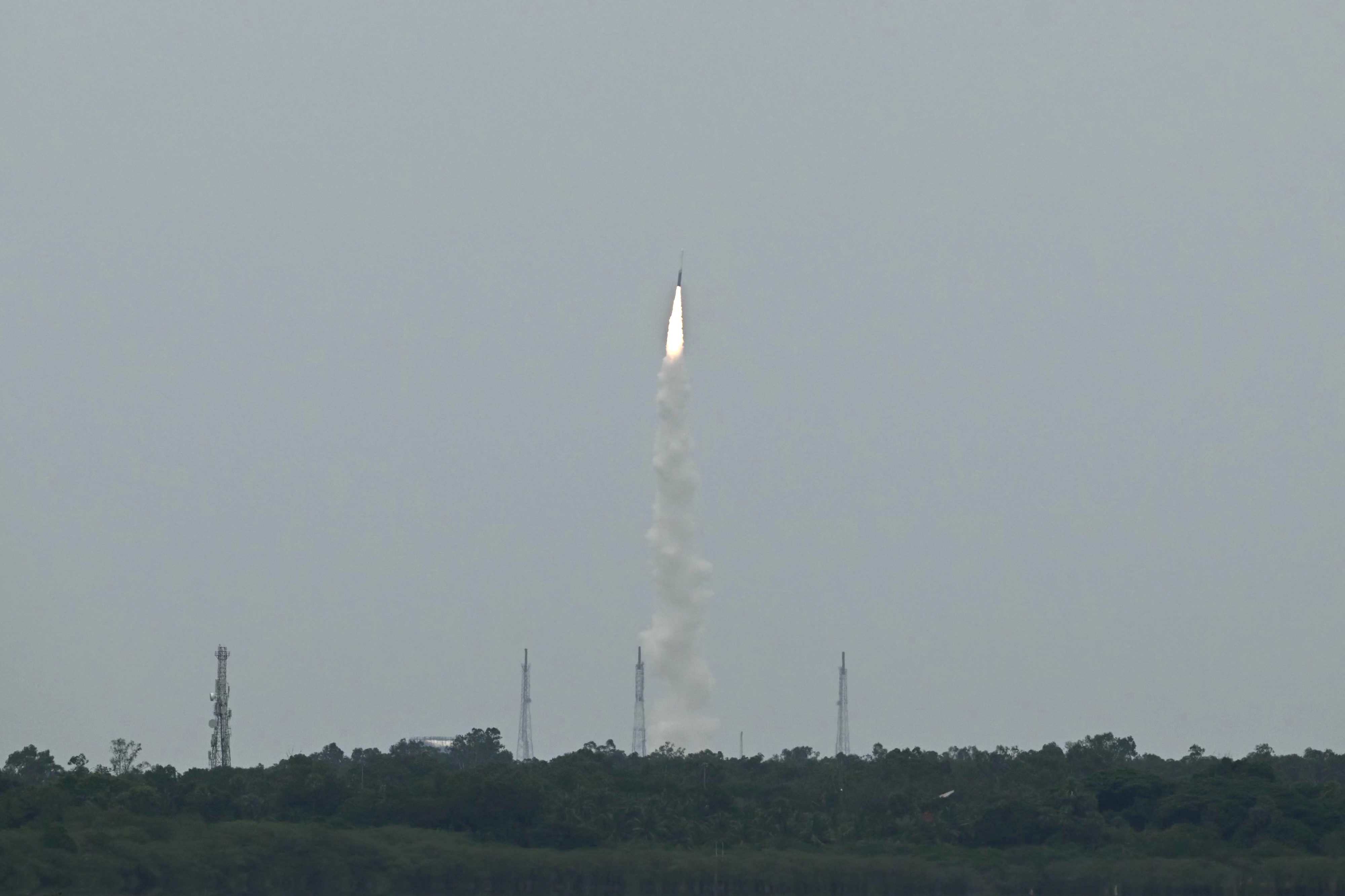
In a landmark moment for India’s burgeoning private space sector, Skyroot Aerospace successfully launched its Vikram-1 rocket into orbit on Saturday, marking the nation’s inaugural fully commercial satellite launcher to achieve this feat. The mission, lauded by Indian space officials as a "grand success," saw the rocket ascend flawlessly into a 280-mile-high (450-kilometer) orbit after lifting off from the Satish Dhawan Space Center on Sriharikota Island, a vital spaceport nestled in the Bay of Bengal. This achievement not only propels Skyroot Aerospace to the forefront of India’s commercial space initiatives but also positions India as a significant contender in the global small satellite launch market.
The Vikram-1 embarked on its historic journey at 1:35 am EDT (06:35 UTC) on Saturday, corresponding to midday at the bustling launch base located along India’s southeastern coast. The launch sequence experienced a brief delay of over half an hour, necessitated by the resolution of a last-minute technical issue. Once the challenge was overcome, the countdown resumed, culminating in the triumphant ignition of Vikram-1’s solid-fueled first stage booster, which powerfully propelled the rocket off the launch pad and skyward.
The Genesis of a New Era: India’s Private Space Ambitions
This successful orbital debut is a testament to a significant shift in India’s space policy. For decades, the Indian space program was primarily the domain of the state-owned Indian Space Research Organization (ISRO), which has a distinguished record of scientific and technological achievements, including the development of reliable launch vehicles like the Polar Satellite Launch Vehicle (PSLV) and the Geosynchronous Satellite Launch Vehicle Mark III (LVM3). ISRO has also achieved remarkable milestones such as becoming the fourth country to successfully land a spacecraft on the Moon in 2023 with its Chandrayaan-3 mission, and is actively pursuing a human-rated crew capsule, Gaganyaan, to transport astronauts to low-Earth orbit.
However, in recent years, under the visionary leadership of Prime Minister Narendra Modi, India has actively sought to liberalize its space sector, opening doors for private sector participation. This policy shift aims to leverage the innovation and agility of private companies to accelerate growth, increase launch cadence, and capture a larger share of the global space economy. The establishment of IN-SPACe (Indian National Space Promotion and Authorization Centre) in 2020 was a pivotal step in this direction, acting as a single-window agency to promote, authorize, and supervise private sector space activities. Pawan Goenka, chairman of IN-SPACe, underscored the significance of this transition, noting that the government’s objective was to transition from a state monopoly to a vibrant ecosystem driven by private enterprise.
A Detailed Look at the Vikram-1 Mission
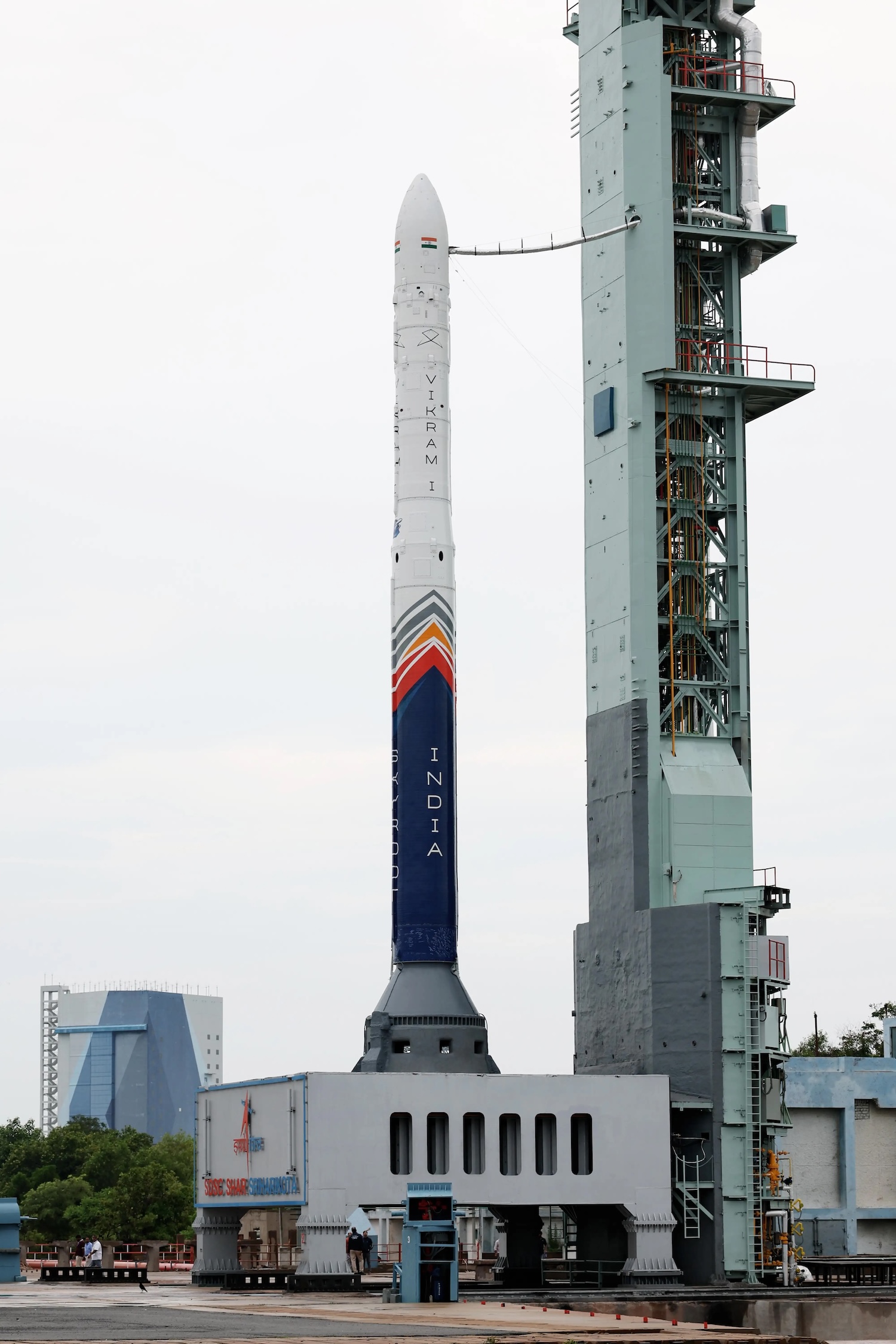
The Vikram-1, while modest in stature compared to ISRO’s larger workhorse rockets, represents a significant leap in private Indian rocketry. Standing approximately 72 feet (22 meters) tall, the rocket is designed to place payloads of up to 770 pounds (350 kilograms) into low-Earth orbit. This capability places it in a competitive class, slightly larger than Rocket Lab’s Electron launch vehicle, which has established itself as one of the world’s most successful dedicated small satellite launchers.
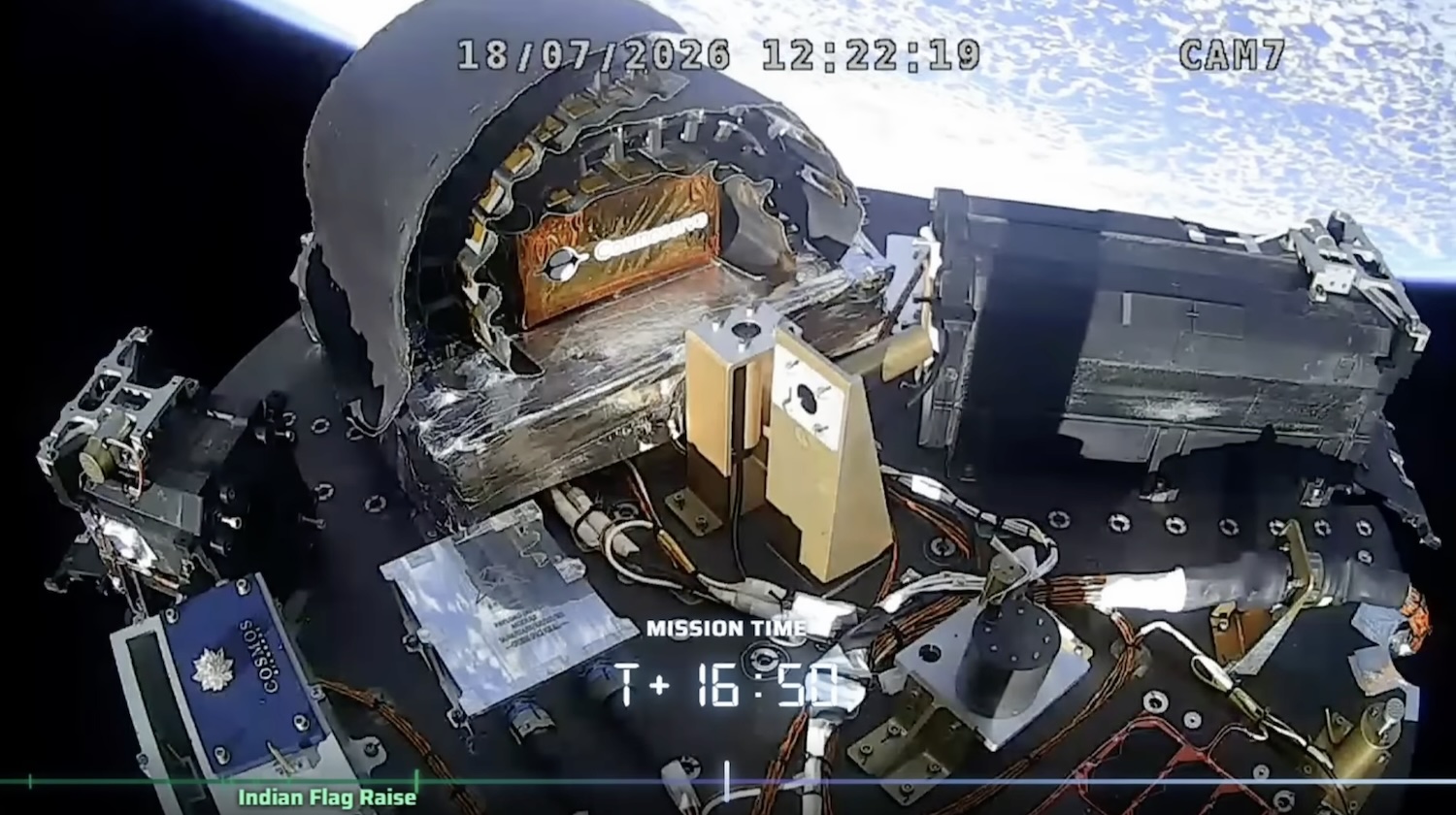
The flight profile on Saturday unfolded with remarkable precision, executing each phase without any major setbacks. The rocket employed a sequential firing of three solid-fueled rocket motors to achieve the necessary thrust to break free from Earth’s gravity. Following the burn-out and separation of these stages, a sophisticated liquid-fueled fourth stage ignited, accelerating the vehicle to an astonishing orbital velocity of approximately 17,000 mph (27,358 km/h). Live feeds from onboard cameras provided breathtaking views of the entire launch sequence, offering a real-time spectacle to ground control teams and enthusiasts alike.
A minor, yet ultimately inconsequential, anomaly was observed during the separation of the rocket’s third stage from its fourth stage. The spent third stage motor appeared to linger near the fourth stage during a brief coasting period, rather than immediately distancing itself as typically expected. However, this did not impede the fourth stage’s performance. Its 3D-printed engine, a testament to Skyroot’s innovative engineering, fired as planned, meticulously guiding the payload into an orbit approximately 280 miles (450 kilometers) high with an inclination of 60 degrees to the equator. Skyroot Aerospace confirmed that these orbital parameters were remarkably close to their preflight predictions, a testament to their meticulous planning and execution. Independent verification swiftly followed, with U.S. military tracking data confirming the rocket’s successful arrival in orbit.
Beating the Odds: A Remarkable Debut
The success of Vikram-1 on its maiden orbital attempt is particularly noteworthy, given the challenging history of first flights for new private orbital-class rockets. Pawan Kumar Chandana, Skyroot’s cofounder and CEO, captured the sentiment perfectly in his remarks to the company’s jubilant launch team: “We achieved one of the biggest milestones ever in India’s space sector—the first private orbital rocket reaching orbit on the very first attempt. It still feels like a dream, and you all made this dream happen.”
Indeed, the statistical odds were not in their favor. SpaceX, now a titan in the space industry, famously required four attempts before its Falcon 1 rocket successfully reached orbit in 2008. Similarly, Rocket Lab’s Electron, despite its current reliability, did not achieve orbit on its initial launch in 2017. Even Blue Origin, with its vast resources, achieved a successful inaugural flight for its heavy-lift New Glenn rocket in 2025, but its engineers had the distinct advantage of extensive prior experience gained from numerous launches of the smaller New Shepard suborbital rocket.
Chandana reflected on this challenging landscape: “On the first attempt, reaching orbit, I never thought it was possible. Skyroot’s team made it possible. A big, big, big shoutout to this phenomenal team, which made it happen. In fact, this launch was nothing short of a suspense movie.”
Initially, Skyroot officials had set rather conservative objectives for the Vikram-1’s debut. Their primary goals, as outlined in a pre-flight press kit, were simply to achieve a successful liftoff, clear the launch tower, and collect maximum data during the ascent phase. Pawan Goenka of IN-SPACe reiterated this, stating, “The mission objective was only to lift off and clear the tower. That was only about 100 meters, but what we went to was 450 kilometers, and it also released all the satellites that were supposed to release. So the mission was absolutely perfect.” This profound overachievement underscores the robustness of Skyroot’s design and engineering.
ISRO’s Foundation and Skyroot’s Innovation
The success of Skyroot Aerospace is not an isolated triumph but a product of India’s evolving space ecosystem. In a formal statement, ISRO confirmed its pivotal role in nurturing the Skyroot venture, providing "handholding and support." This included crucial access to solid rocket motor casting and test facilities at ISRO’s own spaceport on Sriharikota, as well as permission for Skyroot to utilize one of ISRO’s two active launch pads. This collaborative approach, where the state-backed agency empowers private enterprise, is a hallmark of India’s new space strategy.
The Vikram-1 itself is a marvel of indigenous engineering. Adorned in a distinctive blue and white livery, the rocket is predominantly constructed from lightweight carbon composite materials, optimizing its performance and efficiency. Its name pays homage to the revered Indian physicist Vikram Sarabhai, widely regarded as the "Father of the Indian space program," whose pioneering vision laid the groundwork for India’s space ambitions.
Skyroot’s journey to orbital flight was built on foundational steps, including the successful launch of its suborbital rocket, Vikram-S, in November 2022, which reached an altitude of nearly 300,000 feet (90 kilometers). The Vikram-1 incorporates invaluable lessons learned from its predecessor. Skyroot’s ambitious future roadmap envisions further evolution of the Vikram family, including the Vikram-1U, which will feature additional strap-on solid rocket boosters to accommodate heavier payloads. Beyond that, the Vikram-2 is planned to debut a cryogenic upper stage, significantly boosting its payload capacity to 2,000 pounds (900 kilograms) for low-Earth orbit missions. The immediate purpose of the Vikram rocket family, as articulated by Skyroot officials in their press kit, is to "deliver dedicated and responsive launch services for small satellites," addressing a critical and rapidly expanding niche in the global market.
Lofty Ambitions and Economic Impact
Skyroot Aerospace, however, harbors aspirations far beyond small satellite launches. In an interview conducted prior to the Vikram-1 launch, CEO Pawan Kumar Chandana articulated his long-term vision for the company: the development of larger, liquid-fueled, fully reusable rockets, aiming for a "daily cadence" of launches from multiple countries. Such a bold objective would require substantial additional funding and technological advancements, but Saturday’s launch unequivocally demonstrated that Skyroot possesses the fundamental ingredients for a successful launch company.
The company’s rapid ascent has been supported by significant investment. Skyroot has, to date, successfully raised approximately $160 million in capital, propelling its valuation to an impressive $1.1 billion, thus achieving ‘unicorn’ status. This financial backing has enabled rapid expansion, with Skyroot now boasting a workforce of over 1,000 employees, primarily based at its headquarters in Hyderabad. Notably, the average age of Skyroot’s dynamic workforce is a youthful 28 years, reflecting the vibrant energy and innovative spirit driving India’s new-age space sector.
This breakthrough launch elevates Skyroot Aerospace to a league above other space startups not just within India, but arguably in any country outside of the United States and China. It signifies India’s growing prowess in advanced manufacturing and high-tech innovation, proving that its private sector can compete on a global stage in one of the most technologically demanding industries.
India’s Space Journey: A National Priority
Skyroot’s success aligns perfectly with Prime Minister Narendra Modi’s ambitious directives for the Indian space industry. Modi has explicitly challenged the sector to dramatically increase its annual launch total from the current average of about five launches per year to an impressive 50 by the end of the decade. This aggressive target underscores the government’s commitment to making India a global hub for space activities.
Following Saturday’s historic launch, Prime Minister Modi personally extended his congratulations to Chandana and the entire Skyroot team. In an official statement, Modi declared, "This is a defining moment in India’s space journey. The growing participation of our private sector is opening new frontiers and accelerating innovation. This achievement will encourage countless youngsters to dream bigger and innovate fearlessly." His words resonate deeply within a nation that views its space program as a source of immense national pride and a powerful symbol of scientific and technological advancement.
Chandana, a former engineer at ISRO, co-founded Skyroot in 2018 alongside another ex-ISRO scientist, Naga Bharath Daka. Their strategic decision to initially focus on developing a solid-fueled launcher was a pragmatic one, optimizing for the lowest development time and the most cost-effective solution per launch. "We wanted to get to an orbital launch vehicle in a few years," Chandana had told Ars Technica prior to the launch, acknowledging the inherent risks. "It’s a test launch. Statistically, the first launch from a private company almost always fails. It’s very difficult to succeed with all new systems. But I think we have done everything we can do to ensure the first launch goes well." His foresight and the team’s diligent efforts were emphatically validated by the mission’s outcome.
Indeed, the first launch not only went well but significantly exceeded all expectations. Buoyed by this triumph, Chandana has indicated that a second Vikram-1 launch could potentially occur before the end of the current year, signaling a rapid progression towards operational capability.
Broader Implications and Future Outlook
The successful orbital insertion of Vikram-1 carries profound implications, not just for Skyroot Aerospace, but for India’s strategic position in the global space landscape. It solidifies India’s emergence as a formidable player in the commercial space market, offering competitive and responsive launch services for the burgeoning demand of small satellites. The global small satellite market is projected to grow exponentially in the coming years, driven by advancements in miniaturization, the proliferation of constellations for broadband internet, Earth observation, and IoT applications. By fostering indigenous private launch capabilities, India can capture a significant portion of this market, generating revenue, creating high-tech jobs, and fostering a robust ecosystem of ancillary industries.
This achievement also showcases India’s commitment to technological self-reliance, encapsulated by Chandana’s proud declaration after the launch: “This is a 100 percent designed in India rocket, a 100 percent made in India rocket, built by 100 percent Indian people, for India and for the world. This was a historic moment for India, but also a very proud moment for the global space sector because the world needs more access to space.”
The Vikram-1 launch serves as a powerful beacon for other Indian space startups and a clear signal to international customers that India’s private sector is ready to deliver. It accelerates the nation’s journey towards becoming a comprehensive space power, capable of not only scientific exploration and national security missions but also a major commercial provider of space services. As Skyroot Aerospace looks towards its next launch and its ambitious long-term goals of reusable rockets and daily launch cadences, it carries the hopes and aspirations of an entire nation striving to reach new heights in the final frontier.