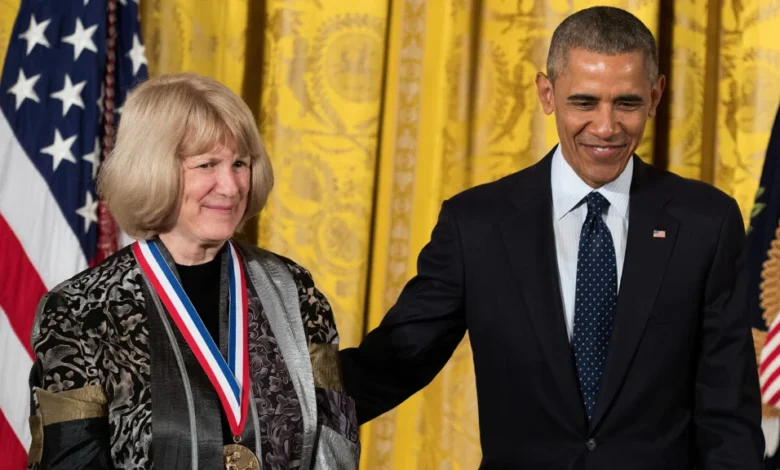
Two decades ago, Dr. Mary-Claire King, a distinguished geneticist, received an invitation that carried a weight few in the scientific community ever experience: an invitation to deliver a seminar at the Karolinska Institutet in Stockholm. To the uninitiated, it was a standard academic engagement. To those familiar with the inner workings of the Nobel Prize, the summons was widely understood as a preliminary evaluation by the prize committee. King traveled to Sweden, presented her research, and engaged in rigorous, closed-door discussions with experts—interactions she would later identify as a critical stage in the Nobel selection process.
While King has yet to be awarded the prize, her name remains a perennial fixture on the shortlists of science enthusiasts and betting markets alike. As the international scientific community turns its attention toward Stockholm for this year’s Nobel announcements, the focus on King serves as a reflection of her monumental contributions to human health. Now 80 and continuing her research at the University of Washington, King stands as a pioneer whose work transformed oncology from a discipline of observation to one of precision intervention.
The BRCA Breakthrough: A Chronology of Discovery
The trajectory of King’s career was forever altered in the mid-1990s. While working as a professor at the University of California, Berkeley, King spearheaded the effort to solve one of the most pressing mysteries in medical genetics: the heritability of breast and ovarian cancer.
For decades, the medical establishment largely operated under the assumption that breast cancer occurred sporadically. King’s work, which culminated in the landmark identification of the BRCA1 and BRCA2 gene mutations in 1994 and 1995, dismantled this consensus. By utilizing innovative genetic mapping techniques, she proved that specific inherited mutations significantly elevated the risk of developing these cancers. This discovery provided a molecular basis for what had previously been observed only as patterns in family history.
The impact was immediate and profound. By moving from the abstract concept of "familial cancer" to the identification of specific genomic markers, King provided the medical community with the tools to offer actionable, life-saving guidance. Women found to carry these mutations were suddenly empowered to make informed medical decisions, including the option of prophylactic surgeries—such as mastectomies or oophorectomies—to prevent the onset of disease.
Statistical Significance and Clinical Impact
The data supporting the importance of King’s work is staggering. Since the identification of the BRCA genes, thousands of women worldwide have utilized genetic testing to determine their risk profile. Preventive interventions have resulted in a measurable reduction in cancer mortality rates. According to the National Cancer Institute, women who carry a BRCA1 or BRCA2 mutation have a significantly higher lifetime risk of breast and ovarian cancer compared to the general population; for BRCA1 carriers, the risk of breast cancer can be as high as 72% by age 80.
The diagnostic capabilities birthed from King’s research have created a global standard of care. Genetic counseling, once a niche field, has become a cornerstone of preventative oncology. The ripple effects of this work extend beyond individual patients to the insurance and pharmaceutical industries, which have had to adapt to a new paradigm of predictive medicine.
Reflections on the Nobel Process
King’s perspective on the Nobel Prize is informed by both her academic standing and her pragmatic view of the scientific process. When asked about the possibility of receiving the honor, she remains grounded. "The chances of any one year are extremely low," she remarked in a recent interview, noting that the selection process is a "tiny filter" with "stochastic features."
She points to the 2023 Nobel Prize in Physiology or Medicine, awarded to Katalin Karikó and Drew Weissman for their work on mRNA vaccine technology, as an example of a clear, universally recognized achievement. King’s ability to contextualize the work of her peers highlights the camaraderie within the high-level research community. Despite the prestige associated with the Nobel, she emphasizes that the true reward for her life’s work is not found in a medal, but in the "secret handshake" she shares with the thousands of women whose lives have been saved or extended due to her research.
Mentorship and the Evolution of Women in Science
King’s career has been defined as much by her advocacy as by her research. Having entered a field historically dominated by men, she has consistently championed the inclusion of women and underrepresented groups in research. While she acknowledges that the landscape has improved significantly—with more women in senior faculty positions and health policy roles—she is candid about the structural hurdles that remain.
"What hasn’t changed is that the time of a woman’s life when she has small children is the same as the time of her life when her career is getting off the ground," King noted. She argues that without systemic support, such as high-quality, subsidized childcare, true equality in the research environment remains an elusive goal. Her advice to the next generation of female scientists is one of patience and persistence: "Careers are long, and children grow up quickly."
Expanding the Horizon: Current Research Frontiers
King’s scientific curiosity has not waned with age. At the University of Washington, her lab continues to push the boundaries of genomic medicine. Her current research interests span a wide range of complex conditions, including:
- Neuropsychiatric Genetics: Investigating de novo mutations in schizophrenia and expanding repeats in bipolar disorder.
- Oncological Complexity: Studying cryptic mutations and structural variations that contribute to inherited cancer predispositions.
- Congenital Anomalies: Exploring the genetic origins of rare developmental disorders.
King’s philosophy, which she describes as "genetics is a way of thinking, genomics is a set of tools," encapsulates her approach to modern science. By applying her unique analytical framework to new technological tools, she continues to tackle challenges that were deemed unsolvable only a decade ago.
The Broader Implications of Predictive Genetics
The legacy of Mary-Claire King is not merely the discovery of a gene, but the establishment of a new ethical and medical framework. Her work forced a societal conversation about the responsibilities that accompany genetic knowledge. As clinicians and policymakers continue to navigate the era of personalized medicine, King’s career serves as a roadmap for how scientific discovery can be translated into public good.
When she was cautioned by colleagues early in her career that her work would "get out of control" once it reached the public, she chose not to retreat. Instead, she leaned into the responsibility of being a bridge between complex laboratory data and the patients who rely on that information. Whether or not the Nobel Committee officially recognizes her contributions with the ultimate prize, the scientific community and the public at large have already acknowledged the magnitude of her impact. Through every woman who receives a life-saving test, and every researcher she mentors, King’s influence continues to evolve, proving that the most enduring discoveries are those that fundamentally change how we understand—and protect—human life.