Texas School Voucher Program Embroiled in Controversy Over Secret Investigations of Islamic Private Schools Based on Discredited Allegations

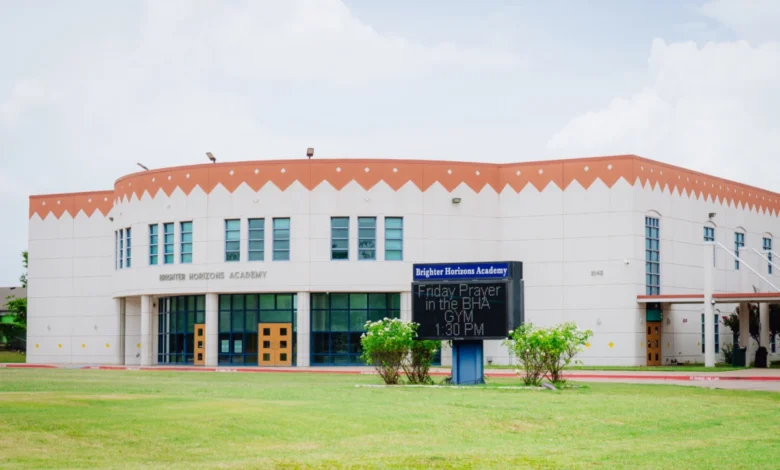
The intersection of religious liberty, state-funded education, and national security allegations has ignited a significant legal and political firestorm in Texas. At the heart of the controversy is a series of investigations launched by the Texas Comptroller of Public Accounts into Islamic private schools applying for the state’s burgeoning school voucher program. New legal filings and depositions reveal that these investigations, funded by taxpayer dollars, were heavily influenced by an activist with a documented history of libel judgments and were far more targeted than the state previously acknowledged.
The dispute centers on whether the state used its administrative authority to unfairly profile and exclude Muslim-affiliated educational institutions based on ideological biases and unverified claims of "terrorist ties." While the schools in question have since been admitted to the program, a high-stakes legal battle continues as the institutions seek class-action status to prevent future discriminatory practices.
The Catalyst: A History of Discredited Allegations
The genesis of the state’s scrutiny can be traced back to Sam Westrop, a researcher currently affiliated with the Texas Public Policy Foundation. Nearly a decade ago, Westrop was at the center of a high-profile legal battle in the United Kingdom. A British court ordered him to pay the equivalent of more than $173,000 in libel damages after he published an article falsely labeling the founder of a London-based Islamic television channel a “convicted terrorist.”
In that case, the presiding judge was unequivocal, stating, “There simply was no evidence to support the allegation of terrorism.” Westrop eventually admitted the underlying evidence for his claim was unreliable and issued a correction. However, years later, Westrop relocated to the United States and began publishing similar claims regarding Islamic institutions in Texas.
As early as the fall of 2024, Westrop shared his "research" with the Texas Comptroller’s office. His reports alleged that several Islamic private schools seeking to participate in the state’s voucher program—which provides taxpayer-funded scholarships for private education—had connections to extremist groups such as Hamas and the Muslim Brotherhood. These allegations, which mirrors the rhetoric used in his previous libelous publications, became a cornerstone of the state’s investigative efforts.
The Expansion of the State’s Investigation
Publicly, the Texas Comptroller’s office maintained that any delays in school approvals were part of a routine, broad-based audit of accreditation credentials. The agency suggested that Islamic schools were simply part of a larger group of approximately 700 schools accredited by Cognia, a global nonprofit, that were being reviewed for up-to-date documentation.
However, an eight-hour deposition of Murl Miller, the Comptroller’s chief counsel for general litigation, taken in May 2025, tells a different story. Miller’s testimony revealed that the state’s investigation was far more specific and exclusionary than previously reported. According to the deposition:
- Targeted Scope: The state used taxpayer funds to contract two third-party investigators to probe approximately 50 private schools. These schools were specifically selected based on alleged ties to "radical Islamic organizations" or the Chinese Communist government.
- Selective Scrutiny: Out of more than 2,600 private schools approved for the voucher program, only this small subset of 50 campuses was subjected to deep-dive "counterterrorism" research.
- Direct Influence: In one instance, Bayaan Academy—an Islamic school represented in the current lawsuit—was initially approved for the program. Its approval was revoked just two hours after Westrop sent an email to state officials containing his "research."
- Lack of Vetting: Despite Westrop’s central role in providing information, Miller admitted during the deposition that he did not perform a basic search of Westrop’s background or the $173,000 libel judgment against him. Miller testified that he relied on the third-party investigators to verify Westrop’s credentials, which they apparently failed to do regarding his legal history.
Chronology of the Voucher Dispute
The timeline of the investigation and the subsequent legal fallout illustrates a rapidly escalating conflict between state agencies and religious minority groups:
- Summer 2024: A regional Homeland Security Task Force is launched in Southeast Texas to combat transnational criminal threats. The Comptroller’s office begins receiving dossiers from Westrop and the RAIR Foundation, an activist group focused on "Islamic supremacists."
- Late 2024: Westrop shares research with the Texas Comptroller of Public Accounts.
- November 2025: Governor Greg Abbott issues an executive order designating the Council on American-Islamic Relations (CAIR) as a foreign terrorist organization, a move challenged in federal court as a violation of due process.
- December 2025: Acting Comptroller Kelly Hancock formally asks Attorney General Ken Paxton for a legal opinion on whether the state can exclude schools with ties to the Chinese government or CAIR.
- January 2026: Attorney General Paxton issues a ruling confirming the Comptroller’s "full authority" to stop taxpayer funds from reaching schools with alleged extremist ties.
- March 2026: Four Islamic private school campuses file a lawsuit against the Comptroller after being denied entry into the voucher program.
- May 2026: Murl Miller sits for an eight-hour deposition, revealing the internal mechanics of the investigation and the influence of outside activists.
- June 2026: The state allows the four plaintiff schools into the program but moves to dismiss the lawsuit, arguing the case is now moot.
- July 2026: Acting Comptroller Kelly Hancock announces his resignation effective at the end of the month.
Taxpayer-Funded Counterterrorism Research
To conduct the investigations, the state hired Reuben Katz and Lara Burns, a retired FBI agent currently associated with George Washington University’s Program on Extremism. The pair provided the state with detailed dossiers on school leaders, cross-referencing names against government terrorism databases.
The irony, as noted in the legal filings, is that Miller admitted the Comptroller’s office is "not readily prepared to do investigations" into foreign terrorist organizations. By outsourcing this function to private researchers based on leads from ideological activists, the state effectively created a "shadow vetting" process that operated outside the standard accreditation requirements mandated by Texas law.
Despite the intensity of the probe, the state ultimately found no actionable evidence to permanently exclude the schools. Every school investigated for Islamic or Chinese ties was eventually admitted to the voucher program.
The Political and Social Climate
The scrutiny of Islamic schools does not exist in a vacuum. It follows a period of heightened anti-Muslim rhetoric within certain segments of Texas politics. At the state Republican Party convention in June 2026, attempts were made to remove Muslim delegates, and prominent figures, including former pastor Dr. Rick Scarborough, made public comments suggesting Muslim attendees should leave the country.
Governor Greg Abbott’s designation of CAIR as a terrorist organization further signaled a shift in the state’s posture toward Muslim civil rights groups. CAIR, which provides legal and advocacy services, has argued that such designations are politically motivated and lack a factual basis in federal law.
The Islamic schools involved in the lawsuit argue that this climate of hostility directly influenced the Comptroller’s decision-making process. They contend that the "accreditation audit" was a pretext used to delay their participation while the state sought ways to justify their exclusion.
Legal Implications and the Push for Class-Action Status
Although the plaintiff schools—including Bayaan Academy and Houston Quran Academy—are now participating in the voucher program, they are refusing to drop their legal challenge. Their attorney, Eric Hudson, argues that the state’s current "approval" is precarious and could be revoked at any time if the underlying discriminatory processes are not addressed.
“Religious liberty is not a temporary pass issued after a lawsuit,” Hudson stated. The plaintiffs are asking a judge to certify the case as a class-action lawsuit. If granted, this would allow the court to issue a broader ruling that protects all private schools from being singled out for investigation based on the religious or political affiliations of their founders, provided they meet the state’s objective educational requirements.
The state’s lawyers, conversely, maintain that because the schools were admitted, there is no ongoing "injury" to be remedied. They argue that the court lacks jurisdiction to continue the case and that the Comptroller’s office acted within its rights to ensure taxpayer funds are not diverted to entities that might pose a security risk.
Resignation of the Acting Comptroller
Adding another layer of complexity to the case is the impending departure of Acting Comptroller Kelly Hancock. In a March 2024 letter to the Attorney General, Hancock continued to push for the removal of the Houston Quran Academy, citing alleged ties between its principal and the Muslim Brotherhood. Hancock urged the Attorney General to strip the school of its corporate charter.
However, during his deposition, Murl Miller distanced the agency from Hancock’s letter, describing it as containing "a lot of mistakes and misstatements." Miller admitted that the agency’s internal research had already determined the accusations were inaccurate and that Hancock’s letter came as a "surprise" to the legal team.
Hancock’s resignation, announced in early July 2026, marks the end of a contentious tenure defined by the voucher debate and a public feud with Attorney General Paxton over legal strategy.
Analysis of Broader Impacts
The resolution of this case will likely set a major precedent for the implementation of school voucher programs across the United States. If the court grants class-action status and finds that the state engaged in discriminatory profiling, it could limit the ability of state agencies to use "national security" as a pretext for vetting religious institutions.
Furthermore, the case highlights the risks of state agencies relying on "outsourced intelligence" from activists with histories of litigation. The failure to vet Sam Westrop’s background before using his research to halt the approval of schools suggests a breakdown in administrative due process that could expose the state to further liability.
For the Islamic schools of Texas, the battle is no longer just about vouchers; it is about establishing that their status as educational institutions is independent of the shifting political winds in Austin. As the legal proceedings move into the next phase, the focus will remain on whether the state’s power to "investigate" is a legitimate tool of oversight or a weapon of ideological exclusion.